They discussed the pivotal role the president of the United States plays in health policy — whether it is building support for or opposition to new plans and proposals. “Presidents have a level of authority which is often underappreciated, especially in health care,” Blumenthal said.
Blumenthal and Rovner also discussed the historical reasons the U.S. has been unable to enact universal health care, incrementalism versus sweeping change, and what he described as “the dance” between proponents and opponents — usually a clear party-line split between Democrats and Republicans — of major health care reforms.
Today, the split seems to have come to a head, as public health, science, and expertise are being viewed by one end of the political spectrum as “the opposition,” Blumenthal said, which will complicate efforts. Still, he outlined ideas for moving forward.
An abbreviated version of this interview aired April 23 on Episode 443 of What the Health? From KFF Health News: “RFK Jr. vs. Congress.”
Blumenthal’s latest book, Whiplash: From the Battle for Obamacare to the War on Science, co-written with James A. Morone, offers a behind-the-scenes look at how three presidential administrations pursued very different health policy goals.
KFF Health News is a national newsroom that produces in-depth journalism about health issues and is one of the core operating programs at KFF—an independent source of health policy research, polling, and journalism. Learn more about KFF.This <a target="_blank" href="https://kffhealthnews.org/health-industry/health-care-policy-political-divide-david-blumenthal-interview/">article</a> first appeared on <a target="_blank" href="https://kffhealthnews.org">KFF Health News</a> and is republished here under a <a target="_blank" href="https://creativecommons.org/licenses/by-nc-nd/4.0/">Creative Commons Attribution-NonCommercial-NoDerivatives 4.0 International License</a>.<img src="https://kffhealthnews.org/wp-content/uploads/sites/8/2023/04/kffhealthnews-icon.png?w=150" style="width:1em;height:1em;margin-left:10px;">
<img id="republication-tracker-tool-source" src="https://kffhealthnews.org/?republication-pixel=true&post=2230749&ga4=G-J74WWTKFM0" style="width:1px;height:1px;">]]>
More than 80 of his customers who were enrolled in the same Medicare supplemental plan from the insurer Chubb got hit last August with a 45% increase.
“In my 49 years of doing biz as a broker, I’ve never seen a premium increase be effective immediately on everyone, instead of on their policy anniversary,” said Jaggi, whose brokerage scrambled to find more affordable options for clients. The policies pick up deductibles and other costs not covered in traditional Medicare, and without one there is no upper limit on how much a consumer might owe each year.
While 45% was an unusually big jump, Jaggi and other brokers say double-digit premium increases for Medicare supplemental, or Medigap, policies are becoming the norm.
A Chubb spokesperson did not respond to requests for comment on the increase.
More than 12 million people — about 43% of those in traditional Medicare — buy a Medigap policy. Others rely on some sort of retiree employer coverage or a different backup. About 13% of people in traditional Medicare don’t have supplemental coverage, according to KFF, meaning they could be vulnerable to large costs if they have a serious illness.
In the supplemental market, following big increases last year, rates appear to be rising again. In early 2026 filings with state insurance commissioners from Aetna, Blue Cross Blue Shield, Cigna, Humana, Mutual of Omaha, and UnitedHealthcare, rate increases for Plan G policies — the most commonly purchased supplement type — ranged from just over 12% to more than 26% in the first quarter, according to Nebraska-based consulting firm Telos Actuarial.
“While this is a small dataset across a select number of states, it’s an indication that carriers are looking to correct their premium rates in light of upward pressure on their claims experience,” said Brett Mushett, a consulting actuary with Telos.
Climbing Numbers
Premium rates vary based on the type of coverage chosen, where a beneficiary lives, and their age. For Plan G coverage, beneficiaries paid an average monthly premium of $164 in 2023, according to KFF. That amount has likely risen since.
“In some states, like Ohio, Medicare supplements for years would have a 3% to 5% year-over-year increase. Now it’s 10% to 15%,” said Amanda Brewton, owner of Medicare Answers Now, a marketing organization whose clients are sales agents.
In Alaska, Premera Blue Cross raised the premiums on its Plan G policies by nearly 12% for this year, according to rate sheets provided to KFF Health News by insurance agent Patricia Mack, who said another insurer raised rates by nearly 13%.
For example, a 65-year-old woman who last year would have been charged $172 a month for a Plan G policy would now face a monthly rate of $192, said Mack, who owns Alaska Insurance Benefits in Wasilla.
Premera spokesperson Courtney Wallace said in an email that Medicare makes changes to deductible and copayment rates each year, which affects supplemental plans that cover those increasing amounts.
Wallace also noted that the insurer saw higher medical service use among its members, “which further drove claims costs and ultimately impacted premiums.”
Agents and policy experts blame a range of factors for rising premiums: an increase in the use of medical services by beneficiaries; the aging of the population; increases in labor and medical costs; rules in some states governing Medigap plans; and people’s enrolling in — or getting out of — private Medicare Advantage plans.
“Five years ago, it was exceedingly uncommon to have a carrier with a rate increase of more than 10%. Now it’s very uncommon to see a rate increase below 10%, and it’s not uncommon to see it over 20%,” said Chalen Jackson, vice president for government affairs at Integrity, a Dallas-based company that sells life and health insurance.
Jaggi, who co-owns Jaggi Petry Insurance & Investments in Forsyth, Illinois, along with his daughter, said he eventually found other options for many of those 80-plus clients with the large increase, which came from an insurer that had previously been the lowest-cost option. But it wasn’t easy — and continuing increases are expected.
“These are unbelievable increases,” said Jaggi, who said he is seeing premium hikes exceeding 15% this year across a range of insurers.
Policy experts have outlined possible solutions, including for Congress to cap out-of-pocket costs for Medicare beneficiaries or subsidize the purchase of Medigap coverage.
“Traditional Medicare is the only federal health insurance program without an out-of-pocket cap,” Sen. Ron Wyden (D-Ore.) wrote in an email, adding that the program “needs to be updated and strengthened to protect the Medicare guarantee for American seniors.”
But making changes to Medicare that require congressional approval is unlikely in the current legislative environment, especially because adding an out-of-pocket cap would add costs to the federal budget.
How This Plays Out
People generally qualify for Medicare when they turn 65. Beneficiaries have six months after they initially enroll in the traditional fee-for-service program to purchase a Medigap plan at standard rates without having to answer health-related questions.
Strict rules then kick in around when beneficiaries can enroll in or switch Medigap coverage and options become much more limited, with each one generally involving trade-offs or tough choices.
At least 16 states have what’s known as a “birthday rule,” which requires insurers once a year to allow people enrolled in a Medigap plan to change to different supplemental coverage — usually around their birthdays — without being medically underwritten. Those rules can help consumers, including those with health conditions, to switch.
An additional four states — Connecticut, Massachusetts, Maine, and New York — require insurers to offer at least one Medigap policy to all applicants either year-round or during an annual enrollment period, depending on the state. Changes are allowed no matter the person’s health.
Another option for those facing high Medigap costs is to leave traditional Medicare and enroll in a private-sector Medicare Advantage plan, which have out-of-pocket caps. But joining one means beneficiaries must generally rely on a set of in-network doctors and hospitals. And if they change their mind and want to go back to traditional Medicare, they have only a 12-month window in which to purchase a Medigap plan without passing health questions. After that, it can be more difficult.
“A lot of people don’t know that if they are in Medicare Advantage for a year, they can get turned down by a Medigap plan or charged really high premiums because of a preexisting condition, which for many people effectively traps them in MA plans,” said Brian Keyser, a research associate at the liberal Center for American Progress and co-author of a recent report on the issue.
There are some exceptions. For example, if a Medicare Advantage plan withdraws from a market or leaves the Medicare program, its enrollees can qualify for a supplemental plan without being asked health questions or charged more for having preexisting conditions.
For this year alone, about 2.6 million people lost Medicare Advantage coverage when their insurer pulled out of their markets, according to KFF, and more than a million lost coverage for 2025. Many switched to other MA plans, but “somewhere around 440,000 of those people did go to a Medicare supplement policy,” sometimes because there was no other MA plan in their area, said George Dippel, president of Deft Research, a Minneapolis-based market research organization focused on insurance for older people. Deft is part of Integrity, the Dallas company.
Some Medicare experts note that anytime insurers enroll people whose health status they can’t consider — whether because of birthday rules or because their Medicare Advantage plan left the market and thus qualified them for an exemption from medical underwriting — it potentially exposes them to more health care utilization and higher costs, making them more likely to increase premiums across the board to offset the possible financial hit.
Another option mentioned by brokers for people looking to lower their costs is to consider one of the two types of Medigap plans that come with a deductible, which is currently just under $3,000 for a year. Those plans charge far lower monthly premiums than Medigap plans that pick up a much larger portion of annual amounts people must pay toward their Medicare services.
Still, “a lot of people are not comfortable with a $3,000 deductible,” Mack said.
KFF Health News is a national newsroom that produces in-depth journalism about health issues and is one of the core operating programs at KFF—an independent source of health policy research, polling, and journalism. Learn more about KFF.This <a target="_blank" href="https://kffhealthnews.org/medicare/medigap-medicare-advantage-premiums-rate-increase-few-alternatives/">article</a> first appeared on <a target="_blank" href="https://kffhealthnews.org">KFF Health News</a> and is republished here under a <a target="_blank" href="https://creativecommons.org/licenses/by-nc-nd/4.0/">Creative Commons Attribution-NonCommercial-NoDerivatives 4.0 International License</a>.<img src="https://kffhealthnews.org/wp-content/uploads/sites/8/2023/04/kffhealthnews-icon.png?w=150" style="width:1em;height:1em;margin-left:10px;">
<img id="republication-tracker-tool-source" src="https://kffhealthnews.org/?republication-pixel=true&post=2228699&ga4=G-J74WWTKFM0" style="width:1px;height:1px;">]]>But officials warned that all optional Medicaid services are still under review as the state health department looks for cuts to offset a shortfall driven by higher-than-expected Medicaid costs.
Jon Ebelt, a spokesperson with the Montana Department of Public Health and Human Services, said the agency is preparing a request to the federal government to add doula care to the state’s Medicaid program. It would cost the state about $118,000 in its first year to provide doula Medicaid reimbursements, according to state estimates.
His April 15 comments came three weeks after department officials told KFF Health News that the state budget deficit had put those plans on hold. Ebelt denied that a final decision had been made in March to scrap the doula Medicaid payments, which state lawmakers approved in a bill last year. The coverage is “now proceeding as planned,” he said.
“At the time of your initial inquiry, we were still in the process of analyzing the appropriation,” Ebelt said.
Federal health officials must approve any amendments to the state’s Medicaid program before payments can begin. At least 25 other states reimburse doulas through Medicaid.
Doulas are trained, nonmedical workers who support people through pregnancy and after they give birth. The care they provide is linked to reductions in health complications, which has prompted more states to cover doula services in recent years.
Montana lawmakers who supported expanding Medicaid to cover doula care in 2025 cited scarce maternity services, especially in rural and Indigenous communities. But this year, the state has a Medicaid budget deficit of more than $177 million and is expecting a similar shortfall next year. Plus, federal policy changes slated to take effect later this year are expected to increase costs.
“ There’s a need and a desire for doula services, but a lot of people can’t afford it,” said Sheri Walker, a Helena-based doula and president of the Montana Doula Collaborative. “So that means many of us have other jobs that we have to juggle.”
Walker is a part-time labor and delivery nurse outside of her doula work.
On March 25, health department spokesperson Holly Matkin said in an email to KFF Health News that the agency “will not be moving forward with the implementation of doula services in the Montana Medicaid benefit package at this time.” She had added that it was unclear whether state law gives the department the authority to authorize coverage during the budget shortfall.
State Sen. Cora Neumann, a Democrat who sponsored last year’s bipartisan doula reimbursement bill, said she didn’t know about the department’s plans until she saw KFF Health News’ reporting. Neumann said she and groups that had backed the legislation began calling health officials, making the case for doula services as a low-cost way to provide critical care.
After about a week, Neumann said, state officials told her the agency was moving ahead with doula services after all.
“They were on the chopping block,” Neumann said. “This is a story of how important it is for all Montanans to pay attention and stay connected to what’s happening.”
Ebelt did not clarify what led the department to change its position. However, he warned that optional Medicaid services, such as doula services, may still be cut.
“All optional services, including this service, are being reviewed,” Ebelt said, referring to doula care. He did not respond to a follow-up query as to whether the department might still decide to postpone the program following federal approval.
Optional services are types of care that states choose to cover through their Medicaid programs but aren’t required by federal law. That can include covering eyeglasses, prescription drugs, and prosthetics, and more specialized care such as physical therapy, or inpatient psychiatric services for people under 21.
Those services may not sound optional, said Liz Williams, who studies Medicaid financing at KFF, a health information nonprofit that includes KFF Health News. But she said they’re one of the few avenues states have to make adjustments when budgets get tight.
Congressional Republicans’ One Big Beautiful Bill Act, the spending measure President Donald Trump signed into law last July, is expected to put more states in a budget crunch as its provisions start to take effect by the end of the year. The federal government has estimated that the law will reduce federal Medicaid spending by nearly $1 trillion over 10 years. The law also left states with a higher share of the costs to provide food assistance.
Williams said many states expanded services in recent years by boosting optional Medicaid benefits and provider pay.
“We could see them walk those back,” Williams said.
Montana’s financial problems preceded federal changes. Last year, state lawmakers cut some of the health department’s funding and underestimated Medicaid use. The state also overestimated what the federal government would pay toward Montana’s Medicaid costs.
Health officials must outline a plan to cut costs before the state’s 2027 budget year begins on July 1. Simultaneously, the agency is trying to hire more staffers to begin vetting whether Medicaid enrollees meet or are exempt from new work requirements that also go in place July 1. The new rules, mandated through long-delayed state legislation and the federal spending law, will have a three-month grace period.
Stephanie Morton, executive director of Healthy Mothers, Healthy Babies-The Montana Coalition, said she’s grateful the state is back on track to pay for doula services through Medicaid. But she said she’s worried about potential health care cuts to come.
“We know that doulas are a critical piece of that infrastructure, but standing alone and losing other sources of care really isn’t optimal,” Morton said. “These are not robust systems as it stands.”
KFF Health News is a national newsroom that produces in-depth journalism about health issues and is one of the core operating programs at KFF—an independent source of health policy research, polling, and journalism. Learn more about KFF.This <a target="_blank" href="https://kffhealthnews.org/medicaid/doula-care-pregnancy-medicaid-montana-budget-cuts/">article</a> first appeared on <a target="_blank" href="https://kffhealthnews.org">KFF Health News</a> and is republished here under a <a target="_blank" href="https://creativecommons.org/licenses/by-nc-nd/4.0/">Creative Commons Attribution-NonCommercial-NoDerivatives 4.0 International License</a>.<img src="https://kffhealthnews.org/wp-content/uploads/sites/8/2023/04/kffhealthnews-icon.png?w=150" style="width:1em;height:1em;margin-left:10px;">
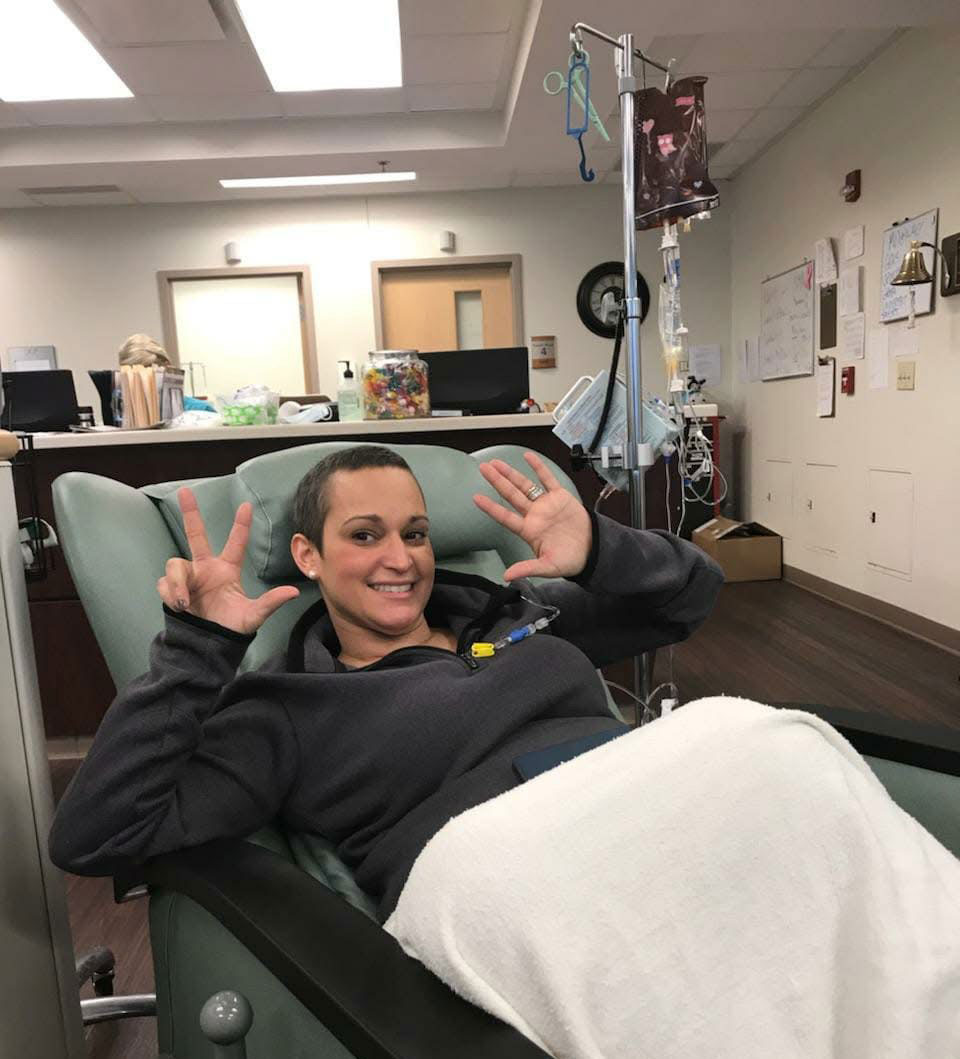
<img id="republication-tracker-tool-source" src="https://kffhealthnews.org/?republication-pixel=true&post=2229052&ga4=G-J74WWTKFM0" style="width:1px;height:1px;">]]>McLeod, who lives near Charleston, South Carolina, is still paying off chemotherapy bills that followed her 2017 diagnosis. She also now faces an onslaught of out-of-pocket costs for follow-up monitoring and care, including regular visits to a pulmonologist and allergist.
McLeod, 45, said she had already spent $2,500 in the first two months of the year and owes an additional $1,300 from a January colonoscopy. That’s on top of the $895 monthly premium for a health insurance plan that covers her family of six.
Those costs have led McLeod to ration her other care. Despite feeling intense chest pain since February, for example, she is putting off a CT scan and a visit to a heart specialist.
“You’re forced to pick and choose as to where your priorities really need to be,” said McLeod, director of strategic programs and partnerships at the Cancer Hope Network, a nonprofit that supports cancer patients. Even in that role, she struggles to navigate the financial aftermath of surviving the disease.
The cost of postcancer care often “keeps us hostage,” she said.
McLeod is one of nearly 19 million U.S. cancer survivors, many of whom continue to need prescriptions, doctor visits, and procedures to monitor their condition and manage posttreatment side effects. Of more than 1,200 cancer patients and survivors surveyed in 2024, about 47% said they had carried medical debt, with nearly half having owed more than $5,000, according to the American Cancer Society Cancer Action Network.
Yet health policy researchers and patient advocates said the experiences of cancer survivors reveal the limits of the Trump administration’s proposals to lower premiums, which may not help patients who accumulate large medical bills year after year. The proposals center on increasing the availability of high-deductible health plans, which have lower monthly payments but require patients to pay thousands of dollars out-of-pocket before coverage kicks in.
In addition, the administration has supported allowing insurers more leeway to sell plans that are not compliant with the Affordable Care Act. Such plans could bar people who have preexisting health conditions, like a cancer diagnosis, and exclude essential benefits that ACA plans are required to cover.
The administration did not answer a request for comment on how its proposals would affect cancer survivors. But its supporters say, in general, people would have more flexibility to personalize coverage and more options for plans with lower monthly fees.
Michael Cannon, director of health policy studies at the Cato Institute, a libertarian think tank, believes patients would have better control over spending, and the option to choose what kind of care gets covered, if health plans were exempted from the ACA’s regulations. A person could opt for a plan that includes cancer treatment but not maternity care, for example.
History proves insurance coverage is not that simple, especially for people with preexisting conditions, said Jennifer Hoque, an associate policy principal with the American Cancer Society Cancer Action Network. When health plans could “pick and choose” enrollees based on preexisting conditions prior to the ACA, people needing the costliest care often struggled to find coverage, she said.
“They’re not going to choose a cancer survivor,” Hoque said of health insurers.
That was the case for Veronika Panagiotou, who said private insurers refused her coverage back in September 2013 because she had a high body mass index. Two months later, as a 25-year-old uninsured graduate student, she was diagnosed with non-Hodgkin lymphoma. The hospital treated her, she recalled, “and sent me all the bills.”
In January 2014, Panagiotou was able to buy one of the first ACA plans that went into effect. It covered chemotherapy and immunotherapy treatment, imaging, medications, hospital stays, weekly blood draws, a blood transfusion, and emergency room visits.
Now Panagiotou, 37, is cancer-free and works as director of advocacy and programs at Cancer Nation, a nonprofit advocacy group. Even though she is covered through her employer, Panagiotou said treatment-related expenses weigh heavily on her life decisions.
“Every choice I make, I think about cancer,” she said.
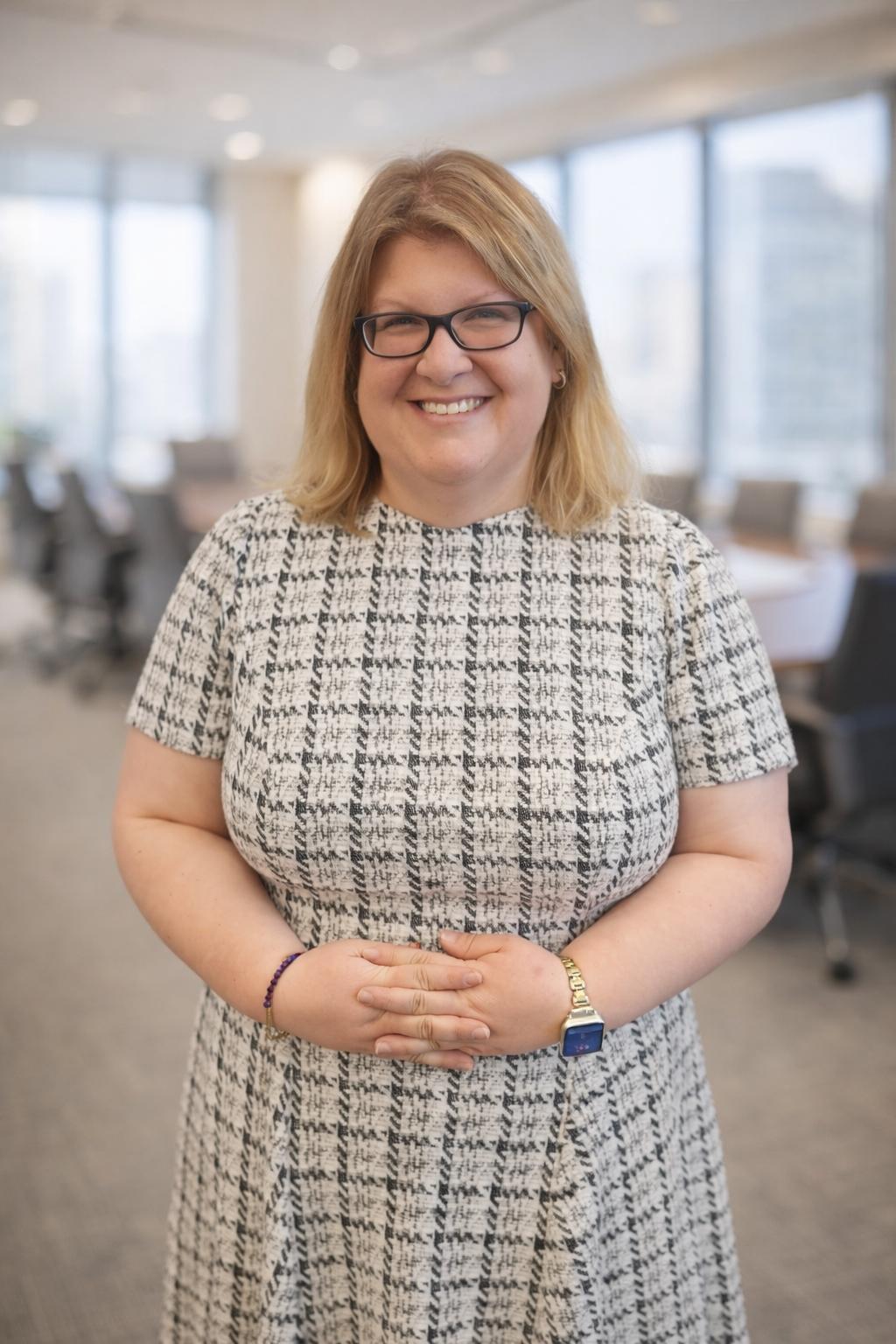
Chris Bond, a spokesperson for AHIP, the main health insurance trade association, said its members are working to improve access to coverage. But that can be a challenge when doctors and drugmakers are hiking prices, he said. Health plans are trying to “shield Americans from the full impact of those rising costs,” Bond said.
The Lymphoma Research Foundation has seen a 10% increase in applications to its patient aid fund this year, CEO Meghan Gutierrez said. “This trajectory suggests that financial safety nets, when they exist, are straining,” she said.
Rising prices are affecting everyone, regardless of the kind of health insurance they have, if any, said Brian Blase, president of Paragon Health Institute, a Republican-aligned think tank. “The biggest challenge for cancer patients isn’t the type of coverage,” he said. “It’s the underlying cost of care.”
Blase pointed to President Donald Trump’s focus on lowering drug prices as potentially helpful to cancer survivors. The Medicare Drug Price Negotiation Program, established by the Inflation Reduction Act of 2022, required the Department of Health and Human Services to negotiate prices for certain high-cost drugs, to lower prices for the federal health insurance program for people ages 65 and older. Drugs for breast, prostate, and kidney cancers are already on that list, according to KFF.
Yet Hoque fears efforts to weaken ACA protections and financial support for marketplace plans will give cancer survivors — who she said tend to “hang on to insurance for dear life” — fewer options, especially between jobs or during career changes.
Erin Jones, a 31-year-old food policy researcher living in Fort Collins, Colorado, who was diagnosed with Hodgkin lymphoma as a young adult, is now cancer-free but still sees two oncologists, visits a high-risk breast clinic, and gets a breast MRI annually. Jones gets health insurance through the university where she works, and said she recently deferred acceptance to a PhD program partly due to uncertainty over affordable coverage.
“I don’t have the freedom to do the things I want to do as easily,” she said, “because I am constantly worried about health insurance.”
Costs related to surviving cancer, including monitoring for recurrence and treatment of side effects, were expected to reach $246 billion by 2030, up from $183 billion in 2015, according to research published in 2020.
Advancements in both detecting and curing cancer have resulted in a higher percentage of people surviving five years or more after diagnosis, according to the American Cancer Society. The number of survivors is expected to grow to more than 22 million people by 2035, estimates show.
Despite these advancements, the cost of treatment can steal the spotlight, said Ezekiel Emanuel, a co-director of the Healthcare Transformation Institute at the University of Pennsylvania and a onetime health policy adviser to former President Barack Obama.
An oncologist, Emanuel said he had observed patients make the difficult decision to delay or skip postcancer care as a result.
“Even when we triumph,” he said, “we don’t seem to be able to have a celebration.”
Are you struggling to afford your health insurance? Have you decided to forgo coverage? Click here to contact KFF Health News and share your story.
KFF Health News is a national newsroom that produces in-depth journalism about health issues and is one of the core operating programs at KFF—an independent source of health policy research, polling, and journalism. Learn more about KFF.This <a target="_blank" href="https://kffhealthnews.org/health-care-costs/cancer-survival-costs-testing-treatment-premiums-deductibles-trump/">article</a> first appeared on <a target="_blank" href="https://kffhealthnews.org">KFF Health News</a> and is republished here under a <a target="_blank" href="https://creativecommons.org/licenses/by-nc-nd/4.0/">Creative Commons Attribution-NonCommercial-NoDerivatives 4.0 International License</a>.<img src="https://kffhealthnews.org/wp-content/uploads/sites/8/2023/04/kffhealthnews-icon.png?w=150" style="width:1em;height:1em;margin-left:10px;">
<img id="republication-tracker-tool-source" src="https://kffhealthnews.org/?republication-pixel=true&post=2229400&ga4=G-J74WWTKFM0" style="width:1px;height:1px;">]]>After some federal financial aid expired, many Americans found that high-deductible health plans were the only option they could afford.
In a new episode of NPR’s Life Kit podcast, KFF Health News reporter Jackie Fortiér and podcast host Marielle Segarra discuss what these plans are, and why they can feel so confusing. Imagine paying $100 out-of-pocket for a routine doctor visit that used to cost you $20. Imagine shouldering thousands of dollars in bills before your insurance pays a cent.
Still, for some people — especially those who rarely need medical care — high-deductible plans work. Listen to the episode to explore how timing your care and taking advantage of free preventive services can help you make the most of your coverage.
KFF Health News is a national newsroom that produces in-depth journalism about health issues and is one of the core operating programs at KFF—an independent source of health policy research, polling, and journalism. Learn more about KFF.This <a target="_blank" href="https://kffhealthnews.org/insurance/listen-health-care-helpline-life-kit-high-deductible-plans-out-of-pocket-costs/">article</a> first appeared on <a target="_blank" href="https://kffhealthnews.org">KFF Health News</a> and is republished here under a <a target="_blank" href="https://creativecommons.org/licenses/by-nc-nd/4.0/">Creative Commons Attribution-NonCommercial-NoDerivatives 4.0 International License</a>.<img src="https://kffhealthnews.org/wp-content/uploads/sites/8/2023/04/kffhealthnews-icon.png?w=150" style="width:1em;height:1em;margin-left:10px;">
<img id="republication-tracker-tool-source" src="https://kffhealthnews.org/?republication-pixel=true&post=2228954&ga4=G-J74WWTKFM0" style="width:1px;height:1px;">]]>The Office of Personnel Management has asked 65 insurance companies to provide monthly reports with detailed medical and pharmaceutical claims data of more than 8 million people enrolled in federal health plans, KFF Health News reported earlier this month. The request, which could dramatically expand the personally identifiable medical information OPM can access, alarmed health ethicists, insurance company executives, and privacy advocates.
Now, OPM Director Scott Kupor has two letters on his desk — one from 16 U.S. senators and another led by Rep. Robert Garcia, the top Democrat on the House Oversight Committee — asking him to drop the agency’s proposal.
“The collection of broad, personally identifiable data regarding medical care and treatment raises concerns that OPM could target certain federal employees seeking vital health care services that the Administration disagrees with on political grounds,” the Democratic House members wrote to Kupor April 17, citing KFF Health News.
The letters from congressional Democrats alone are unlikely to reverse OPM’s plans. Republicans — who control Congress and, ultimately, any oversight activities — have not weighed in on OPM’s notice.
OPM did not immediately respond to a request for comment on the letters. The agency, which said in its notice that it will use the data for oversight and to manage the federal health plans, has not publicly addressed written concerns about its proposal.
The notice, posted and sent to insurers in December, states that insurers are legally permitted to disclose “protected health information” to OPM and does not provide instructions to redact identifying information, such as names or diagnoses, from the claims.
That data could be used to implement cost-saving measures, health policy experts told KFF Health News earlier this month. But it would also give the Trump administration — which has laid off or fired tens of thousands of federal workers — access to a vast trove of personal information.
In the letters, Democratic lawmakers lay out a number of concerns about potential consequences of OPM’s obtaining detailed medical claims for millions of federal workers.
The letter from Senate Democrats — led by Adam Schiff of California and Mark Warner of Virginia — argues that OPM is not equipped to safeguard such sensitive data and that the administration could share the records across government agencies, as it has done with personal information on millions of Medicaid enrollees.
They also assert that the agency does not have a legal right to the data and that insurers’ sharing the information with OPM would “violate the core principles of the Health Insurance Portability and Accountability Act.” HIPAA requires certain organizations that maintain identifiable health information — such as hospitals and insurers — to protect it from being disclosed without patient consent. The proposal, the senators warn, threatens patients’ relationships with their clinicians, especially “sensitive disclosures regarding mental health, chronic illness, or other deeply personal conditions.”
“For these reasons, we strongly urge you to cease any further consideration of this proposal,” states the letter, which was sent to Kupor on April 19.
The American Federation of Government Employees, the largest union for federal employees, responded with alarm to KFF Health News’ reporting. The union noted in a statement from its national president, Everett Kelley, that OPM’s proposal “comes in the context of coordinated attacks on federal employees and repeated stretching of the legal boundaries for sharing sensitive personal data across government agencies.
“The question of what this administration intends to do with eight million Americans’ most private health information is not academic,” the AFGE statement read. “It is urgent.”
In an emailed statement, Kelley applauded the congressional letters.
“We are pleased that Democratic lawmakers on the Hill are just as outraged as we are over this administration’s blatant attempt to breach the privacy of millions of Americans across the country,” Kelley wrote. “We share their concerns regarding potential misuse of the information to continue illegally targeting workers and their demand for OPM to withdraw this proposal.”
KFF Health News is a national newsroom that produces in-depth journalism about health issues and is one of the core operating programs at KFF—an independent source of health policy research, polling, and journalism. Learn more about KFF.This <a target="_blank" href="https://kffhealthnews.org/health-industry/opm-federal-workers-health-records-hipaa-democratic-letters/">article</a> first appeared on <a target="_blank" href="https://kffhealthnews.org">KFF Health News</a> and is republished here under a <a target="_blank" href="https://creativecommons.org/licenses/by-nc-nd/4.0/">Creative Commons Attribution-NonCommercial-NoDerivatives 4.0 International License</a>.<img src="https://kffhealthnews.org/wp-content/uploads/sites/8/2023/04/kffhealthnews-icon.png?w=150" style="width:1em;height:1em;margin-left:10px;">
<img id="republication-tracker-tool-source" src="https://kffhealthnews.org/?republication-pixel=true&post=2228955&ga4=G-J74WWTKFM0" style="width:1px;height:1px;">]]>
KFF Health News Michigan correspondent Kate Wells discussed urgent care clinics offering abortions on Apple News Today on April 15.
- Click here to hear Wells on Apple News Today.
- Read Wells’ “Urgent Care Clinics Move To Fill Abortion Care Gaps in Rural Areas.”
KFF Health News Montana correspondent Katheryn Houghton discussed doula Medicaid reimbursements on Montana Public Radio on April 9.
- Click here to hear Houghton on Montana Public Radio.
- Read Houghton’s “This Northern Cheyenne Doula Was About To Start Getting Paid — Then Medicaid Cuts Hit.”
KFF Health News contributor Michelle Andrews discussed farm bureau health plans on The Yonder Report on April 8.
- Click here to hear Andrews on The Yonder Report.
- Read Andrews’ “Farm Bureau Health Plans Beat the ACA on Prices With an Age-Old Tactic: Rejecting Sick People.”
KFF Health News is a national newsroom that produces in-depth journalism about health issues and is one of the core operating programs at KFF—an independent source of health policy research, polling, and journalism. Learn more about KFF.
This <a target="_blank" href="https://kffhealthnews.org/on-air/on-air-april-18-2026-urgent-care-abortion-doulas-farm-bureau-health-plans/">article</a> first appeared on <a target="_blank" href="https://kffhealthnews.org">KFF Health News</a> and is republished here under a <a target="_blank" href="https://creativecommons.org/licenses/by-nc-nd/4.0/">Creative Commons Attribution-NonCommercial-NoDerivatives 4.0 International License</a>.<img src="https://kffhealthnews.org/wp-content/uploads/sites/8/2023/04/kffhealthnews-icon.png?w=150" style="width:1em;height:1em;margin-left:10px;">
<img id="republication-tracker-tool-source" src="https://kffhealthnews.org/?republication-pixel=true&post=2183401&ga4=G-J74WWTKFM0" style="width:1px;height:1px;">]]>LISTEN: Quashing innovation or risking a patient’s health? Lauren Sausser told WAMU’s Health Hub on April 15 why the White House and some states are at odds over how to regulate AI in health care.
Speed, efficiency, and lower costs. Those are the traits artificial intelligence supporters celebrate. But the same qualities worry physicians who fear the technology could lead to insurance denials with humans left out of the loop.
With scant federal regulation, states are left to shape the rules on AI in health care. For residents in the Washington, D.C., metropolitan area, a divide is playing out on opposite sides of the Potomac River. Maryland and Virginia have taken very different approaches to regulating AI in health insurance.
KFF Health News correspondent Lauren Sausser joined WAMU’s Health Hub on April 15 to explain why where you live may determine how much of a role AI plays in your coverage.
KFF Health News is a national newsroom that produces in-depth journalism about health issues and is one of the core operating programs at KFF—an independent source of health policy research, polling, and journalism. Learn more about KFF.This <a target="_blank" href="https://kffhealthnews.org/health-industry/wamu-health-hub-ai-state-regulation-april-15-2026/">article</a> first appeared on <a target="_blank" href="https://kffhealthnews.org">KFF Health News</a> and is republished here under a <a target="_blank" href="https://creativecommons.org/licenses/by-nc-nd/4.0/">Creative Commons Attribution-NonCommercial-NoDerivatives 4.0 International License</a>.<img src="https://kffhealthnews.org/wp-content/uploads/sites/8/2023/04/kffhealthnews-icon.png?w=150" style="width:1em;height:1em;margin-left:10px;">
<img id="republication-tracker-tool-source" src="https://kffhealthnews.org/?republication-pixel=true&post=2228242&ga4=G-J74WWTKFM0" style="width:1px;height:1px;">]]>But Republican lawmakers in some states think the new rules — part of the GOP’s One Big Beautiful Bill Act, signed last July by President Donald Trump — don’t go far enough.
Indiana is leading that charge, with a new law that requires applicants to prove they’ve been working or participating in a similar activity for three consecutive months to get benefits.
Meanwhile, residents in many other states will have to show they’ve been working just one month, the least cumbersome option under Trump’s signature tax-and-domestic-spending law. It instructs states to decide whether to require one, two, or three months of work history.
As in Indiana, Republican Idaho lawmakers approved a three-month requirement, and the state’s governor signed the bill into law on April 10.
The efforts, along with similar moves in Arizona, Missouri, and Kentucky, are aimed at restricting flexibility to implement the federal law at the state level.
“Normally, you would not see state legislators weighing in on these decisions,” said Lucy Dagneau, a senior official with the American Cancer Society’s advocacy arm.
The nonpartisan Congressional Budget Office estimated 18.5 million adults will be subject to the new rules, which will be enforced across 42 states and the District of Columbia. In Indiana, work rules will target about 33% of the state’s Medicaid population. The rules generally wouldn’t apply to children, people 65 or older, or people with disabilities or serious health issues.
Typically, state administrators — not lawmakers — detail how they plan to comply with new federal standards, and they often look to federal regulators for guidance. But officials at the Centers for Medicare & Medicaid Services have yet to tell states how to comply with many aspects of the sweeping budget law, leaving state lawmakers to intervene.
Gov. Mike Braun, a Republican, signed the Indiana bill into law on March 4, making his state the first to set the Medicaid work requirement at three months — the longest period allowed under the federal law.
Republican state Sen. Chris Garten introduced a bill in January, saying it was needed to “align” state law with the new federal Medicaid rules. He also pitched the bill as a way to crack down on “waste, fraud, and abuse” in public programs.
When ineligible people get enrolled, it robs “the truly vulnerable Hoosier who actually needs the help,” Garten said during a January committee hearing.
Democratic state Sen. Fady Qaddoura expressed skepticism during the hearing and questioned the necessity of the legislation. Qaddoura asked Indiana Family and Social Services Administration Secretary Mitch Roob to provide an estimate of the number of ineligible people who enrolled in Medicaid in the state.
“I think very few,” Roob replied. “It’ll never be none.”
After hearing Roob’s answer, Qaddoura said there is no evidence of a widespread problem in Indiana. He accused Republicans of using waste, fraud, and abuse as justification to deny health benefits and food aid to vulnerable Hoosiers.
Garten later called Qaddoura’s accusation a “fundamental mischaracterization” of the bill.
Republicans have said imposing these limits protects the Medicaid program’s longevity.
“We believe in a safety net for our most vulnerable, not a hammock for able-bodied adults that choose not to work,” Garten said. “By tightening these screws, we ensure that our safety net remains sustainable.”
Indiana’s Medicaid enrollment is expected to decrease because of Garten’s legislation, according to an analysis from Indiana’s nonpartisan Legislative Services Agency.
Medicaid helps keep people healthy, so they can continue to work, said Adam Mueller, executive director of the Indiana Justice Project, a nonpartisan legal advocacy organization focusing on health, housing, and food insecurity.
Mueller worries that people will struggle to prove their work history, especially those with nontraditional jobs.
“If the point is to get people engaged, the one month would do it,” Mueller said.
Ultimately, he fears the law will harm Hoosiers with the greatest need for assistance. “They’re going to get tripped up by the bureaucratic hurdles.”
An analysis by the Center on Budget and Policy Priorities predicted that work rules will impose new barriers to coverage and that how states choose to implement the rules will “significantly affect the number of people who lose coverage.” State policy decisions will determine just “how intense the burden is,” the left-leaning think tank found, and opting for a shorter look-back period “will enable more people to enroll.”
Lawmakers in multiple states considered limits. And the same right-leaning lobbying group, the Foundation for Government Accountability, testified in favor of these measures in Arizona, Indiana, and Missouri.
In Missouri, FGA lobbyist James Harris said the measure intends to “move people from dependency and give them back that dignity and pride of work.”
Missouri state Rep. Darin Chappell proposed requiring a three-month look-back period like the measure in Indiana. But the latest version of the bill he sponsored would require applicants to show they were working for only one month before enrolling.
Chappell, a Republican, said his initiative would encourage a “working mindset.”
Anna Meyer, owner of a small bakery in Columbia, Missouri, said the implication is that she and others on Medicaid are lazy. “I have been working since I was 15 years old,” she said. “I’m 43 now.”
Meyer, who voiced her opposition, said she previously had problems submitting information to the state Medicaid agency. She fears new reporting requirements will put her and others at risk of losing coverage, even if they meet the work rule.
She has fibromyalgia, a chronic condition that increases overall sensitivity to pain. She also has food allergies. Medicaid helps pay for medications and doctor visits that keep her healthy and allow her to keep working.
“I work very hard,” Meyer said.
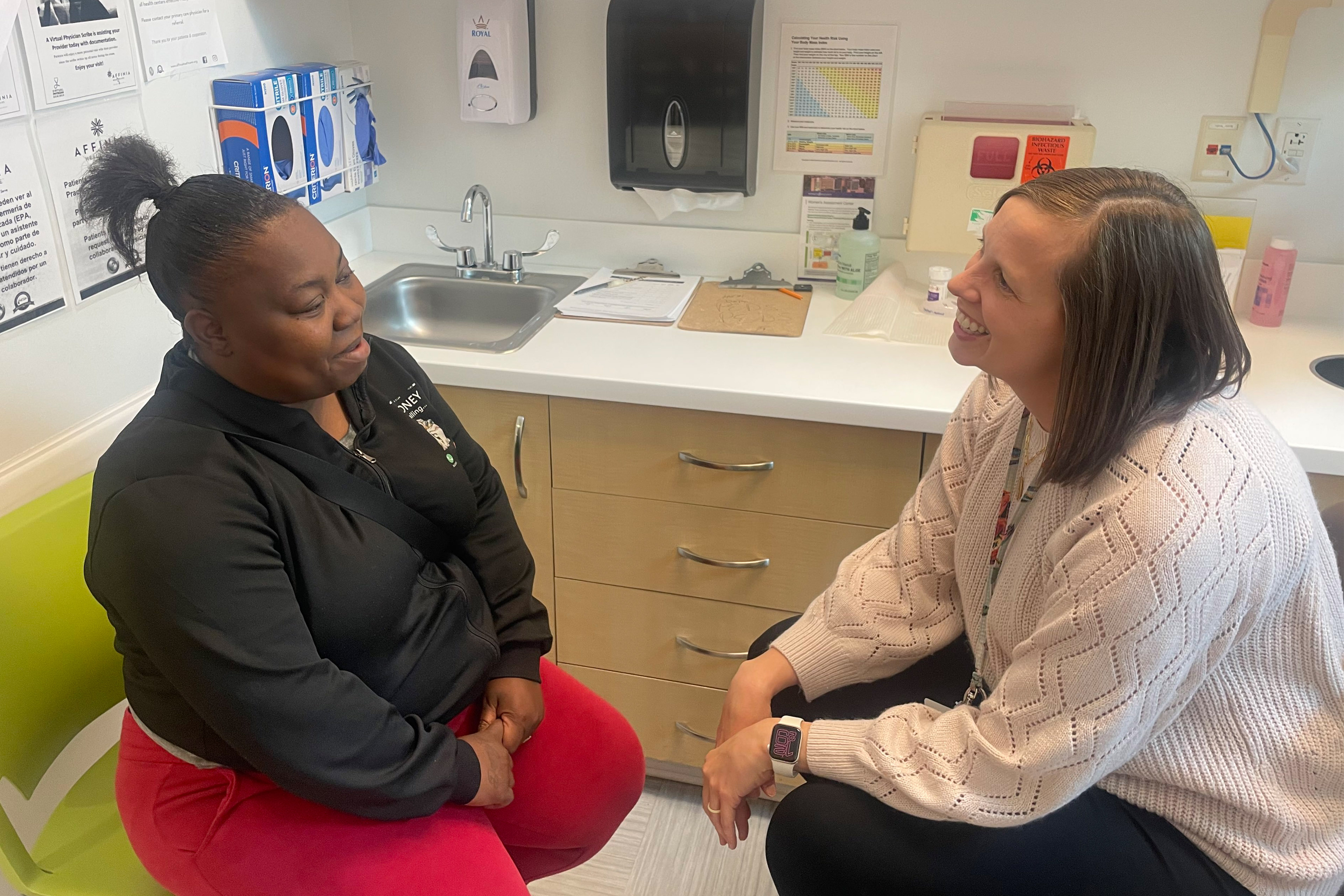
In St. Louis, Jessica Norton, an OB-GYN, treats many Medicaid patients at an Affinia Healthcare clinic. She said they struggle to remain insured even though Missouri extends a full year of Medicaid coverage to eligible women after they give birth. Some of her patients are inexplicably kicked off that coverage by the time of their checkups six weeks after birth. She fears red tape from the new work requirements will make it harder to hang on to insurance, even though pregnant women and new mothers are supposed to be exempt.
Norton criticized lawmakers for the message this policy sends to vulnerable patients. They are saying, “Oh, actually, health care is a privilege, and you have to earn it,” she said.
Nearly two-thirds of adults ages 19 to 64 on Medicaid already work, according to KFF. The reason many of the remaining adults on Medicaid are not working is that they are retired, serving as a caregiver, or too sick, KFF has found.
Some states are not only setting the strictest requirements but also blocking out the optional leniency built into the federal rules.
For example, states may adopt additional exemptions from work rules, such as allowing people to claim a “short-term hardship,” designed to provide continued Medicaid coverage to people with medical conditions that prevent them from working.
Missouri lawmakers are seeking a constitutional amendment to bar their state from offering such optional exemptions. But patient advocates warn these limits would harm the state’s vulnerable residents when they need coverage the most, particularly Missouri’s rural cancer patients.
Often, rural Missouri patients must travel to Kansas City or St. Louis for treatment, disrupting their ability to work, Emily Kalmer, a lobbyist for the American Cancer Society’s advocacy arm, testified at the January hearing. Recognizing this, the federal law provides certain exemptions for this kind of scenario.
But this short-term hardship exemption would be off the table in Missouri.
Time is “very important in the life of a cancer patient or a cancer survivor,” Kalmer said.
KFF Health News is a national newsroom that produces in-depth journalism about health issues and is one of the core operating programs at KFF—an independent source of health policy research, polling, and journalism. Learn more about KFF.This <a target="_blank" href="https://kffhealthnews.org/insurance/federal-medicaid-work-rules-one-three-months-indiana-missouri/">article</a> first appeared on <a target="_blank" href="https://kffhealthnews.org">KFF Health News</a> and is republished here under a <a target="_blank" href="https://creativecommons.org/licenses/by-nc-nd/4.0/">Creative Commons Attribution-NonCommercial-NoDerivatives 4.0 International License</a>.<img src="https://kffhealthnews.org/wp-content/uploads/sites/8/2023/04/kffhealthnews-icon.png?w=150" style="width:1em;height:1em;margin-left:10px;">
<img id="republication-tracker-tool-source" src="https://kffhealthnews.org/?republication-pixel=true&post=2228139&ga4=G-J74WWTKFM0" style="width:1px;height:1px;">]]>It started building over the summer, fed by news of immigration raids across Southern California, Trump administration plans to share Medicaid data with Immigration and Customs Enforcement, and the passage of state and federal restrictions on immigrant Medicaid eligibility. Then in November, the federal government released a new “public charge” proposal that, if enacted, could block certain immigrants from obtaining permanent legal residency if they or family members have used public benefits, including Medicaid.
Many of González’ clients and their children, often U.S. citizens, still qualify for California’s Medicaid program, known as Medi-Cal, which provides health coverage to over 14 million residents with low incomes or disabilities. But increasingly, they don’t want to enroll or renew their coverage, she said.
“Many people don’t want to apply,” she said. “There are people who say they don’t even want to go outside and water their plants.”
An analysis by KFF Health News found that, from June to December, the latest month for which figures are available, almost 100,000 immigrants without legal status left Medi-Cal, representing about a quarter of all disenrollments in that time frame, even though this group makes up only about 11% of Medi-Cal enrollees.
It marks a reversal in a steady rise in enrollment among immigrants without legal status in California. Until July, sign-ups among this group had risen every month since the state opened Medi-Cal to all low-income residents regardless of immigration status in January 2024.
Tessa Outhyse, a spokesperson for the California Department of Health Care Services, which oversees Medi-Cal, said the enrollment declines can be mostly attributed to the fact that the government restarted eligibility checks that were suspended during the covid-19 pandemic. Indeed, overall Medi-Cal enrollment peaked in May 2023, and has since declined by about 1.6 million.
But two researchers, Leonardo Cuello at Georgetown University’s Center for Children and Families and Susan Babey at the UCLA Center for Health Policy Research, pointed out that California and most other states had fully resumed eligibility checks by mid-2024. In other words, that wouldn’t explain why enrollment has fallen precipitously in the last 12 months or so.
What has changed, Cuello said, is that the federal government passed the One Big Beautiful Bill Act, and executive orders added more changes that are propelling disenrollment.
Surveys Offer Clues
A KFF/New York Times survey found immigrant adults nationally, especially parents, to be increasingly avoiding government programs that help pay for food, housing, or health care, to avoid drawing attention to their or a family member’s immigration status. That included lawfully present residents and naturalized citizens. Parental avoidance of these programs is particularly concerning, Cuello said, because about 1 in 4 children in the U.S. have an immigrant parent, even though most of those children were born in the U.S.
Cuello suspects that may help explain a nationwide enrollment drop of almost 3% in Medicaid and the Children’s Health Insurance Program during the first 10 months of last year, including a 5.6% drop in enrollment among California children, according to data compiled by Georgetown colleagues.
During the first Trump administration, the president broadened public charge criteria to allow consideration of Medicaid use and food and housing assistance. That led many citizen children and other household members to forgo Medicaid and other programs they were eligible for. Some continued to avoid the programs even after several courts blocked implementation and Democratic President Joe Biden rescinded the rule.
“It caused a high level of confusion,” said Louise McCarthy, president and CEO of the Community Clinic Association of Los Angeles County, which represents about 70 health centers in the Los Angeles area. “Community health center staff are still working to undo the effects of the first rule.”
Projected Savings
Currently, only people reliant on cash assistance programs or long-term, government-funded institutionalized care may be considered a public charge risk when applying for a visa to enter the country or to become a legal permanent resident. But under the Trump administration’s proposed rule, Medicaid and other noncash programs could be used to determine whether an immigrant is likely to become dependent on the government. Immigration officers would also have more discretion to label people a public charge.
The Department of Homeland Security’s proposal says the changes are needed because the existing rules hamper the agency’s ability to make decisions about an immigrant’s risk of becoming reliant on government resources. A public comment period for the proposal ended in December.
DHS did not respond to a request about when it plans to make a final decision on the rule. The change would “align with long-standing policy that aliens in the United States should be self-reliant and government benefits should not incentivize immigration,” the proposal states.
The agency projected the change could save federal and state governments almost $9 billion annually from people disenrolling from or forgoing enrollment in public benefit programs.
A KFF analysis of the proposed rule estimated it could result in 1.3 to 4 million people disenrolling from Medicaid or CHIP, including as many as 1.8 million citizen children.
“It’s clearly being weaponized to create fear and anxiety,” said Benyamin Chao, supervising health and public benefits policy manager at the California Immigrant Policy Center. He called the proposal part of an “assault on lawfully present immigrants and U.S. citizens who are family members, and just the general community.”
Public charge fears are expected to decrease enrollment also in anti-hunger programs, such as the Supplemental Nutrition Assistance Program, known in California as CalFresh. Mark Lowry, who heads the Orange County Food Bank, said that that — along with disenrollment related to the One Big Beautiful Bill Act — could overwhelm food pantries, since federal nutrition programs account for the vast majority of food aid.
“There’s no way that the emergency food system has the capacity or resources to address those needs,” he said.
Health Care Needs
Fear of Medi-Cal enrollment doesn’t extend to all immigrants. Juana Zaragoza manages a program in Oxnard that helps mostly Indigenous Mexican farmworkers sign up for Medi-Cal. Overall enrollment and reenrollment has remained steady over the past few months, she said. Neither she nor the community members she serves know much about the public charge proposal, she added.
Often, any concerns they have are outweighed by an immediate need for health care.
“We encounter a lot of people who are balancing: what benefits me now and what benefits me later,” she said. “Some just want to cover their needs in the moment.”
KFF Health News is a national newsroom that produces in-depth journalism about health issues and is one of the core operating programs at KFF—an independent source of health policy research, polling, and journalism. Learn more about KFF.This <a target="_blank" href="https://kffhealthnews.org/medicaid/public-charge-rule-homeland-security-medicaid-medi-cal-california-immigrants/">article</a> first appeared on <a target="_blank" href="https://kffhealthnews.org">KFF Health News</a> and is republished here under a <a target="_blank" href="https://creativecommons.org/licenses/by-nc-nd/4.0/">Creative Commons Attribution-NonCommercial-NoDerivatives 4.0 International License</a>.<img src="https://kffhealthnews.org/wp-content/uploads/sites/8/2023/04/kffhealthnews-icon.png?w=150" style="width:1em;height:1em;margin-left:10px;">
<img id="republication-tracker-tool-source" src="https://kffhealthnews.org/?republication-pixel=true&post=2178966&ga4=G-J74WWTKFM0" style="width:1px;height:1px;">]]>