Health Care Costs Archives - KFF Health News https://kffhealthnews.org/topics/health-care-costs/ KFF Health News produces in-depth journalism on health issues and is a core operating program of KFF. Fri, 24 Apr 2026 18:32:04 +0000 en-US hourly 1 https://wordpress.org/?v=6.8.5 https://kffhealthnews.org/wp-content/uploads/sites/8/2023/04/kffhealthnews-icon.png?w=32 Health Care Costs Archives - KFF Health News https://kffhealthnews.org/topics/health-care-costs/ 32 32 161476233 In Connecticut, Doctors and Dentists Are More Likely Than Hospitals To Sue Patients https://kffhealthnews.org/health-care-costs/the-week-in-brief-connecticut-doctors-dentists-medical-debt/ Fri, 24 Apr 2026 18:30:00 +0000 https://kffhealthnews.org/?p=2230134&preview=true&preview_id=2230134 How often do hospitals, physicians, and other providers sue patients over unpaid bills? 

That’s a question we’ve asked a lot over the last several years at KFF Health News. Since 2022, we’ve been working with newsrooms around the country, such as the Connecticut Mirror, to explore the scale and impact of America’s medical debt crisis. It’s part of a project we call “Diagnosis: Debt.” 

We know that this type of debt burdens many people — about 100 million adults, according to a nationwide survey we did. But in most states, it’s almost impossible to gauge how many patients are getting taken to court over health care debt. 

Connecticut’s court data is different. 

It offered an opportunity to explore just how many people are being sued over medical and dental bills, who is suing patients, and for how much. Over the past year, I’ve collaborated with CT Mirror reporters Katy Golvala and Jenna Carlesso to learn more about the people facing legal actions.

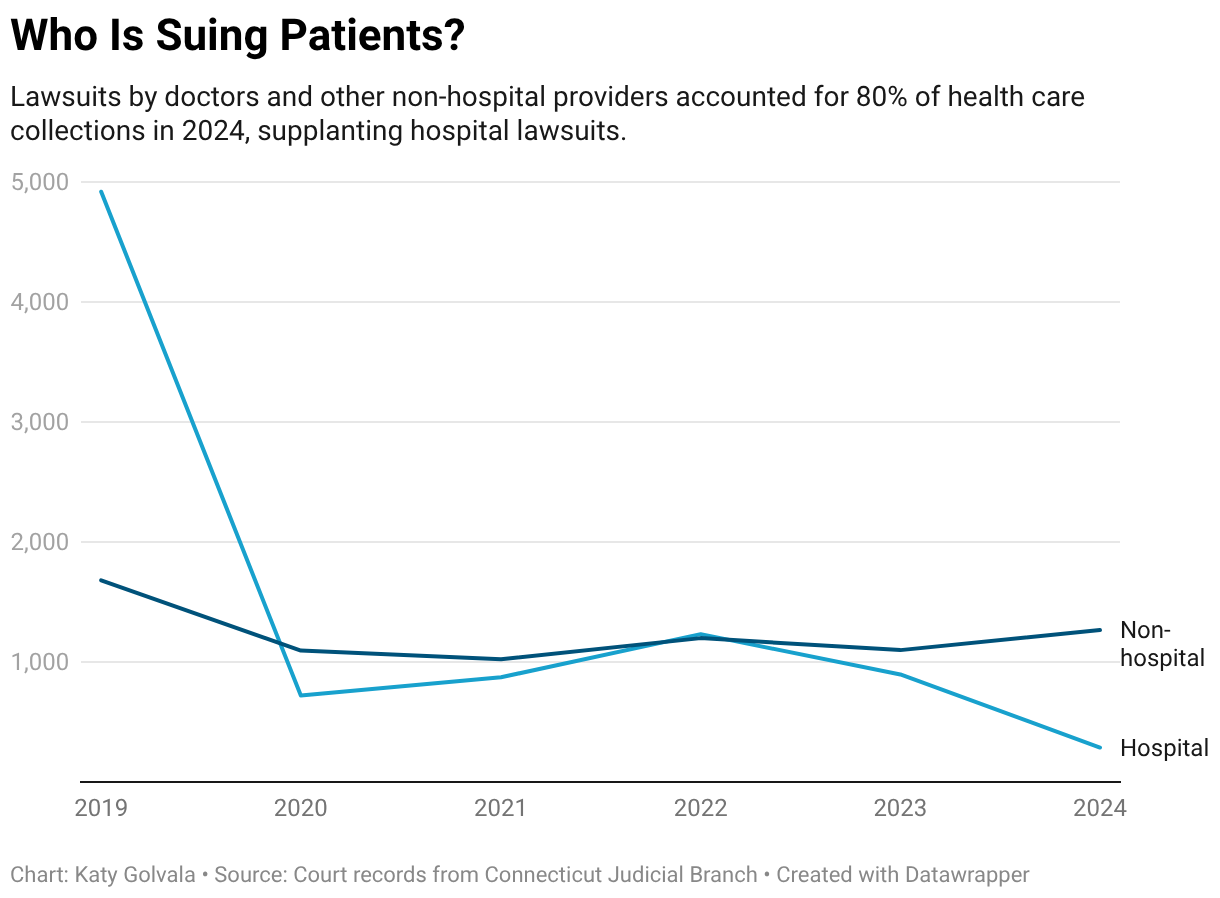
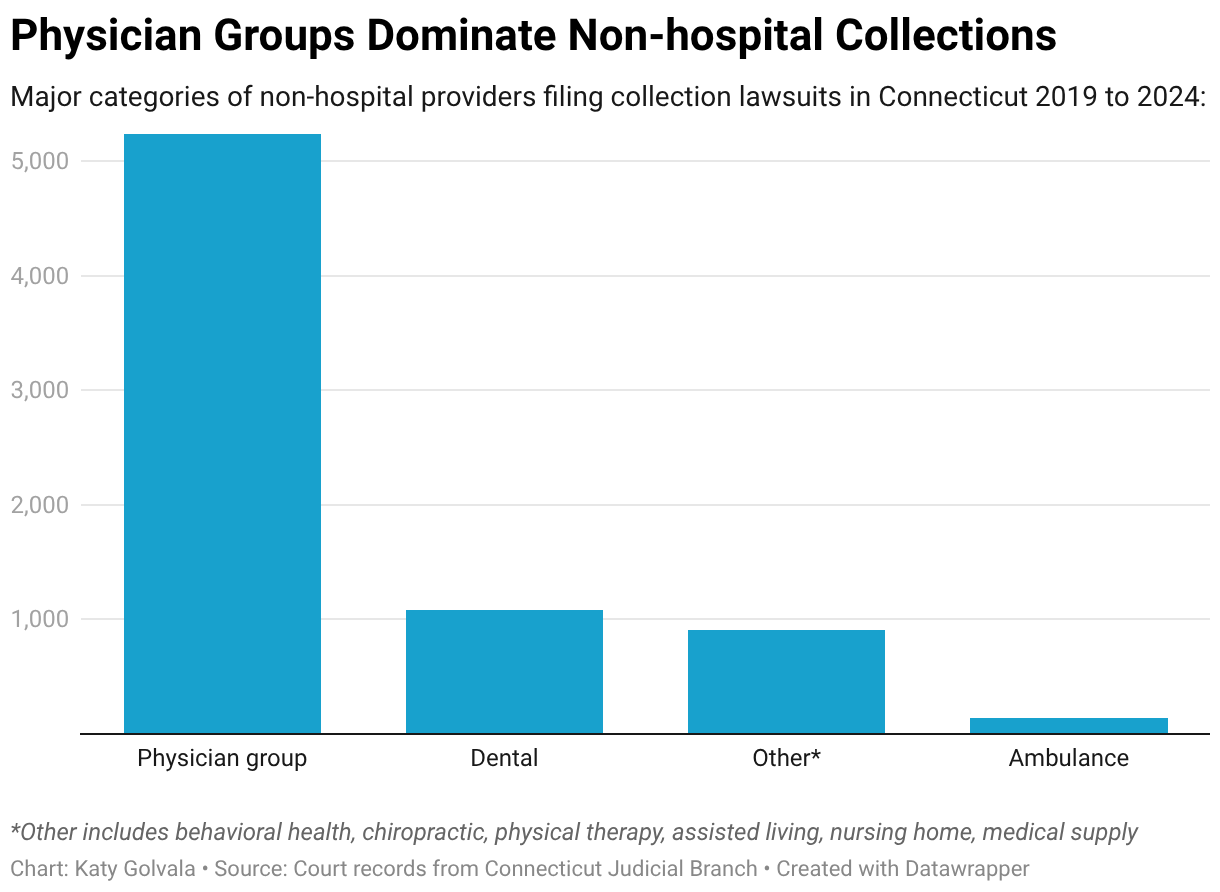
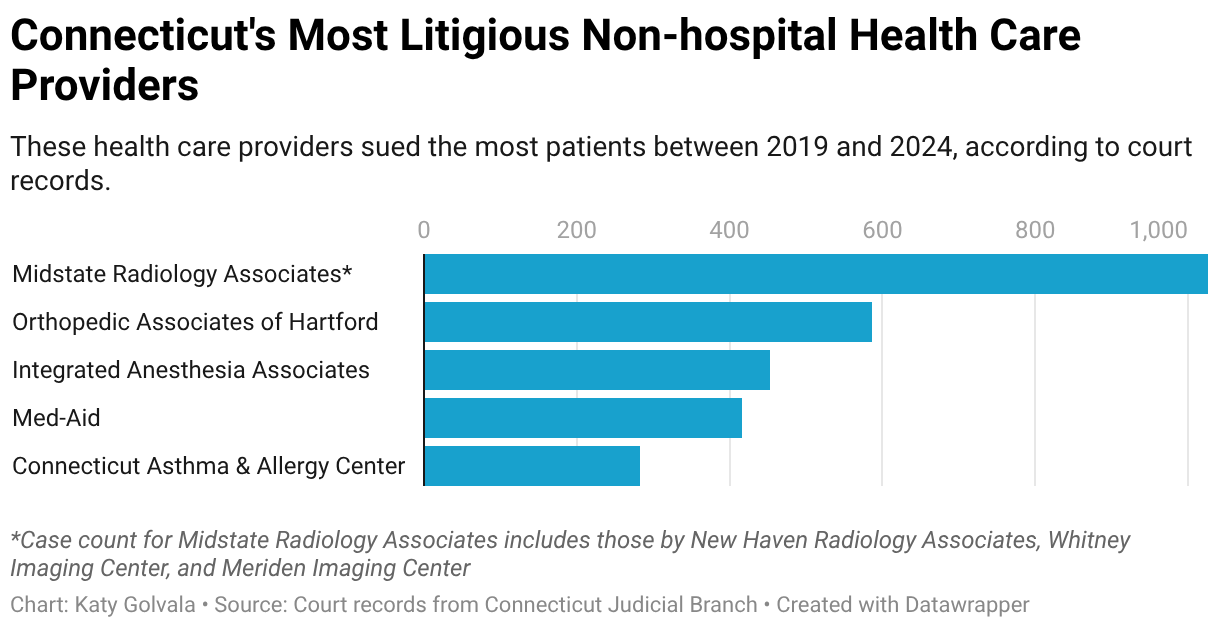
What we found was surprising … and sad. This week, we shared the first of our articles, which explores how hospitals have been supplanted by physician groups and other medical and dental providers as the most aggressive bill collectors.

That’s a major reversal from five years earlier, when hospital system lawsuits made up three-quarters of health-related collection cases in the state’s courts.

The shift is moving medical debt collections into a less regulated realm. Most hospitals, because they are tax-exempt nonprofits, must make financial aid available to low-income patients and follow federal regulations that limit aggressive collection activities. Other medical providers, such as private medical groups, are generally exempt from these rules. 

Lawsuits can lead to garnished wages, liens on homes, and hundreds of dollars of added debt from interest and court fees. They also pile additional financial strains on struggling families, prevent patients from getting needed care, and sap trust in medical providers.

“It’s really messed up,” said Allie Cass-Wilson, a nurse in Bristol, Connecticut, who was sued over a $1,972 debt by an OB-GYN practice where she’d been a patient years earlier. She did not contest the lawsuit, court records show. Still, she asked: “How can they do that to people?”

KFF Health News is a national newsroom that produces in-depth journalism about health issues and is one of the core operating programs at KFF—an independent source of health policy research, polling, and journalism. Learn more about KFF.

This <a target="_blank" href="https://kffhealthnews.org/health-care-costs/the-week-in-brief-connecticut-doctors-dentists-medical-debt/">article</a&gt; first appeared on <a target="_blank" href="https://kffhealthnews.org">KFF Health News</a> and is republished here under a <a target="_blank" href="https://creativecommons.org/licenses/by-nc-nd/4.0/">Creative Commons Attribution-NonCommercial-NoDerivatives 4.0 International License</a>.<img src="https://kffhealthnews.org/wp-content/uploads/sites/8/2023/04/kffhealthnews-icon.png?w=150&quot; style="width:1em;height:1em;margin-left:10px;">

<img id="republication-tracker-tool-source" src="https://kffhealthnews.org/?republication-pixel=true&post=2230134&amp;ga4=G-J74WWTKFM0&quot; style="width:1px;height:1px;">]]>
2230134
Watch: Acknowledging Health Care’s Great Divide https://kffhealthnews.org/health-industry/health-care-policy-political-divide-david-blumenthal-interview/ Thu, 23 Apr 2026 19:00:58 +0000 https://kffhealthnews.org/?p=2230749 In this “How Would You Fix It?” interview, Julie Rovner, KFF Health News’ chief Washington correspondent and host of the What the Health? podcast, sat down with David Blumenthal — a physician, health policy expert, former Obama administration official, and author — to explore the dynamics that make fixing the nation’s health care system so difficult.

They discussed the pivotal role the president of the United States plays in health policy — whether it is building support for or opposition to new plans and proposals. “Presidents have a level of authority which is often underappreciated, especially in health care,” Blumenthal said.

Blumenthal and Rovner also discussed the historical reasons the U.S. has been unable to enact universal health care, incrementalism versus sweeping change, and what he described as “the dance” between proponents and opponents — usually a clear party-line split between Democrats and Republicans — of major health care reforms.

Today, the split seems to have come to a head, as public health, science, and expertise are being viewed by one end of the political spectrum as “the opposition,” Blumenthal said, which will complicate efforts. Still, he outlined ideas for moving forward.

An abbreviated version of this interview aired April 23 on Episode 443 of What the Health? From KFF Health News: “RFK Jr. vs. Congress.”

Blumenthal’s latest book, Whiplash: From the Battle for Obamacare to the War on Science, co-written with James A. Morone, offers a behind-the-scenes look at how three presidential administrations pursued very different health policy goals.

KFF Health News is a national newsroom that produces in-depth journalism about health issues and is one of the core operating programs at KFF—an independent source of health policy research, polling, and journalism. Learn more about KFF.

This <a target="_blank" href="https://kffhealthnews.org/health-industry/health-care-policy-political-divide-david-blumenthal-interview/">article</a&gt; first appeared on <a target="_blank" href="https://kffhealthnews.org">KFF Health News</a> and is republished here under a <a target="_blank" href="https://creativecommons.org/licenses/by-nc-nd/4.0/">Creative Commons Attribution-NonCommercial-NoDerivatives 4.0 International License</a>.<img src="https://kffhealthnews.org/wp-content/uploads/sites/8/2023/04/kffhealthnews-icon.png?w=150&quot; style="width:1em;height:1em;margin-left:10px;">

<img id="republication-tracker-tool-source" src="https://kffhealthnews.org/?republication-pixel=true&post=2230749&amp;ga4=G-J74WWTKFM0&quot; style="width:1px;height:1px;">]]>
2230749
Medigap Premiums Leap, and Consumers Have Few Alternatives https://kffhealthnews.org/medicare/medigap-medicare-advantage-premiums-rate-increase-few-alternatives/ Thu, 23 Apr 2026 09:00:00 +0000 https://kffhealthnews.org/?p=2228699 After decades of selling insurance, Illinois-based broker John Jaggi had never seen anything like it.

More than 80 of his customers who were enrolled in the same Medicare supplemental plan from the insurer Chubb got hit last August with a 45% increase.

“In my 49 years of doing biz as a broker, I’ve never seen a premium increase be effective immediately on everyone, instead of on their policy anniversary,” said Jaggi, whose brokerage scrambled to find more affordable options for clients. The policies pick up deductibles and other costs not covered in traditional Medicare, and without one there is no upper limit on how much a consumer might owe each year.

While 45% was an unusually big jump, Jaggi and other brokers say double-digit premium increases for Medicare supplemental, or Medigap, policies are becoming the norm.

A Chubb spokesperson did not respond to requests for comment on the increase.

More than 12 million people — about 43% of those in traditional Medicare — buy a Medigap policy. Others rely on some sort of retiree employer coverage or a different backup. About 13% of people in traditional Medicare don’t have supplemental coverage, according to KFF, meaning they could be vulnerable to large costs if they have a serious illness.

In the supplemental market, following big increases last year, rates appear to be rising again. In early 2026 filings with state insurance commissioners from Aetna, Blue Cross Blue Shield, Cigna, Humana, Mutual of Omaha, and UnitedHealthcare, rate increases for Plan G policies — the most commonly purchased supplement type — ranged from just over 12% to more than 26% in the first quarter, according to Nebraska-based consulting firm Telos Actuarial.

“While this is a small dataset across a select number of states, it’s an indication that carriers are looking to correct their premium rates in light of upward pressure on their claims experience,” said Brett Mushett, a consulting actuary with Telos.

Climbing Numbers

Premium rates vary based on the type of coverage chosen, where a beneficiary lives, and their age. For Plan G coverage, beneficiaries paid an average monthly premium of $164 in 2023, according to KFF. That amount has likely risen since.

“In some states, like Ohio, Medicare supplements for years would have a 3% to 5% year-over-year increase. Now it’s 10% to 15%,” said Amanda Brewton, owner of Medicare Answers Now, a marketing organization whose clients are sales agents.

In Alaska, Premera Blue Cross raised the premiums on its Plan G policies by nearly 12% for this year, according to rate sheets provided to KFF Health News by insurance agent Patricia Mack, who said another insurer raised rates by nearly 13%.

For example, a 65-year-old woman who last year would have been charged $172 a month for a Plan G policy would now face a monthly rate of $192, said Mack, who owns Alaska Insurance Benefits in Wasilla.

Premera spokesperson Courtney Wallace said in an email that Medicare makes changes to deductible and copayment rates each year, which affects supplemental plans that cover those increasing amounts.

Wallace also noted that the insurer saw higher medical service use among its members, “which further drove claims costs and ultimately impacted premiums.”

Agents and policy experts blame a range of factors for rising premiums: an increase in the use of medical services by beneficiaries; the aging of the population; increases in labor and medical costs; rules in some states governing Medigap plans; and people’s enrolling in — or getting out of — private Medicare Advantage plans.

“Five years ago, it was exceedingly uncommon to have a carrier with a rate increase of more than 10%. Now it’s very uncommon to see a rate increase below 10%, and it’s not uncommon to see it over 20%,” said Chalen Jackson, vice president for government affairs at Integrity, a Dallas-based company that sells life and health insurance.

Jaggi, who co-owns Jaggi Petry Insurance & Investments in Forsyth, Illinois, along with his daughter, said he eventually found other options for many of those 80-plus clients with the large increase, which came from an insurer that had previously been the lowest-cost option. But it wasn’t easy — and continuing increases are expected.

“These are unbelievable increases,” said Jaggi, who said he is seeing premium hikes exceeding 15% this year across a range of insurers.

Policy experts have outlined possible solutions, including for Congress to cap out-of-pocket costs for Medicare beneficiaries or subsidize the purchase of Medigap coverage.

“Traditional Medicare is the only federal health insurance program without an out-of-pocket cap,” Sen. Ron Wyden (D-Ore.) wrote in an email, adding that the program “needs to be updated and strengthened to protect the Medicare guarantee for American seniors.”

But making changes to Medicare that require congressional approval is unlikely in the current legislative environment, especially because adding an out-of-pocket cap would add costs to the federal budget.

How This Plays Out

People generally qualify for Medicare when they turn 65. Beneficiaries have six months after they initially enroll in the traditional fee-for-service program to purchase a Medigap plan at standard rates without having to answer health-related questions.

Strict rules then kick in around when beneficiaries can enroll in or switch Medigap coverage and options become much more limited, with each one generally involving trade-offs or tough choices.

At least 16 states have what’s known as a “birthday rule,” which requires insurers once a year to allow people enrolled in a Medigap plan to change to different supplemental coverage — usually around their birthdays — without being medically underwritten. Those rules can help consumers, including those with health conditions, to switch.

An additional four states — Connecticut, Massachusetts, Maine, and New York — require insurers to offer at least one Medigap policy to all applicants either year-round or during an annual enrollment period, depending on the state. Changes are allowed no matter the person’s health.

Another option for those facing high Medigap costs is to leave traditional Medicare and enroll in a private-sector Medicare Advantage plan, which have out-of-pocket caps. But joining one means beneficiaries must generally rely on a set of in-network doctors and hospitals. And if they change their mind and want to go back to traditional Medicare, they have only a 12-month window in which to purchase a Medigap plan without passing health questions. After that, it can be more difficult.

“A lot of people don’t know that if they are in Medicare Advantage for a year, they can get turned down by a Medigap plan or charged really high premiums because of a preexisting condition, which for many people effectively traps them in MA plans,” said Brian Keyser, a research associate at the liberal Center for American Progress and co-author of a recent report on the issue.

There are some exceptions. For example, if a Medicare Advantage plan withdraws from a market or leaves the Medicare program, its enrollees can qualify for a supplemental plan without being asked health questions or charged more for having preexisting conditions.

For this year alone, about 2.6 million people lost Medicare Advantage coverage when their insurer pulled out of their markets, according to KFF, and more than a million lost coverage for 2025. Many switched to other MA plans, but “somewhere around 440,000 of those people did go to a Medicare supplement policy,” sometimes because there was no other MA plan in their area, said George Dippel, president of Deft Research, a Minneapolis-based market research organization focused on insurance for older people. Deft is part of Integrity, the Dallas company.

Some Medicare experts note that anytime insurers enroll people whose health status they can’t consider — whether because of birthday rules or because their Medicare Advantage plan left the market and thus qualified them for an exemption from medical underwriting — it potentially exposes them to more health care utilization and higher costs, making them more likely to increase premiums across the board to offset the possible financial hit.

Another option mentioned by brokers for people looking to lower their costs is to consider one of the two types of Medigap plans that come with a deductible, which is currently just under $3,000 for a year. Those plans charge far lower monthly premiums than Medigap plans that pick up a much larger portion of annual amounts people must pay toward their Medicare services.

Still, “a lot of people are not comfortable with a $3,000 deductible,” Mack said.

KFF Health News is a national newsroom that produces in-depth journalism about health issues and is one of the core operating programs at KFF—an independent source of health policy research, polling, and journalism. Learn more about KFF.

This <a target="_blank" href="https://kffhealthnews.org/medicare/medigap-medicare-advantage-premiums-rate-increase-few-alternatives/">article</a&gt; first appeared on <a target="_blank" href="https://kffhealthnews.org">KFF Health News</a> and is republished here under a <a target="_blank" href="https://creativecommons.org/licenses/by-nc-nd/4.0/">Creative Commons Attribution-NonCommercial-NoDerivatives 4.0 International License</a>.<img src="https://kffhealthnews.org/wp-content/uploads/sites/8/2023/04/kffhealthnews-icon.png?w=150&quot; style="width:1em;height:1em;margin-left:10px;">

<img id="republication-tracker-tool-source" src="https://kffhealthnews.org/?republication-pixel=true&post=2228699&amp;ga4=G-J74WWTKFM0&quot; style="width:1px;height:1px;">]]>
2228699
Montana Moves Ahead With Doula Pay but Warns Medicaid Cuts Still May Come https://kffhealthnews.org/medicaid/doula-care-pregnancy-medicaid-montana-budget-cuts/ Wed, 22 Apr 2026 09:00:00 +0000 https://kffhealthnews.org/?p=2229052 Montana officials said they are moving forward with plans to allow Medicaid to pay doulas, reversing a previous statement that budget problems had prompted them to pause the effort to reimburse the birth workers.

But officials warned that all optional Medicaid services are still under review as the state health department looks for cuts to offset a shortfall driven by higher-than-expected Medicaid costs.

Jon Ebelt, a spokesperson with the Montana Department of Public Health and Human Services, said the agency is preparing a request to the federal government to add doula care to the state’s Medicaid program. It would cost the state about $118,000 in its first year to provide doula Medicaid reimbursements, according to state estimates.

His April 15 comments came three weeks after department officials told KFF Health News that the state budget deficit had put those plans on hold. Ebelt denied that a final decision had been made in March to scrap the doula Medicaid payments, which state lawmakers approved in a bill last year. The coverage is “now proceeding as planned,” he said.

“At the time of your initial inquiry, we were still in the process of analyzing the appropriation,” Ebelt said.

Federal health officials must approve any amendments to the state’s Medicaid program before payments can begin. At least 25 other states reimburse doulas through Medicaid.

Doulas are trained, nonmedical workers who support people through pregnancy and after they give birth. The care they provide is linked to reductions in health complications, which has prompted more states to cover doula services in recent years.

Montana lawmakers who supported expanding Medicaid to cover doula care in 2025 cited scarce maternity services, especially in rural and Indigenous communities. But this year, the state has a Medicaid budget deficit of more than $177 million and is expecting a similar shortfall next year. Plus, federal policy changes slated to take effect later this year are expected to increase costs.

“ There’s a need and a desire for doula services, but a lot of people can’t afford it,” said Sheri Walker, a Helena-based doula and president of the Montana Doula Collaborative. “So that means many of us have other jobs that we have to juggle.”

Walker is a part-time labor and delivery nurse outside of her doula work.

On March 25, health department spokesperson Holly Matkin said in an email to KFF Health News that the agency “will not be moving forward with the implementation of doula services in the Montana Medicaid benefit package at this time.” She had added that it was unclear whether state law gives the department the authority to authorize coverage during the budget shortfall.

State Sen. Cora Neumann, a Democrat who sponsored last year’s bipartisan doula reimbursement bill, said she didn’t know about the department’s plans until she saw KFF Health News’ reporting. Neumann said she and groups that had backed the legislation began calling health officials, making the case for doula services as a low-cost way to provide critical care.

After about a week, Neumann said, state officials told her the agency was moving ahead with doula services after all.

“They were on the chopping block,” Neumann said. “This is a story of how important it is for all Montanans to pay attention and stay connected to what’s happening.”

Ebelt did not clarify what led the department to change its position. However, he warned that optional Medicaid services, such as doula services, may still be cut.

“All optional services, including this service, are being reviewed,” Ebelt said, referring to doula care. He did not respond to a follow-up query as to whether the department might still decide to postpone the program following federal approval.

Optional services are types of care that states choose to cover through their Medicaid programs but aren’t required by federal law. That can include covering eyeglasses, prescription drugs, and prosthetics, and more specialized care such as physical therapy, or inpatient psychiatric services for people under 21.

Those services may not sound optional, said Liz Williams, who studies Medicaid financing at KFF, a health information nonprofit that includes KFF Health News. But she said they’re one of the few avenues states have to make adjustments when budgets get tight.

Congressional Republicans’ One Big Beautiful Bill Act, the spending measure President Donald Trump signed into law last July, is expected to put more states in a budget crunch as its provisions start to take effect by the end of the year. The federal government has estimated that the law will reduce federal Medicaid spending by nearly $1 trillion over 10 years. The law also left states with a higher share of the costs to provide food assistance.

Williams said many states expanded services in recent years by boosting optional Medicaid benefits and provider pay.

“We could see them walk those back,” Williams said.

Montana’s financial problems preceded federal changes. Last year, state lawmakers cut some of the health department’s funding and underestimated Medicaid use. The state also overestimated what the federal government would pay toward Montana’s Medicaid costs.

Health officials must outline a plan to cut costs before the state’s 2027 budget year begins on July 1. Simultaneously, the agency is trying to hire more staffers to begin vetting whether Medicaid enrollees meet or are exempt from new work requirements that also go in place July 1. The new rules, mandated through long-delayed state legislation and the federal spending law, will have a three-month grace period.

Stephanie Morton, executive director of Healthy Mothers, Healthy Babies-The Montana Coalition, said she’s grateful the state is back on track to pay for doula services through Medicaid. But she said she’s worried about potential health care cuts to come.

“We know that doulas are a critical piece of that infrastructure, but standing alone and losing other sources of care really isn’t optimal,” Morton said. “These are not robust systems as it stands.”

KFF Health News is a national newsroom that produces in-depth journalism about health issues and is one of the core operating programs at KFF—an independent source of health policy research, polling, and journalism. Learn more about KFF.

This <a target="_blank" href="https://kffhealthnews.org/medicaid/doula-care-pregnancy-medicaid-montana-budget-cuts/">article</a&gt; first appeared on <a target="_blank" href="https://kffhealthnews.org">KFF Health News</a> and is republished here under a <a target="_blank" href="https://creativecommons.org/licenses/by-nc-nd/4.0/">Creative Commons Attribution-NonCommercial-NoDerivatives 4.0 International License</a>.<img src="https://kffhealthnews.org/wp-content/uploads/sites/8/2023/04/kffhealthnews-icon.png?w=150&quot; style="width:1em;height:1em;margin-left:10px;">

<img id="republication-tracker-tool-source" src="https://kffhealthnews.org/?republication-pixel=true&post=2229052&amp;ga4=G-J74WWTKFM0&quot; style="width:1px;height:1px;">]]>
2229052
They’re in Remission, but Their Medical Bills Aren’t: Cancer Survivors Navigate Soaring Costs https://kffhealthnews.org/health-care-costs/cancer-survival-costs-testing-treatment-premiums-deductibles-trump/ Wed, 22 Apr 2026 09:00:00 +0000 https://kffhealthnews.org/?p=2229400 Nearly four years after doctors declared Marielle Santos McLeod free of colon cancer, she has yet to feel liberated from the burden of medical expenses.

McLeod, who lives near Charleston, South Carolina, is still paying off chemotherapy bills that followed her 2017 diagnosis. She also now faces an onslaught of out-of-pocket costs for follow-up monitoring and care, including regular visits to a pulmonologist and allergist.

McLeod, 45, said she had already spent $2,500 in the first two months of the year and owes an additional $1,300 from a January colonoscopy. That’s on top of the $895 monthly premium for a health insurance plan that covers her family of six.

Those costs have led McLeod to ration her other care. Despite feeling intense chest pain since February, for example, she is putting off a CT scan and a visit to a heart specialist.

“You’re forced to pick and choose as to where your priorities really need to be,” said McLeod, director of strategic programs and partnerships at the Cancer Hope Network, a nonprofit that supports cancer patients. Even in that role, she struggles to navigate the financial aftermath of surviving the disease.

The cost of postcancer care often “keeps us hostage,” she said.

McLeod is one of nearly 19 million U.S. cancer survivors, many of whom continue to need prescriptions, doctor visits, and procedures to monitor their condition and manage posttreatment side effects. Of more than 1,200 cancer patients and survivors surveyed in 2024, about 47% said they had carried medical debt, with nearly half having owed more than $5,000, according to the American Cancer Society Cancer Action Network.

Marielle Santos McLeod poses, smiling, during chemo treatment. She holds up fingers on her left and right hands, totaling eight.
McLeod feels burdened by the cost of colon cancer treatment, even though she’s in remission. She’s still paying off chemotherapy bills that followed her 2017 diagnosis, on top of out-of-pocket costs for follow-up monitoring and care. (Gordon McLeod)

Yet health policy researchers and patient advocates said the experiences of cancer survivors reveal the limits of the Trump administration’s proposals to lower premiums, which may not help patients who accumulate large medical bills year after year. The proposals center on increasing the availability of high-deductible health plans, which have lower monthly payments but require patients to pay thousands of dollars out-of-pocket before coverage kicks in.

In addition, the administration has supported allowing insurers more leeway to sell plans that are not compliant with the Affordable Care Act. Such plans could bar people who have preexisting health conditions, like a cancer diagnosis, and exclude essential benefits that ACA plans are required to cover.

The administration did not answer a request for comment on how its proposals would affect cancer survivors. But its supporters say, in general, people would have more flexibility to personalize coverage and more options for plans with lower monthly fees.

Michael Cannon, director of health policy studies at the Cato Institute, a libertarian think tank, believes patients would have better control over spending, and the option to choose what kind of care gets covered, if health plans were exempted from the ACA’s regulations. A person could opt for a plan that includes cancer treatment but not maternity care, for example.

History proves insurance coverage is not that simple, especially for people with preexisting conditions, said Jennifer Hoque, an associate policy principal with the American Cancer Society Cancer Action Network. When health plans could “pick and choose” enrollees based on preexisting conditions prior to the ACA, people needing the costliest care often struggled to find coverage, she said.

“They’re not going to choose a cancer survivor,” Hoque said of health insurers.

That was the case for Veronika Panagiotou, who said private insurers refused her coverage back in September 2013 because she had a high body mass index. Two months later, as a 25-year-old uninsured graduate student, she was diagnosed with non-Hodgkin lymphoma. The hospital treated her, she recalled, “and sent me all the bills.”

In January 2014, Panagiotou was able to buy one of the first ACA plans that went into effect. It covered chemotherapy and immunotherapy treatment, imaging, medications, hospital stays, weekly blood draws, a blood transfusion, and emergency room visits.

Now Panagiotou, 37, is cancer-free and works as director of advocacy and programs at Cancer Nation, a nonprofit advocacy group. Even though she is covered through her employer, Panagiotou said treatment-related expenses weigh heavily on her life decisions.

“Every choice I make, I think about cancer,” she said.

A woman stands inside at an office. She is smiling.
Veronika Panagiotou was 25 years old and uninsured in 2013 when she was diagnosed with non-Hodgkin lymphoma. The hospital treated her, she says, “and sent me all the bills.” Now she’s cancer-free and insured through work. But treatment-related expenses still weigh heavily on her life decisions, she says. (Kara Kenan)

Chris Bond, a spokesperson for AHIP, the main health insurance trade association, said its members are working to improve access to coverage. But that can be a challenge when doctors and drugmakers are hiking prices, he said. Health plans are trying to “shield Americans from the full impact of those rising costs,” Bond said.

The Lymphoma Research Foundation has seen a 10% increase in applications to its patient aid fund this year, CEO Meghan Gutierrez said. “This trajectory suggests that financial safety nets, when they exist, are straining,” she said.

Rising prices are affecting everyone, regardless of the kind of health insurance they have, if any, said Brian Blase, president of Paragon Health Institute, a Republican-aligned think tank. “The biggest challenge for cancer patients isn’t the type of coverage,” he said. “It’s the underlying cost of care.”

Blase pointed to President Donald Trump’s focus on lowering drug prices as potentially helpful to cancer survivors. The Medicare Drug Price Negotiation Program, established by the Inflation Reduction Act of 2022, required the Department of Health and Human Services to negotiate prices for certain high-cost drugs, to lower prices for the federal health insurance program for people ages 65 and older. Drugs for breast, prostate, and kidney cancers are already on that list, according to KFF.

Yet Hoque fears efforts to weaken ACA protections and financial support for marketplace plans will give cancer survivors — who she said tend to “hang on to insurance for dear life” — fewer options, especially between jobs or during career changes.

Erin Jones, a 31-year-old food policy researcher living in Fort Collins, Colorado, who was diagnosed with Hodgkin lymphoma as a young adult, is now cancer-free but still sees two oncologists, visits a high-risk breast clinic, and gets a breast MRI annually. Jones gets health insurance through the university where she works, and said she recently deferred acceptance to a PhD program partly due to uncertainty over affordable coverage.

“I don’t have the freedom to do the things I want to do as easily,” she said, “because I am constantly worried about health insurance.”

Costs related to surviving cancer, including monitoring for recurrence and treatment of side effects, were expected to reach $246 billion by 2030, up from $183 billion in 2015, according to research published in 2020.

Advancements in both detecting and curing cancer have resulted in a higher percentage of people surviving five years or more after diagnosis, according to the American Cancer Society. The number of survivors is expected to grow to more than 22 million people by 2035, estimates show.

Despite these advancements, the cost of treatment can steal the spotlight, said Ezekiel Emanuel, a co-director of the Healthcare Transformation Institute at the University of Pennsylvania and a onetime health policy adviser to former President Barack Obama.

An oncologist, Emanuel said he had observed patients make the difficult decision to delay or skip postcancer care as a result.

“Even when we triumph,” he said, “we don’t seem to be able to have a celebration.”

Are you struggling to afford your health insurance? Have you decided to forgo coverage? Click here to contact KFF Health News and share your story.

KFF Health News is a national newsroom that produces in-depth journalism about health issues and is one of the core operating programs at KFF—an independent source of health policy research, polling, and journalism. Learn more about KFF.

This <a target="_blank" href="https://kffhealthnews.org/health-care-costs/cancer-survival-costs-testing-treatment-premiums-deductibles-trump/">article</a&gt; first appeared on <a target="_blank" href="https://kffhealthnews.org">KFF Health News</a> and is republished here under a <a target="_blank" href="https://creativecommons.org/licenses/by-nc-nd/4.0/">Creative Commons Attribution-NonCommercial-NoDerivatives 4.0 International License</a>.<img src="https://kffhealthnews.org/wp-content/uploads/sites/8/2023/04/kffhealthnews-icon.png?w=150&quot; style="width:1em;height:1em;margin-left:10px;">

<img id="republication-tracker-tool-source" src="https://kffhealthnews.org/?republication-pixel=true&post=2229400&amp;ga4=G-J74WWTKFM0&quot; style="width:1px;height:1px;">]]>
2229400
Real Estate Investors Profit From Long-Term Care While Residents Languish https://kffhealthnews.org/health-industry/real-estate-investment-trusts-senior-housing-nursing-homes-profit/ Tue, 21 Apr 2026 09:00:00 +0000 https://kffhealthnews.org/?p=2228343 By the time she was hospitalized in 2020, Pearlene Darby, a retired teacher, had suffered open sores on both legs, both hips, and both heels, as well as a five-inch-long gash on her tailbone. She died two weeks later at age 81 from infections and bedsores, according to her death certificate. Her daughter sued the nursing home, alleging it had left Darby sitting in her own feces and urine time and again.

The lawsuit, settled on confidential terms last year, blamed not only the managers of City Creek Post-Acute and Assisted Living but also the building’s owner, a real estate investment trust, or REIT.

In the year Darby died, City Creek paid CareTrust REIT more than $1 million in rent, while the Sacramento, California, nursing home ran a deficit, court records show.

Federal tax rules ban REITs from running health care facilities, but CareTrust was not an absentee landlord either, according to internal records filed in the case. It chose the nursing home’s management company and required through the lease that the home keep at least 80% of beds occupied. CareTrust granularly tracked how well the home kept to its financial plan, down to the money spent monthly on nurses and food, the records said. And the documents showed that the real estate company kept tabs on government safety inspection findings and Medicare quality ratings.

A man in a maroon t-shirt and a woman wearing glasses flex their arms together for a portrait
Pearlene Darby, a resident of a Sacramento, California, nursing home, was hospitalized with bedsores and an infection. A surgeon said she was too fragile to survive surgery, her daughter’s lawsuit alleged. The home denied liability and the case was settled out of court. She is pictured here with her grandson Caleb Darby. (Shirlene Darby)

Both CareTrust and the nursing home operator denied liability for Darby’s death. CareTrust officials said in court papers that it is not involved in day-to-day nursing home decisions or patient care, and that it monitors facilities to ensure nothing jeopardizes rent payments. In a written statement, CareTrust Corporate Counsel Joseph Layne told KFF Health News: “We are the property owners, not the operators.”

Landlords With Influence

Over the past decade, real estate investment trusts have bought thousands of buildings that house nursing homes, hospitals, assisted living facilities, and medical offices. A KFF Health News examination of court filings and corporate records shows that these landlords have more influence than the health care facilities publicly acknowledge.

The documents reveal REITs often select the management who oversee the operations and leave them in place even when they are aware of threadbare staffing, floundering governance, repeated safety violations, or other problems that hamper quality of care. A California jury in March awarded $92 million in punitive damages against a former REIT over the death of a 100-year-old resident with dementia who froze to death outside her assisted living facility.

“The REITs are in charge,” said Laraclay Parker, one of the lawyers who represent Darby’s daughter.

Absence of Oversight

Despite their ubiquity, REITs remain invisible to state and federal health regulators. Hospitals and nursing homes are not required to disclose rent payments or landlord identities in the annual reports they submit to Medicare.

Under President Donald Trump, the Centers for Medicare & Medicaid Services indefinitely suspended a Biden-era requirement that nursing homes disclose REIT involvement. Catherine Howden, a CMS spokesperson, said in a statement that the agency does not regulate facilities based on their tax status or corporate form and instead focuses on the quality of the care they provide.

REITs now own a fifth of the nation’s senior housing, which includes assisted living, memory care, and independent living, according to an industry analysis. REITs also hold investments in 1 in 6 nursing homes. Publicly traded REITs that focus on health care are now worth nearly a quarter of a trillion dollars, according to Nareit, an industry association.

While one research study found REIT investments were associated with higher spending on nursing wages, another concluded that after being bought by REITs, nursing homes frequently replaced registered nurses with less skilled nurses and aides. A third analysis concluded that health inspection results were worse after REIT investment.

Researchers also found that investor-owned hospital chains that sold buildings to REITs were more likely to close or go bankrupt, as happened in 2024 with Steward Health Care. Often, private equity investors kept the sale proceeds as profits while the hospitals were burdened with new rent costs. “There were no improvements in clinical outcomes,” said Thomas Tsai, an associate professor at the Harvard T.H. Chan School of Public Health.

REITs are required to distribute most of their income and don’t have to pay the 21% federal corporate income tax on it. There is a catch: A REIT that “directly or indirectly operates or manages” a health care facility loses the tax break for five years. Typically, a REIT leases the property to another company that runs the nursing home or assisted living facility and maintains its tax break. Nareit said health care REITs distributed more than $7 billion in dividends in 2024.

Michael Stroyeck, head of health care analysis at Green Street, a real estate research company, said “there’s definitely a symbiotic relationship” between REITs and facility managers because they have the same goals. He said he has seen REITs replace operators that are having difficulties or go bankrupt.

John Kane, a senior vice president at the American Health Care Association and the National Center for Assisted Living, an industry group that represents nursing homes, said in a statement: “Given government funding often falls short, REITs have been valuable partners in helping to invest in long term care without influencing daily operations.”

A man holds a paper photograph of a woman in his hands for a photo
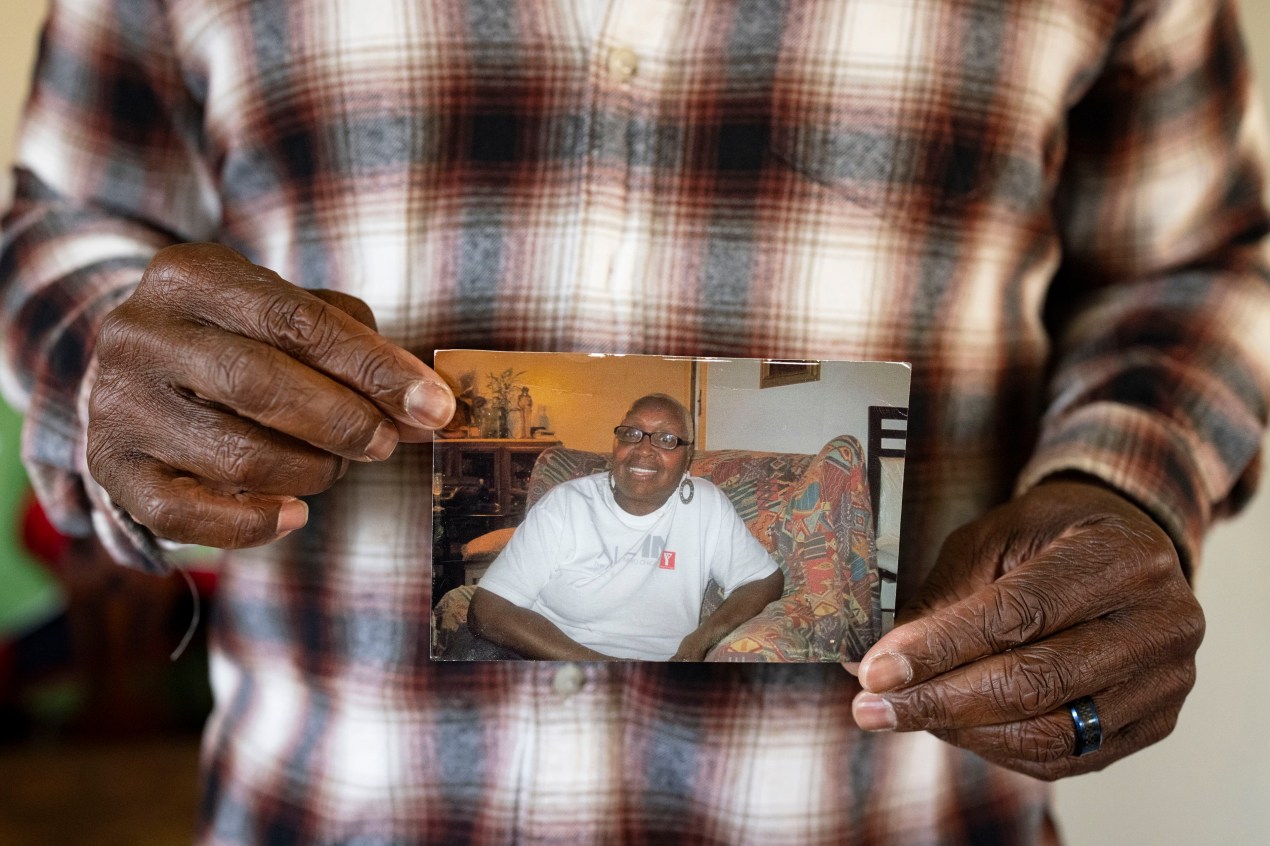
Leslie Adams holds a photo of his mother, Shirley, who died after developing infected bedsores at Lakeview Rehabilitation and Nursing Center, according to a lawsuit he filed. A court awarded the family $17 million. (Taylor Glascock for KFF Health News)

Low Staffing at a Chain

Strawberry Fields REIT, which like CareTrust trades on the New York Stock Exchange, owns or controls the buildings of 131 nursing home facilities. The nursing home operations inside 66 of those facilities are owned by Moishe Gubin, Strawberry Fields’ chief executive, and Michael Blisko, one of its directors, according to Strawberry Fields’ annual report for last year.

Gubin and Blisko also jointly own Infinity Healthcare Management, which manages their nursing homes; Blisko is Infinity’s CEO. On average, Infinity-affiliated nursing homes provided an hour and a quarter less nursing care per resident per day than the national average of four hours, a KFF Health News analysis of federal records found.

Infinity and several of its nursing homes have recently settled 30 death and injury lawsuits in Cook County, Illinois, totaling more than $4 million, said Margaret Battersby Black, a Chicago lawyer. A jury last year awarded $12 million in a lawsuit brought against Infinity and one of its Chicago nursing homes over the 2023 death of Shirley Adams. A retired candy factory worker, Adams died after developing infected bedsores at Lakeview Rehabilitation and Nursing Center, according to the lawsuit.

“She had wounds that no one could explain,” one of her adult children, Leslie Adams, testified at trial. Medicare gives Lakeview its lowest quality rating, one star out of five.

A photograph of the profile of a man, facing sunlight through a window, as he stands in a room with green painted walls
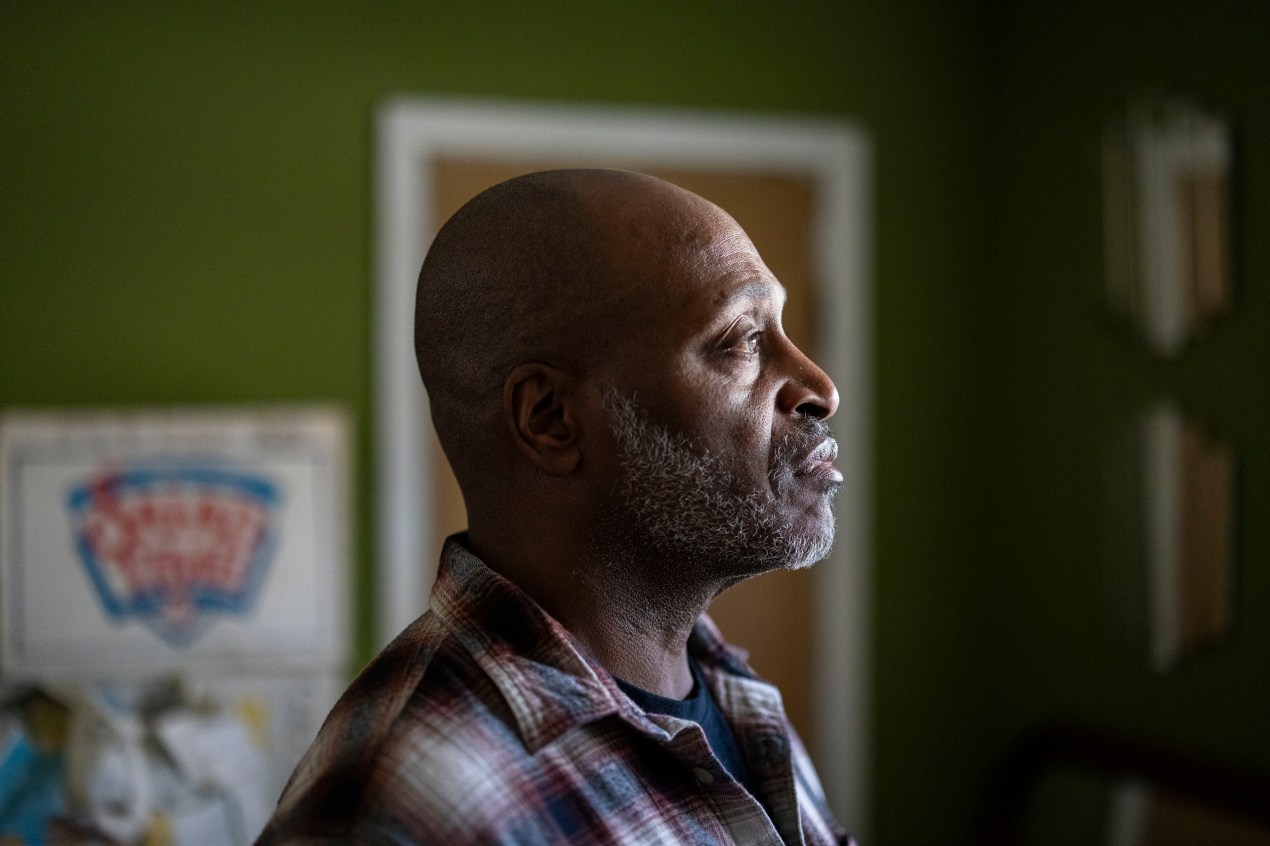
Leslie Adams poses for a portrait at his Chicago home in the room where his mother, Shirley Adams, lived before she was moved to Lakeview Rehabilitation and Nursing Center. (Taylor Glascock for KFF Health News)

Paul Connery, a lawyer for Adams’ family, said they are still trying to collect on the judgment against the nursing home and management company, which now totals $17 million with interest and attorney fees.

“If I get caught speeding and I went to court, they issue me a ticket and I’ve got a fine to pay,” Adams said in an interview. “How are they able to still continue to move on with business like nothing has happened?”

In a phone interview and an email, Gubin said Strawberry Fields, Infinity, and the nursing homes are all legally distinct and that he has not played an active role in Infinity in more than a decade. He said nursing homes get sued all the time but that the verdict against Lakeview is so large that it will force the home to declare bankruptcy or shut down.

“The whole thing is unfortunate,” Gubin said by phone. “For 15 years they were a perfectly good guardian” and “a well-run building,” he said. “You wouldn’t think it was fair to be judged on your worst day.”

Blisko and an Infinity lawyer did not respond to requests for comment.

Strawberry Fields, which owns 10 assisted living facilities and two long-term care hospitals in addition to the nursing homes, earned net income last year of $33 million from $155 million in rent, a 21% profit margin, securities filings show. Gubin said those weren’t excessive returns.

The exterior of a brick building with a sign that says "Lakeview Rehabilitation & Nursing Center"
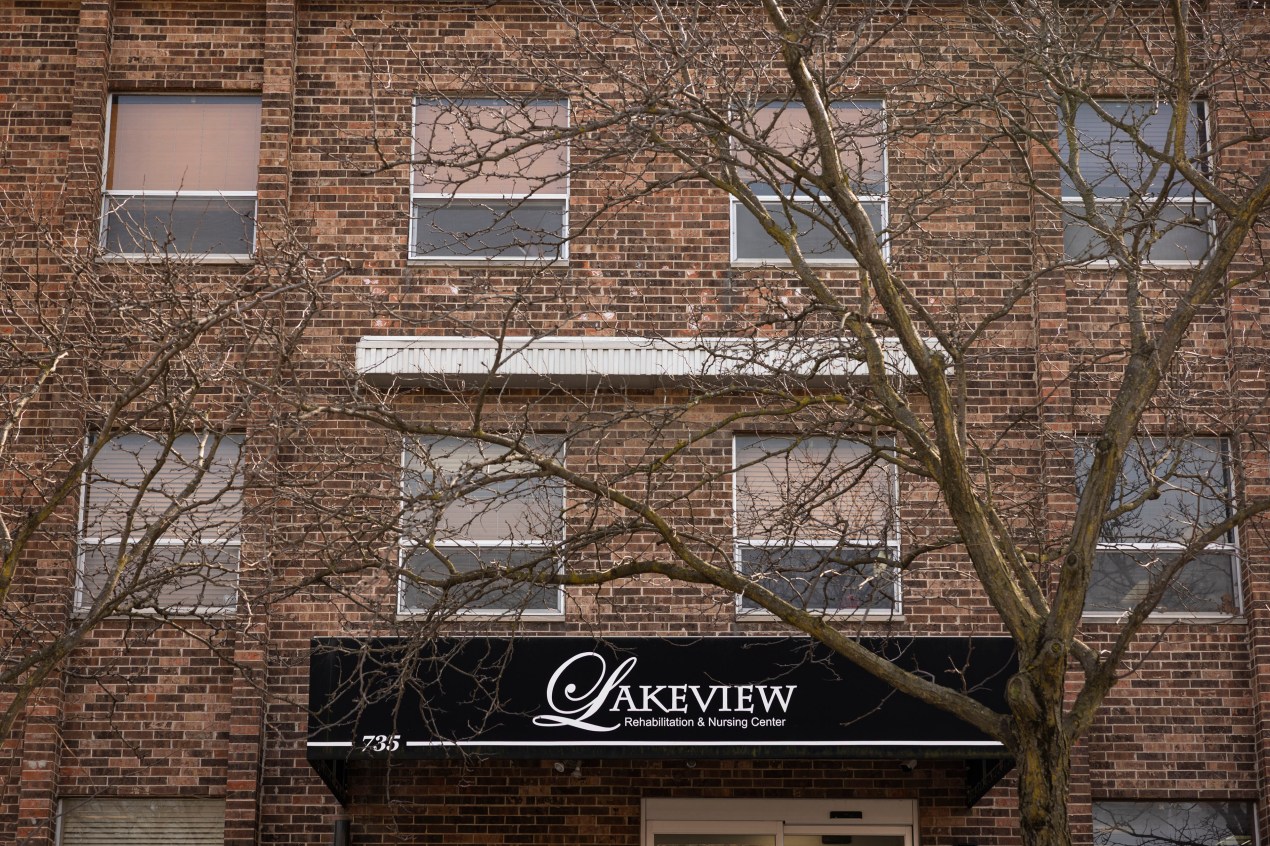
The owners and operators of Lakeview Rehabilitation and Nursing Center in Chicago also are directors of the real estate investment trust that owns the building, a securities filing shows. (Taylor Glascock for KFF Health News)

A $110 Million Verdict

Traditionally, REIT leases make the operating companies responsible for paying property taxes, insurance premiums, and maintenance costs. In 2008, Congress gave health care REITs a new option to make money: On top of collecting rents, they could set up subsidiaries and take profits directly from health care businesses. They still must have independent management overseeing care decisions. Many REITs have embraced the role even though the subsidiaries must pay corporate taxes and risk losing money if the businesses do poorly.

Colony Capital was a REIT that through layers of shell corporations owned both the building and the operation of Greenhaven Estates, a Sacramento assisted living and memory care facility. In 2018 Greenhaven paid Colony $1.4 million in rent, nearly a third of its $4.5 million in revenue that year, according to financial records filed in court.

Greenhaven also was on the verge of losing its license, according to a revocation notice filed in November 2018 by the California Department of Social Services. Greenhaven had racked up years of health violations, including from letting untrained workers administer medications, lacking enough employees to care for people with dementia, and neglecting a resident who smeared feces over his body, bed, floor, and bathroom, the notice said.

In February 2019, a few weeks after celebrating her 100th birthday, Mildred Hernandez, a resident with Alzheimer’s, wandered out of Greenhaven in the middle of the night. Her assisted living wing had no exit door alarms even though it housed several residents with dementia, court records showed. Berta Lepe, one of Greenhaven’s caregivers, found Hernandez under a bush, wearing only a shirt and underwear. The temperature was in the 30s.

A woman with white hair and glasses, wearing a blue sweater and a floral shirt, smiles for a portrait
Mildred Hernandez died of hypothermia after wandering out of her assisted living facility in the middle of the night. A jury awarded $92 million in punitive damages against the owner of the home. (Ric Tapia)

“She was talking, but I couldn’t understand what she was saying,” Lepe testified at trial over a lawsuit from Hernandez’s family. Hernandez died of hypothermia a few hours later, according to her death certificate.

Frontier Management, the company that Colony had hired to manage Greenhaven, denied liability and settled the lawsuit on undisclosed terms.

Since the lawsuit, Colony has changed its name to DigitalBridge, which no longer owns Greenhaven and gave up its REIT status. At trial earlier this year, DigitalBridge said resident care was the responsibility of Frontier and that Colony “encouraged” Frontier to address problems. Richard Welch, a former Colony executive, testified that replacing management is disruptive. “I viewed it as a last resort,” he said.

In March, a jury awarded Hernandez’s family $110 million: $10 million in compensatory damages, $92 million in punitive damages against DigitalBridge, and $8 million in punitive damages against Formation Capital, an asset management company.

“REIT money is very detached from knowing about or caring about patient or resident outcomes, because it’s not in their business model,” Ed Dudensing, a lawyer for the family, said in an interview. “Their allegiance is to their investors.”

DigitalBridge has asked the judge to delay finalizing the judgment while its legal challenges to the lawsuit and the verdict are evaluated. A DigitalBridge attorney and a corporate spokesperson did not respond to requests for comment, a Formation attorney declined comment, and a Frontier attorney and a spokesperson did not respond to a request for comment.

‘Wet From Head to Toe’

When CareTrust bought City Creek Post-Acute and Assisted Living in 2019, the Sacramento nursing home where Pearlene Darby lived had a one-star Medicare rating and was losing money. CareTrust leased the building to a management company called Kalesta Healthcare Group based on the business plan Kalesta submitted.

While CareTrust was not the operator, it held periodic phone calls with Kalesta, which provided “a full update of what’s happening at the facility,” including changes in leadership, financial progress, and health inspection survey results, according to deposition testimony by Ryan Williams, a Kalesta co-founder.

According to a state inspection report, in 2020, the year Darby died, City Creek left a resident in soiled linens “wet from head to toe lying in bed” for more than eight hours. During a different visit, a health inspector cited the home after watching a nurse put a dirty diaper back onto a resident after caring for a wound. “It was just a small stool and it is far from where the wound is,” the nurse told the inspector, according to the report.

James Callister, CareTrust’s chief investment officer, said in his deposition that CareTrust officials “review results of regulatory surveys provided to us by the tenant. We review the five-star rating.” He said, “We evaluate results of care, but we do not evaluate types of care given or how or when, no.”

Darby had been living in City Creek since 2011 after a stroke left her in a wheelchair. She needed help getting in and out of bed. From September through November 2020, Darby lost 30 pounds, her family’s lawsuit alleged. During those months, employees dropped her three times as one worker rather than the required two operated the mechanical lift, the lawsuit said.

The suit alleged City Creek failed to reposition her every two hours in bed or her wheelchair, which is the clinical standard for people at risk of bedsores, and to promptly order devices to protect her skin.

In November, the nursing home sent Darby to the hospital. A blood test found bacteria had entered her bloodstream from her feces’ touching open skin wounds, according to the lawsuit. The hospital diagnosed her with sepsis. A surgeon said she needed an operation to redirect fecal waste from her intestines but concluded she wasn’t medically stable enough for surgery, the suit said.

Darby began receiving comfort care measures and was sent back to City Creek. She died two weeks later. In court filings, CareTrust and Kalesta denied the allegations.

In a phone interview, Williams, the Kalesta co-founder, said Darby’s death occurred during the most challenging point of the covid pandemic, when California rules required any nurses testing positive for the virus to be sent home and nurses were quitting out of fear for their health. “It was the most herculean of professional efforts to secure enough staff,” he said.

While expressing sympathy for Darby and her family, he said it was “unconscionable” that personal injury lawyers sued nursing homes over care failures during “the worst of times.”

In court, CareTrust petitioned Judge Richard Miadich to dismiss it from the lawsuit before trial. “This case does not concern a property condition,” CareTrust’s lawyers wrote. “CareTrust is simply a landlord.” But the judge ruled last year a jury should decide whether CareTrust “exercised actual control over City Creek.”

The case was settled out of court a few months later. All parties declined to reveal the settlement terms.

A 67% Profit

As recently as November 2023 — four years after its acquisition — City Creek earned one star from Medicare. It was cited for failing to have the minimum nursing home staffing required by California law during five of 24 randomly selected days in 2022, according to an inspection report. Williams said in the interview that Kalesta had increased spending on nursing over the course of its ownership, including boosting wages, but that it takes a year or two to turn around a troubled nursing home. He said the home’s star rating in 2023 was dragged down by its poor inspection history from before Kalesta took over.

City Creek’s rating has climbed in the past two years, and it now has the top overall rating of five, according to Medicare. Medicare rates City Creek’s current staffing levels as average. That’s better than most nursing homes in more than 200 buildings CareTrust bought before 2025, according to a KFF Health News analysis of federal data. On average, CareTrust nursing homes provided a half hour less nursing care per resident per day than the national average of four hours.

In its statement to KFF Health News, CareTrust’s counsel Layne said the REIT worked to “identify quality operators as tenants,” and that the homes the REIT rents out have more nurses and aides than the minimum required for nursing homes by their state governments. “The operators are licensed by state regulators and retain sole responsibility for operations,” the statement said.

CareTrust, which now owns more than 500 senior housing and nursing home buildings, reported net income last year of $320 million from $476 million in rents and other revenue — a 67% profit margin. By comparison, HCA Healthcare, one of the nation’s largest for-profit hospital and health care chains, reported a 10% profit margin for last year.

Lesley Ann Clement, one of Darby’s lawyers, said cases like hers show the nursing home industry is wrong to complain it lacks financial resources for more staffing.

“There’s plenty of money,” Clement said. “They’re just not spending it on patient care.”

KFF Health News is a national newsroom that produces in-depth journalism about health issues and is one of the core operating programs at KFF—an independent source of health policy research, polling, and journalism. Learn more about KFF.

This <a target="_blank" href="https://kffhealthnews.org/health-industry/real-estate-investment-trusts-senior-housing-nursing-homes-profit/">article</a&gt; first appeared on <a target="_blank" href="https://kffhealthnews.org">KFF Health News</a> and is republished here under a <a target="_blank" href="https://creativecommons.org/licenses/by-nc-nd/4.0/">Creative Commons Attribution-NonCommercial-NoDerivatives 4.0 International License</a>.<img src="https://kffhealthnews.org/wp-content/uploads/sites/8/2023/04/kffhealthnews-icon.png?w=150&quot; style="width:1em;height:1em;margin-left:10px;">

<img id="republication-tracker-tool-source" src="https://kffhealthnews.org/?republication-pixel=true&post=2228343&amp;ga4=G-J74WWTKFM0&quot; style="width:1px;height:1px;">]]>
2228343
Listen: Cheap Health Insurance Isn’t Always Cheap https://kffhealthnews.org/insurance/listen-health-care-helpline-life-kit-high-deductible-plans-out-of-pocket-costs/ Tue, 21 Apr 2026 09:00:00 +0000 https://kffhealthnews.org/?p=2228954 A lot of people choose their health insurance the way they shop for a flight — sort by the lowest price and click “buy.” But what looks like a bargain upfront can come with costly consequences later.

After some federal financial aid expired, many Americans found that high-deductible health plans were the only option they could afford.

In a new episode of NPR’s Life Kit podcast, KFF Health News reporter Jackie Fortiér and podcast host Marielle Segarra discuss what these plans are, and why they can feel so confusing. Imagine paying $100 out-of-pocket for a routine doctor visit that used to cost you $20. Imagine shouldering thousands of dollars in bills before your insurance pays a cent.

Still, for some people — especially those who rarely need medical care — high-deductible plans work. Listen to the episode to explore how timing your care and taking advantage of free preventive services can help you make the most of your coverage.

KFF Health News is a national newsroom that produces in-depth journalism about health issues and is one of the core operating programs at KFF—an independent source of health policy research, polling, and journalism. Learn more about KFF.

This <a target="_blank" href="https://kffhealthnews.org/insurance/listen-health-care-helpline-life-kit-high-deductible-plans-out-of-pocket-costs/">article</a&gt; first appeared on <a target="_blank" href="https://kffhealthnews.org">KFF Health News</a> and is republished here under a <a target="_blank" href="https://creativecommons.org/licenses/by-nc-nd/4.0/">Creative Commons Attribution-NonCommercial-NoDerivatives 4.0 International License</a>.<img src="https://kffhealthnews.org/wp-content/uploads/sites/8/2023/04/kffhealthnews-icon.png?w=150&quot; style="width:1em;height:1em;margin-left:10px;">

<img id="republication-tracker-tool-source" src="https://kffhealthnews.org/?republication-pixel=true&post=2228954&amp;ga4=G-J74WWTKFM0&quot; style="width:1px;height:1px;">]]>
2228954
The Accidental Architect of America’s Drug Patent Problem https://kffhealthnews.org/podcast/an-arm-and-a-leg-alfred-engelberg-accidental-architect-drug-patent-thicket/ Mon, 20 Apr 2026 09:00:00 +0000 https://kffhealthnews.org/?post_type=podcast&p=2228494 Depending on whom you ask, Alfred Engelberg could be a hero or a villain in the story of American pharmaceuticals. The patent lawyer helped write legislation that led to a dramatic increase in the number of generic drugs on the market. He also contributed to a patent system that gives pharmaceutical companies monopolies on their most lucrative drugs, blocking generic competition and keeping prices high along the way. 

An Arm and a Leg host Dan Weissmann traces Engelberg’s story back more than 50 years, from a scrappy childhood on the Atlantic City boardwalk to watching President Ronald Reagan sign his bill into law at the White House Rose Garden. Today, Engelberg advocates for policy changes he believes will enable more generic drugs to reach the market faster. 

Dan Weissmann @danweissmann Host and producer of "An Arm and a Leg." Previously, Dan was a staff reporter for Marketplace and Chicago's WBEZ. His work also appears on "All Things Considered," Marketplace, the BBC, 99% Invisible, and "Reveal," from the Center for Investigative Reporting.

Credits

Emily Pisacreta Producer
Claire Davenport Producer
Adam Raymonda Audio wizard
Ellen Weiss Editor
Click to open the Transcript Transcript: Why drugs cost so much, 101: Medicine monopolies

Note: “An Arm and a Leg” uses speech-recognition software to generate transcripts, which may contain errors. Please use the transcript as a tool but check the corresponding audio before quoting the podcast.

Dan: Hey there–

We are kicking off a new series here — We’re calling it An Arm and a Leg 101.

We’ve spent years of reporting on two huge questions: Why does health care cost so freaking much? And what can we maybe do about it?

We’ve been chasing answers one story, one question at a time.

Now, we’re pulling together some of what we’ve learned. Digging a little deeper, going a little broader.

Starting with why so many drugs cost so much.

One of the first questions I ever asked — one of our first stories — was: How can insulin be so expensive? Wasn’t it discovered in the early 20th century? Shouldn’t it be a generic drug by now?

You know, cheap? 

And part of the answer I got was: Insulin has been transformed since the early 20th century. A lot.

A medical researcher named Jing Luo told me: Today’s insulins are a long way from what we had a hundred years ago.

Jing Luo: They’ve been really modified at a molecular level. It’s cool stuff. It’s super cool stuff. And you know, there are multiple Nobel prizes in physiology and medicine that have made this happen.

Dan: And all that super-cool stuff, those amazing discoveries, got patented.

Meaning: The patent-holders– the pharma companies — got a monopoly on those amazing discoveries.

The pharma companies claimed patents — and monopolies– on a bunch of other things too. Not all of them amazing.

But each new patent can mean another delay for a generic version coming to market.

Jing Luo: Companies can stack dozens of patents on top of each other to try to thwart generic competition because they can say, look, we’ve got three patents on the active ingredient. We’ve got patents on the medical uses of the active ingredient. We’ve got patents on the non-active excipient associated with this ingredient. We’ve got multiple patents on the devices, and so you who are trying to enter this space will sue you for patent infringement on all of them.

Dan: A patent guarantees you at least a 20-year monopoly. Drugs can generally get an extra five. 

And these extra patents — secondary patents –can keep you protected LONGER. If you don’t file them at the same time as the original: 

To talk about a drug that’s in the news right now. The original patent on the active ingredient in Wegovy and Ozempic actually expired this year.. The extra five years extends it to the early 2030s. 

But dozens of extra patents — secondary patents, filed later — mean that here in the U.S., we might not see cheaper generic versions until 2042. Or later.

And as Jing Luo told me: This strategy isn’t a secret. It’s an industry cornerstone. 

Jing Luo: When you listen to these like CEOs of pharma companies being interviewed at CNBC, you know, they’d be like, well, what about generic competition for this product? And they’ll just keep saying, no, no, no. We’ve got this really robust patent portfolio. We can withstand any challenge. We’re gonna tie this up in courts forever and don’t worry about it.We’re gonna continue this gravy boat for a long, long time. That’s the way they reinsure investors.

Dan: A robust patent portfolio. ?Or what researchers and advocates call a patent thicket.

They say quality matters less than quantity. 

The numbers are wild. 

According to one study, the 10 best-selling drugs for 2021 — drugs for cancer, HIV, arthritis — were protected by a combined total of seven hundred and forty-two patents. With hundreds more “pending.”

When these add-on patents get challenged in court, they actually get tossed out more often than primary patents..

But lawsuits cost money. A robust patent portfolio — a patent thicket — means generic companies would need to be ready to file a LOT of them.

So, we wanted to know: How did all this happen? How did these games get started?

It turns out, there is one guy who can tell you the story from the beginning, for better and for worse. Who helped shape it. Made millions of dollars from it. Saw its flaws. And has spent most of the last 30 years trying to fix them. Hie’s a lawyer named Al Engelberg, and he’s 86 years old.

Alfred Engelberg: I tell people all the time, I live in a world, a pharma world where half the people think I’m dead and the other half wish I was.  

Dan: Al Engelberg’s story is the story  of generic drugs in America. And it’s a wild ride. 

This is An Arm and a Leg — a show about why health care costs so freaking much, and what we can maybe do about it. I’m Dan Weissmann. I’m a reporter, and I like a challenge. So the job we’ve chosen here is to take one of the most enraging, terrifying, depressing parts of American life, and bring you something entertaining, empowering, and useful.

?Al Engelberg’s parents fled Nazi Germany in the late 1930s.

He was born here, less than a year after they arrived. They had nothing.

And  here’s where they made their new life. 

Retro news reel: We are flying over a well-known eastern city. That is remarkable because manufacturing is almost non-existent. A city whose principle business is the entertainment of millions. Atlantic city, often called the vacation capital of the nation

Dan: Al likes to say he learned most of what he knows about practicing law on the Atlantic City boardwalk, by the time he was 16. 

Alfred Engelberg: We grew up very, very fast there. I started working when I was about nine or 10 and, and there were lots of opportunities on the boardwalk. 

Dan: His first “job” was crawling around under the boardwalk, looking for loose change.

Alfred Engelberg: But I went on to work at hotdog stands and at an illegal bingo game for the local mob.

Dan: And in every job, Atlantic City drove home its major lesson: Cheating — hustling — is something you’ve gotta expect. 

At this illegal bingo parlor, Al’s job was walking between tables, doling out bingo cards for a dime apiece. The bosses hired college kids to walk behind kids like Al, to keep him honest.

Alfred Engelberg: I mean, these guys are running an illegal game, but they still need to count, and they still inherently don’t trust anybody. 

Dan: Which was correct. Al says the college kids had their own hustle: They’d have him set aside a dollar or two before turning in his dimes — split that dollar with him fifty-fifty — and tell the bosses Al’s count was fine.

Alfred Engelberg: And everybody knowing that the counts were wildly inaccurate anyway ‘cause the little old ladies were, were stealing cards. Everybody in the room had their own thing going, you know, from the customers on.

Dan: After Al made it out of Atlantic City, his unique on-the-job education continued. He studied chemical engineering at Drexel, then took a job as a patent examiner while going to law school at night.

And at that job, he learned: The patent system was ripe for hustling.

Partly because most of his colleagues weren’t necessarily giving the job their all. 

Like him, most patent examiners were working their way through law school. And they were sneaking time to study on the job.

Alfred Engelberg: We used to be able to cut our notes down so they fit in these file drawers with the patents. And we would be reading your notes and if your boss came by, you would just drop a patent on top of the notes.

Dan: You could say it was Atlantic City all over again. Everybody in the job is sneaking something for themselves — in this case, time.

And Al Engelberg could see that, even if his colleagues gave it their all, they were too green to do their job well. 

A patent examiner’s job — deciding whether a proposed invention deserves a monopoly (which at that time was 17 years) — means deciding whether the idea for that invention would be obvious to “a person of ordinary skill in that field.”

Alfred Engelberg: And most of the examiners had never worked in that field and had absolutely no idea. And this is the big leagues. You’re granting somebody a monopoly for 17 years, and it seemed ridiculous on its face.

Dan: Al cut his own path at the patent office. He’d worked his way through engineering school, in manufacturing plants, he saw what people of ordinary skill in that field solve problems every day. So he specialized in examining patents he actually knew something about.

That got him promoted, then it got him recruited by a corporate lawyer.. After the company paid his way through the rest of law school, he jumped to the Justice Department. 

He was ambitious– he wanted experience junior lawyers don’t usually get — like trying cases of his own.

After a few years doing just that, he took a job with a small law firm in New York City in 1968.

Alfred Engelberg: I came to New York to private practice at the age of 30 and I was ready to go. I mean, I was ready to, to tear the world apart and I did.

Dan: Patents were still a specialty. Then, in 1973, he gets a call that leads to his first generic drug case.

Generic drugs were not a hot market at the time.

Alfred Engelberg: ?The generic drug industry in 1970s was essentially, a half a dozen, privately owned family businesses, mostly in the metropolitan New York area. And most of the drugs that they were selling were drugs that were approved before 1962. 

Dan: Yeah. 1962 is when the FDA made it harder to get a new drug approved — you had to go through long clinical trials to show that your drug was safe and effective. 

Even if your drug was a generic version of an existing drug. Those little companies didn’t have the capital to run those trials, so they were stuck selling those old drugs.

Not much of a business. Maybe 20 percent of prescriptions were for generic drugs.

So when Al Engelberg got a call for his first generic drug case, that was the context. And the case itself did not sound promising. For one thing:

Alfred Engelberg: The call wasn’t even from the client. It was from a bank. The client was bankrupt. 

Dan: The client was bankrupt. This bankrupt client, Premo Pharmaceuticals, was getting sued for patent infringement. The bank was willing to put up ten thousand dollars for a defense. Nowhere near enough to actually try a case. Oh, and…

Alfred Engelberg: From what they told me, the information they gave me, we didn’t have a very good defense.

Dan: But Al Engelberg saw an opening. He could see that his opponents have weaknesses too.

Alfred Engelberg: The patent owners were in a very strange position. If they won, they got nothing because we were already bankrupt. Two, they were gonna have to spend the legal fees to win.

Dan: Win against a young lawyer named Al Engelberg who already had a rep as a tough opponent. So they could lose.

Alfred Engelberg: And if they lost, they would lose millions and millions of dollars in business because there wouldn’t be a patent. And they’d have competition from generic drugs.

Dan: And meanwhile, Al Engelberg is also sizing up the judge. He knows the guy doesn’t love patents.

So Al shows up to the first conference and he bluffs. 

Alfred Engelberg: I said to the judge, oh, your Honor, you know, it’s another one of those patents. They’re all invalid. And I said, we don’t need very much discovery. We’re, we’ll be ready to go to trial in a few months. Just set a trial date.

Dan: The other side walks out beside themselves.

And within a couple of weeks they call Al to say: Hey, how about this? You guys just acknowledge our patent is OK, and we’ll give you the money we would’ve spent litigating. Call it 400,000 bucks?

Alfred Engelberg: I called the client and said, how’s $400,000? He said, are you kidding?

Dan: They didn’t just get out of trouble — they got out of bankruptcy, with $400,000 in their pockets. Because Al Engelberg knew how to size up a situation.   

Alfred Engelberg: You don’t learn that in law school. That’s not what they teach.

Dan: Word gets  around about that case, and pretty soon everybody in the generic drug world is calling him.

It’s a small world, but by the end of the 1970s, there may be room for it to start getting bigger. 

People are starting to notice: Drugs are expensive. Maybe there should be more cheap generics. 

Some generic drug companies form an association and start lobbying: Make it easier to get generic drugs to market without having to go through all those trials.

The brand-name drugmakers push back: They say it takes so long to run the trials and get their drugs approved, they don’t get enough time to make money before those patents expire.

In 1983, Democratic Representative Henry Waxman steps in to broker a compromise, with Republican Senator Orrin Hatch.

And Mr. Engelberg goes to Washington. To run strategy for the generic drugmakers. 

Alfred Engelberg: In a lot of ways , that’s where my Atlantic City training really helped me at the end of the day

Dan: There were a lot of people, with a lot of interests. A lot of angles. ?He starts commuting from New York to Washington DC a couple times a week — for months and months, more than a year.

And Al Engelberg says: This time, it wasn’t just about winning a case.

Alfred Engelberg: I was in the back of a cab the way I remember, with the senior partner of the law firm. And he says to me, why are you breaking your ass going to Washington two or three times? Why don’t you send an associate? You know, it’s just like, it’s just another case. And I said. I said, are you kidding? I said, you know, how many lawyers ever get to do what I’m doing right now? To be at the table influencing what may be a major law that’s gonna have major consequences is, is like something I never thought my whole life I’d be doing.

Dan: A kid from Atlantic City was exactly the right person to try to balance all the angles, negotiate a compromise. It took more than a year. It almost didn’t happen. But then it did. Congress passed the bill, and President Ronald Reagan got in front of cameras to sign it.

Ronald Reagan: Let me turn my attention to the real reason we’re here this afternoon, signing into law the Drug Price Competition and Patent Term Restoration Act of 1984. 

Dan: better known as Hatch-Waxman.

Hatch Waxman had three basic components:

One: Brand drugmakers got a few extra years on their patents.

Two: Generic drugmakers got a pathway to get FDA approval.

And three –The new law laid out rules for a generic drugmaker when they wanted to CHALLENGE an existing patent. 

Negotiating that third part was the part where Al Engelberg’s education on the Atlantic City boardwalk, and the U.S. patent office, and the generic drug industry came together: The result would make him millions and millions of dollars — and blow a giant hole into the grand bargain he had worked so hard to bring about.

That’s coming right up.

This episode of An arm and a Leg is produced in partnership with KFF Health News. That’s a nonprofit newsroom covering health issues in America. The folks at KFF Health News are amazing journalists — their work wins all kinds of awards, every year. We are honored to work with them.

So. The brand-name drug makers and the generic drug makers struck a deal. That deal was good for them. Both sides got something big out of it. The public was supposed to get something out of it too.

And, to be fair, we did: Remember, back then, maybe one out of five prescriptions was for a generic drug. Now it’s nine out of ten.

But we pay more than ever for drugs. Mostly for branded, patent-protected drugs. And the biggest, most-important, most profitable drugs get locked behind patent thickets.

How did that happen? 

Well, to understand that, it helps to know what Al Engelberg got out of the whole bargain.

Al had been there at the bargaining table, on behalf of the generics. 

One day, during those negotiations, he was in the office with Henry Waxman’s lead counsel, a guy named Bill Corr, when Corr got a call from someone on the other side.

Corr starts pointing at the phone, pointing to Al — indicating: This guy is talking about you.

When Corr gets off the phone he says: That guy’s not sure about this deal where bad patents could be challenged. He’s suspicious about where you might take this. Like, are you just gonna set up a bounty-hunting operation, to get patents declared invalid?

And Corr said, Al, would you do that? 

Alfred Engelberg: And I said, you know, Bill, until this moment, I’ve never given it any thought, but it’s a hell of a good idea. Maybe I’ll look at it. 

Dan: And he did. Starting almost as soon as Hatch-Waxman became law.

Alfred Engelberg: And we sat in the rose garden, September 23rd, 1984, watched Reagan sign the bill. And in December of that year, I sat down at my kitchen table with a yellow pad and I laid out a strategy.

Dan: If you were gonna set up a bounty-hunting operation, how would you do it?

Al Engelberg knew a lot of patents were garbage. Knew it from his time in the patent office, knew it from practicing law. And he knew how much money a successful patent challenge could be worth.

The way Hatch-Waxman worked: If a generic drug company challenged a patent and won, they would get six months before any OTHER generic drugmakers could get a crack at the market.

So their only competition would be the brand. If a pill cost two cents to make, and the brand was selling for a dollar a pill — that’s 98 cents of profit for every pill.

You’re the only competitor? You could charge 75 cents a pill and get 73 cents of profit. On a hit drug, you could make millions and millions — just in those six months. 

Al’s idea was this: Partner up with a generic drugmaker. Go find cases– drugs with weak patents. Win ’em. 

And split those millions in potential profits fifty-fifty. 

Al pitched a generic drugmaker — they were ready to go — and brought the deal to his law firm. .

Alfred Engelberg: As it turned out, my partners weren’t interested in having me do this. They tried to talk me out of it.

Dan: But they couldn’t. So he left. Went out on his own. All on his own.

Alfred Engelberg: I never hired a single soul, not even a secretary. And I couldn’t type. I still can’t type.

Dan: But he hunted and pecked his way through brief after brief. He bought an early portable computer — it weighed thirty pounds — and lugged it around in the back of his car. For ten years.

Alfred Engelberg: It was stupid. I almost killed myself. But, it worked out okay.

Dan: Yeah. Turns out Al was really good at finding the problems with drug patents.

In one of his first cases, Al Engelberg personally made more than 70 million dollars. Others settled: A few million here, a few million there– it adds up.

And then…

Alfred Engelberg: It got to be the mid nineties, and I was working on a case called Buspar. 

Dan: The Buspar case ended up a big winner for Al Engelberg and his generic drug partners. 

But it had consequences that went way beyond a single case. And led to big losses for the public.. Here’s how it went.  

Alfred Engelberg: Buspar was an anti-anxiety drug. And by all accounts not a very good one.

Dan: But Bristol Meyers Squibb invested in big advertising and marketing campaigns.

Speaker 5: I feel anxious. I can’t concentrate. 

Speaker 6: I’m so irritable. If you. You suffer from excessive worry. It can feel like a mountain of anxiety. 

Speaker 5: I’ll never get it all done. I’m overwhelmed. 

Speaker 6: But a prescription medication called buspar can help.

Dan: And all that marketing did its job. By the mid-1990s, Buspar was making more than 200 million dollars a year for Bristol.

Alfred Engelberg: The only problem for them was that the drug was not new. 

Dan: The active ingredient was well-known in medical literature as a tranquilizer. Nobody had bothered to market it.

So Bristol Myers Squibb filed a patent on it, claiming it had discovered a new use for this well-known tranquilizer: Treating anxiety.

Al Engelberg says when he read the patent application, he could barely believe it: What do tranquilizers do if not… treat anxiety?

It’s like saying: There’s this stuff called sugar. We’re gonna take out a patent on using it as a sweetener.

This looked like a case for a guy from Atlantic City. 

Alfred Engelberg: I did something that lawyers don’t. That’s just the way I was built. 

I filed a motion with the court and basically said, we don’t need any evidence.

You just have to read the patent. If you believe it’s true, the patent’s invalid. Just, you know, all you need is a dictionary basically.

Dan: Al says Bristol was eager to settle. 

Alfred Engelberg: We get into a settlement discussion and we keep saying, no, no, no, no.

Dan: Al’s partners had done the math: They figured they stood to make a hundred million dollars or more once they won. So when the other side offered 25 million, no was the easy answer.

Alfred Engelberg: We said, why are we gonna take this? You know, it’s crazy. There’s a reward here we know what it is. We’re gonna get it eventually.

Dan: Al sits down with a lawyer from the other side, a guy he knows, explains how he sees the math.

And soon the other side comes through with a much bigger offer: 72 million dollars – almost three times as much. 

Alfred Engelberg: And I’m sitting there like, what are you crazy? But then think about it from their point of view. 

Dan: Paying 72 million dollars is nothing, compared to what Bristol stands to gain if this lawsuit goes away. 

With their monopoly, Bristol Meyer Squibb is making more than 200 million dollars a year on Buspar. And unless somebody else lines up to do what Al Engelberg had done, expect to keep that monopoly for years.

Charging whatever they want. Two dollars a pill, three dollars a pill. Which Al Engelberg says is exactly what happened.

In fact, they kept that monopoly for like five years. 

Alfred Engelberg: As it turned out, nobody came behind us. And so, they had that monopoly until 2000. So they got five years of 2 billion, in gross profits. 

Dan: They made out.

Alfred Engelberg:  For the cost of $75 million. And you know, the public got screwed ’cause they are continuing to pay, you know, $2 a pill or $3 a pill for a drug that eventually ends up being available for 20 or 30 cents. Um, so that’s, that’s how it works.

Dan: That’s how it works. The branded company and the generic company both make out great. Cheaper generic versions of a drug get delayed. 

That amazing payday for Al Engelberg and his partners at the generic drug company turned into a model a template for the kind of deal that every generic drug company would want in on.

It got a nickname: Pay for delay.

Alfred Engelberg: That spread through the industry like wildfire, those numbers, you know, you don’t make those numbers half a cent at a time on, on pills,

Dan: Lawsuits were way more profitable.

But Al Engelberg wasn’t filing them.

A year or so after the Buspar case settled, sparking the Pay for Delay gold rush, he retired. He had plenty of money and nothing to prove.

And in retirement, he started evaluating what he’d accomplished, for better and for worse.

For better, generic drugs had more than doubled their share of the market since Hatch-Waxman took effect.

For worse, he could see two places where — despite all of his Atlantic City training — he had missed a couple of angles in negotiating Hatch-Waxman. 

One was: this whole pay-for-delay scheme. Turned out, in balancing incentives for brands and generic makers, he’d left open this perverse incentive that left the public out. 

And the second was a loophole  that Hatch-Waxman had left open.: 

It created a process where players like Al and his generic partners could challenge patents on drugs like Buspar, that they thought didn’t deserve protected monopolies. It removed some friction for those attacks. 

The drug companies developed a way to add more friction:  stacking extra patents — secondary patents — on every drug.

Developing patent thickets.

Even if a secondary patent is trivial  — and lots of them do get tossed out — challenging it means a court fight. And that costs money.

Alfred Engelberg: It caused the big drug companies to just get more and more patents. Because why not? You know, there was nothing standing in the way.

Dan: I mean, nobody knows better than Al Engelberg: Patent examiners don’t exactly stand in the way. 

And those patent thickets and pay for delay, they feed on each other. 

Alfred Engelberg: The economics of the business, caused these kinds of settlements to reach epic proportions. So the generic companies would, challenge these secondary patents and, the drug companies would pay them off.

Dan: In 1999 he published an article in a scholarly journal arguing that Hatch-Waxman needed a reboot. Even the six-month head start for a successful challenge could probably go. 

And ever since — for more than twenty-five years — he’s poured millions of dollars into efforts to tighten the rules. Funding research. A public-information campaign from Consumer Reports. Even a center for IP law at his alma mater, NYU.

It hasn’t always gone his way. 

Pay for delay has gotten much bigger since Al Engelberg wrote his first article calling for reform: He wrote in 1999 that about two dozen patent challenges had been filed.

Now he estimates that number at twelve thousand.

Alfred Engelberg: I can’t tell you how many tens of billions of dollars in legal fees that is. It’s one of the fastest growing and and steadiest industries for big law.

Dan: A Hatch-Waxman litigation forum on LinkedIn has more than fourteen thousand members.

And Hatch-Waxman doesn’t cover many of today’s the top-selling drugs– the biggest moneymakers. They belong to a class called “biologics.”

That includes famously-expensive rheumatoid arthritis drugs like Humira and Enbrel — and insulin. 

Biologics weren’t a category forty years ago when Hatch-Waxman got negotiated. Congress passed a new law to deal with them in 2010 — ?the Biologics Price Competition and Innovation Act.

Al Engelberg is not a fan of that law.

Alfred Engelberg: Whatever mistakes were made in Hatch Waxman, they were multiplied by 10 and deliberately in the biologics law

Dan: He says the all but encourages patent thickets. And doesn’t provide a pathway to challenge them.

He says it reminds him of some of his early days practicing law.

Alfred Engelberg: Back in the seventies, we used to have small startup clients in the computer field, and they would get letters from IBM. It says, we are ready to inform you that you may be infringing one or more of the following patents. And there was a 10 page list of patents attached. And the startup would come to us and say, you know, what should we do? And we would say, find another line of work, you know, what are you gonna do?

Dan: But he has not given up. In 2025, he published a book: Breaking the Medicine Monopolies.

It tells the story of his career — and lays out his prescriptions for fixing the problem.

He doesn’t JUST focus on plugging the holes in Hatch-Waxman and the biologics law.

Alfred Engelberg: You know, we don’t actually need a generic drug industry. We need generic drug pricing. 

Dan: He’s got proposals for an increased government role in negotiating and regulating prices — and more than that.

He argues that a 1980 law allows the government to commisssion generic versions of drugs that were developed using public research dollars.

He also says the FDA rules that protect secondary patents on drugs — that allow patent thicketing — are based on a completely wrong interpretation of Hatch-Waxman.

And tells us he’s working up a challenge, with help from AI tools like Claude. 

He’s 86 years old. And he doesn’t seem inclined to stop.

Alfred Engelberg: It so changed my life and I did so well by it, I thought, how can I not take on this problem? Who’s gonna do it if I don’t do it?

Dan: He’s got the time. Money’s no object. And he knows the territory as well as anybody. He helped create it. 

Alfred Engelberg: So it’s, it’s my obligation really. It’s that sort of Jewish guilt. What can I tell you? I’m paying back for the bingo game.

Dan: So we’ve gone back more than fifty years on the question: Why aren’t there more generic drugs? We’ve learned why we’ve got the ones we have, and what stands in the way of getting more.

And that is just in time. Because this spring the U.S. Supreme Court will hear arguments in a case that could restrict the generic drug pipeline even further. It could have major implications.

And understanding what they are requires all of the 101 we’ve covered here. We’ll have that story for you in a few weeks. Til then, take care of yourself. 

This episode of An Arm and a Leg was produced by Emily Pisacreta, with help from Dan Weissmann— and edited by Ellen Weiss. 

Adam Raymonda is our audio wizard.

Our music is by Dave Weiner and Blue Dot Sessions. 

Claire Davenport is our engagement producer.

Sarah Ballema is our Operations Manager. Bea Bosco is our consulting director of operations. 

This series — An Arm and a Leg 101 — is made possible in part by support from Arnold Ventures. 

An Arm and a Leg is produced in partnership with KFF Health News. That’s a national newsroom producing in-depth journalism about health issues in America and a core program at KFF, an independent source of health policy research, polling, and journalism.

 Zach Dyer is senior audio producer at KFF Health News. He’s editorial liaison to this show.

An Arm and a Leg is distributed by KUOW, Seattle’s NPR news station.

And thanks to the Institute for Nonprofit News for serving as our fiscal sponsor.

They allow us to accept tax-exempt donations. You can learn more about INN at INN.org.

Finally, thank you to everybody who supports this show financially.

You can join in any time at arm and a leg show, dot com, slash: support.
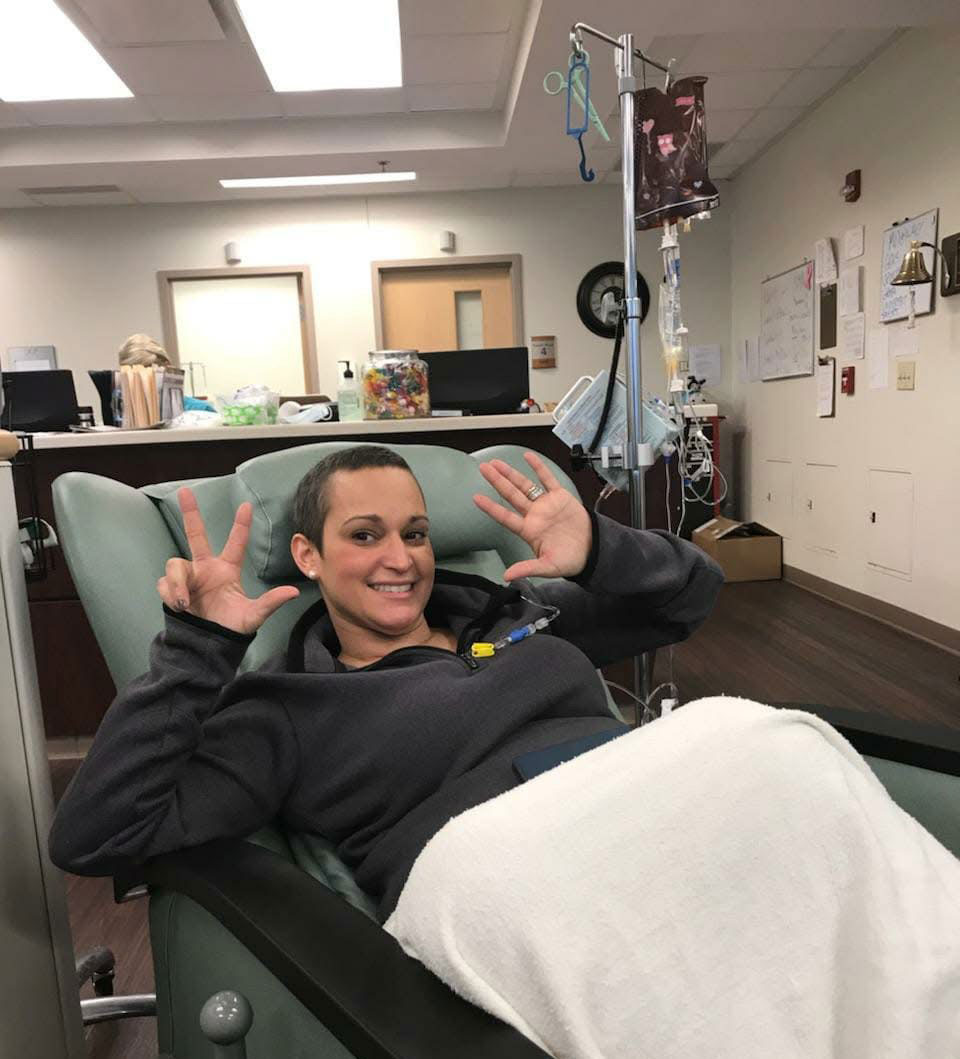

“An Arm and a Leg” is a co-production of KFF Health News and Public Road Productions.

For more from the team at “An Arm and a Leg,” subscribe to its weekly newsletter, First Aid Kit. You can also follow the show on FacebookInstagramLinkedIn, and Bluesky. And if you’ve got stories to tell about the health care system, the producers would love to hear from you.

To hear all KFF Health News podcasts, click here.

And subscribe to “An Arm and a Leg” on Spotify, Apple Podcasts, Pocket Casts, or wherever you listen to podcasts.

KFF Health News is a national newsroom that produces in-depth journalism about health issues and is one of the core operating programs at KFF—an independent source of health policy research, polling, and journalism. Learn more about KFF.

This <a target="_blank" href="https://kffhealthnews.org/podcast/an-arm-and-a-leg-alfred-engelberg-accidental-architect-drug-patent-thicket/">article</a&gt; first appeared on <a target="_blank" href="https://kffhealthnews.org">KFF Health News</a> and is republished here under a <a target="_blank" href="https://creativecommons.org/licenses/by-nc-nd/4.0/">Creative Commons Attribution-NonCommercial-NoDerivatives 4.0 International License</a>.<img src="https://kffhealthnews.org/wp-content/uploads/sites/8/2023/04/kffhealthnews-icon.png?w=150&quot; style="width:1em;height:1em;margin-left:10px;">

<img id="republication-tracker-tool-source" src="https://kffhealthnews.org/?republication-pixel=true&post=2228494&amp;ga4=G-J74WWTKFM0&quot; style="width:1px;height:1px;">]]>
2228494
In Connecticut, Doctors Now Sue Patients Most Over Medical Bills, Surpassing Hospitals https://kffhealthnews.org/news/medical-debt-connecticut-doctors-sue-patients/ Mon, 20 Apr 2026 09:00:00 +0000 BRISTOL, Conn. — Many hospital systems in Connecticut have stopped suing their patients over unpaid bills, stung by criticism about the harm caused by aggressive collection tactics.

But physicians, dentists, ambulance companies, and other health care providers are still taking their patients to court, a Connecticut Mirror-KFF Health News investigation of state legal records shows.

Lawsuits by doctors and other nonhospital providers now dominate health care collections in Connecticut, the records show, accounting for more than 80% of cases filed against patients and their families in 2024.

That’s a major reversal from just five years earlier, when hospital system lawsuits made up three-quarters of health-related collection cases in the state’s courts.

The shift is moving medical debt collections into a less regulated realm. Most hospitals, because they are tax-exempt nonprofits, must make financial aid available to low-income patients and follow federal regulations that limit aggressive collection activities. Other medical providers, such as private medical groups, are generally exempt from these rules.

Line graph depicting the number of lawsuits initiated against patients by hospital versus non-hospital medical providers.

The lawsuits are typically over bills of less than $3,000, but the impact on patients can be devastating. Lawsuits are among the most ruinous byproducts of a health care debt problem that burdens an estimated 100 million people in the U.S.

Lawsuits can lead to garnished wages, liens on homes, and hundreds of dollars of added debt from interest and court fees. They also pile additional financial strains on struggling families, prevent patients from getting needed care, and sap trust in medical providers.

“It’s really messed up,” said Allie Cass-Wilson, a nurse in Bristol, Connecticut, who was sued over a $1,972 debt by an OB-GYN practice where she’d been a patient years earlier. “How can they do that to people?” She did not contest the lawsuit, court records show.

Cass-Wilson, who is 36 and lives in a small apartment just off an expressway on-ramp, said she learned of the outstanding debt only when she was sued. When she tried making an appointment, she said, she was told her doctor wouldn’t see her. “They said I was blacklisted,” Cass-Wilson said. “I was so confused. I couldn’t believe that my medical provider let my care be interrupted like this.”

Cass-Wilson ultimately sought medical care elsewhere.

Radiologists, Dentists, Ambulances

Overall, CT Mirror and KFF Health News identified more than 16,000 health care-related debt cases in Connecticut courts from 2019 to 2024. The database was assembled from online court records with the help of January Advisors, a data science consulting firm that helped extract and sort the data.

Over the six-year period, most of Connecticut’s more than 25,000 licensed physicians and dentists did not pursue patients in court for outstanding balances.

But records show that more than 400 medical providers, including several hospital systems, sued their patients. Among those filing lawsuits were radiologists, anesthesiologists, eye doctors, podiatrists, allergists, and pediatricians.

Dentists, periodontists, and other dental providers filed more than 1,000 lawsuits against patients. And ambulance companies sued more than 140 people.

Med-Aid, a company based outside New Haven, Connecticut, that provides orthopedic braces and other medical supplies to patients, sued more than 400 people, the court records show. The company’s president, Frank Dilieto, did not respond to repeated interview requests.

A column chart of medical debt collections lawsuits by provider type in Connecticut. From most to least: Hospital system 8,900, physician group 5,200, dental 1,100, other 900, ambulance 140.

Cass-Wilson was sued by Briar Rose Network in Bristol, Connecticut, a member of a large network of OB-GYN practices across Connecticut called Physicians for Women’s Health. The network’s members sued close to 100 patients in 2024, records show.

Paula Greenberg, CEO of Women’s Health Connecticut, a private equity-backed company affiliated with Physicians for Women’s Health that manages business operations for the network, said the lawsuits represent a small fraction of the more than 300,000 patients the network sees every year.

“This is an organization committed to patients,” Greenberg said. She noted that the group offers options to help patients pay, including installment plans and financial aid.

Geoffrey Manton, president of Naugatuck Valley Radiological Associates, said his practice also will work with people who say they can’t pay. But, he said, patients sometimes stop responding to their bills.

“Hiding from your problems isn’t going to solve them,” Manton said. “If we didn’t take any action, there could be that person that is in that late-model Mercedes that just chooses not to pay any bills.” The group sued more than 125 patients from 2019 to 2024, according to the court records.

Many medical providers say that aggressive collections stem from the growing prevalence of high-deductible health plans that leave patients with thousands of dollars of bills before their coverage kicks in.

Greenberg and Manton said each of their physician groups must collect. “This is a business,” Greenberg said. “We have to look at our operating costs.”

Critics of medical collection lawsuits note that the patients are typically sued over relatively small debts that are likely to have little impact on multimillion-dollar medical practices.

The average patient debt that members of Physicians for Women’s Health sued over in 2024 was less than $1,100, court records show. The physician group’s annual revenues are typically in the tens of millions of dollars, according to Greenberg.

Even relatively small debts — which often include interest — can place substantial burdens on families struggling to keep up with their bills, especially while dealing with a serious illness, patient advocates say.

“We don’t have a realistic choice in using health care,” said Lisa Freeman, who heads the Connecticut Center for Patient Safety and has advocated for patients struggling with medical bills. “To then get sued for it, when people have less and less funds available for anything extra, that’s very disheartening.”

A Stroke, Then a Lawsuit

A man stands indoors for a portrait. He is wearing a hoodie,
Matthew Millman, who lives in New Britain, Connecticut, lost his job as an IT support worker after having a stroke. He was then sued by Meriden Imaging Center over a $1,891 bill. Millman did not contest the case, and Meriden tried to garnish his wages. He currently holds two part-time jobs, one bagging groceries, the other helping homebound seniors. (Joe Buglewicz for KFF Health News)

Matthew Millman, 54, lost his job as an IT support worker after having a stroke. Then Meriden Imaging Center sued him over an $1,891 bill.

Millman and his wife said they tried to explain their financial situation to the center, which is affiliated with Midstate Radiology Associates, a large physician group that operates imaging centers and doctors’ offices across Connecticut.

“It was very frustrating,” said Millman, who lives in an aging apartment owned by his wife’s family in New Britain. Millman, his wife, and their teenage daughter are barely getting by on his two part-time jobs — one bagging groceries, the other helping homebound seniors. Together, the jobs pay about $1,500 a month, he said.

The imaging center, after winning the collection case against Millman, tried to garnish his wages, though that was unsuccessful because Millman had lost his IT job.

“It’s all about money,” Millman said, shaking his head. “If you are trained in helping somebody with their health, it shouldn’t be about the money first. It should be about their health.”

Court records show that Midstate Radiology, Meriden Imaging Center and affiliates filed more than 1,000 collection lawsuits against patients from 2019 to 2024, making them the most litigious nonhospital providers in the state. As is common in medical debt lawsuits, the plaintiffs prevailed in most cases, records show.

A bar chart showing medical debt collection lawsuits by provider. From most to least: Midstate Radiology Associates 1,030, Orthopedic Associates of Hartford 580, Integrated Anesthesia Associates 450, Med-Aid 400, Connecticut Asthma &amp; Allergy Center 280

Midstate president Gary Dee, a radiologist, didn’t respond to emails and messages left at his West Hartford office.

Across town from Millman’s apartment in New Britain, Joseph Lentz lives in a cramped apartment with his wife and daughter. He used to oversee operations at a Boy Scout camp but is now unemployed. Lentz lost his job during the pandemic. The family home went into foreclosure, he said.

In 2023, Orthopedic Associates of Hartford sued Lentz over a $3,644 bill the practice said he owed after having shoulder surgery in 2018.

“I’d pay it if I could, I guess,” said Lentz, 59. “But I don’t even know where next month’s rent is coming from. I’m trying to climb out as best I can. I guess this is just one more thing to shovel in.”

The orthopedic group filed more than 580 lawsuits against patients from 2019 to 2024, prevailing in most, records show.

The medical group declined interview requests. But chief executive David Mudano said in a statement: “As an independent physician practice, we strive to balance compassion for patients with the financial responsibility required to sustain our practice.”

Old Debts and Disputed Claims

Lentz, who did not contest the lawsuit, said he has no reason to doubt he owes the debt. But in many cases reviewed by CT Mirror and KFF Health News and in interviews, patients being sued questioned the accuracy of their medical bills, citing care they thought health insurance should have covered or, in some cases, bills for services they never received.

This reflects broader problems with aggressive collection tactics like lawsuits when disputes over the accuracy of medical bills and delayed or denied insurance claims are so widespread in American health care.

A 2022 report by the federal Consumer Financial Protection Bureau found that nearly half of the medical debt complaints fielded by the agency involved bills that consumers said were erroneous in some way or that consumers said they’d already paid.

“We know people are billed incorrectly,” said Lester Bird, who studies debt collection lawsuits at the nonprofit Pew Charitable Trusts. Bird noted that courts are ill equipped to sort through disputed medical charges or insurance claims, especially when there is little documentation in most debt collection lawsuits.

“It’s complicated before it gets to the courts,” Bird said, “and it’s very complicated when it gets into the courts.”

This can create headaches for physicians and other providers. But billing problems ultimately affect patients and their families most, said Connecticut state Sen. Saud Anwar, a Democrat who is also a physician. “Patients are left to deal with it.”

Andrew Skolnick, an attorney in Milford, outside New Haven, was sued in 2023 by an imaging center where his wife had received services in 2020.

Skolnick said that when the couple, who were covered through his job-based insurance, originally received the bill from Diagnostic Imaging of Milford, he tried to tell the imaging center it had submitted the claim to the wrong insurance plan, but he said they wouldn’t speak with him.

The center later filed the lawsuit, alleging he owed more than $2,000, plus almost $300 in interest.

Despite interview requests, officials at Diagnostic Imaging of Milford did not comment for this article.

Unlike most patients who are sued, Skolnick had the resources and expertise to contest the suit. He said he offered to pay what would have been his responsibility under the plan if the imaging center had filed his claim correctly. He ultimately settled for $1,700, court records show.

“It wasn’t a tremendous amount, but I knew that they had made a mistake,” Skolnick said. “The system is not working.”

More Protections?

Anwar, the state lawmaker and physician, expressed concern that lawsuits undermine patients’ faith in their doctors.

“It’s a sacred relationship,” he said. “If your physician, who is taking care of you, is suing you for money, that’s a problem.

Many hospitals, facing bad publicity from suing patients, have stopped taking patients to court over unpaid bills. Hospital collection lawsuits identified by CT Mirror and KFF Health News in Connecticut court records plunged from more than 4,900 in 2019 to fewer than 300 in 2024.

Also, in recent years, several states, including Connecticut, have expanded protections for patients with bills they can’t pay.

Connecticut now bars medical debt from consumer credit reports, and legislators are pushing to get hospitals to provide more financial aid to patients. Other states have restricted the use of wage garnishment and property liens to collect medical debt.

But state efforts to rein in aggressive medical debt collections have mostly focused on hospitals. That may need to change, said Connecticut state Sen. Matt Lesser, a Democrat who co-chairs the legislature’s Human Services Committee.

He is a key backer of a bill introduced this year that would bar hospitals from billing patients who receive public benefits like food assistance or who make less than twice the federal poverty level, about $32,000 for an individual.

The restriction would not apply to bills from physicians and other nonhospital providers, however. “We may have to go bigger if that’s where the heart of the matter is,” Lesser said.

Connecticut Gov. Ned Lamont, a Democrat who spearheaded an initiative to cancel medical debt for more than 150,000 state residents, also expressed concern about physicians suing the people in their care.

“Everyone should do the right thing by patients,” he said.

This article was produced in partnership with The Connecticut Mirror, a statewide nonprofit newsroom that covers public policy and politics.


How We Did It: Analyzing Connecticut Health Care Debt Collection Lawsuits

How often do health care providers sue patients over unpaid bills?

In most states, that’s nearly impossible to answer because courts don’t typically identify which debt collection lawsuits involve a medical debt versus other kinds of debt, such as rent, credit cards, or cellphone bills.

But Connecticut is different. Debt collection cases filed in small-claims court for unpaid medical or dental bills must be classified as health care debt. We worked with the data science consulting firm January Advisors to pull these cases from the Connecticut court database and analyze them. (January Advisors has worked with nonprofits and researchers across the country to collect debt collection data from state courts. The firm did not have any editorial input in our project.)

We started with health care collection cases filed in small-claims court from 2019 to 2024. But this covered only cases involving debts smaller than $5,000. We also wanted to know about cases in which providers sued for bills exceeding $5,000. Connecticut courts don’t assign a “medical” category for large-claim cases. So we pulled all large-claim records for any plaintiff — hospital or nonhospital provider — that appeared in medical small-claims cases. We also included cases with plaintiffs that didn’t appear in that dataset but had common medical terminology in their names, like “hospital” or “DDS.”

We then went through each case manually to confirm that the plaintiff was a medical or dental provider. We determined whether the provider was part of a larger hospital or physician group. And we categorized each plaintiff by a provider type (e.g., hospital system, dental, physician group).

In some cases, the data we pulled was incomplete, so we looked up the court records online and manually entered the information into our database. The Connecticut Judicial Department purges case records from its online portal after a certain amount of time. In those cases, we asked the agency to provide summonses and claims so we could manually enter the case information into our database.

We removed cases with out-of-state defendants or out-of-state plaintiffs and any cases in which missing records made it difficult to confirm information about the provider.

KFF Health News is a national newsroom that produces in-depth journalism about health issues and is one of the core operating programs at KFF—an independent source of health policy research, polling, and journalism. Learn more about KFF.

This <a target="_blank" href="https://kffhealthnews.org/news/medical-debt-connecticut-doctors-sue-patients/">article</a&gt; first appeared on <a target="_blank" href="https://kffhealthnews.org">KFF Health News</a> and is republished here under a <a target="_blank" href="https://creativecommons.org/licenses/by-nc-nd/4.0/">Creative Commons Attribution-NonCommercial-NoDerivatives 4.0 International License</a>.<img src="https://kffhealthnews.org/wp-content/uploads/sites/8/2023/04/kffhealthnews-icon.png?w=150&quot; style="width:1em;height:1em;margin-left:10px;">

<img id="republication-tracker-tool-source" src="https://kffhealthnews.org/?republication-pixel=true&post=2228622&amp;ga4=G-J74WWTKFM0&quot; style="width:1px;height:1px;">]]>
2228622
Journalists Talk Hot Health Topics: Urgent Care Clinics Performing Abortions and Doulas’ Pay https://kffhealthnews.org/on-air/on-air-april-18-2026-urgent-care-abortion-doulas-farm-bureau-health-plans/ Sat, 18 Apr 2026 09:00:00 +0000 https://kffhealthnews.org/?p=2183401&post_type=article&preview_id=2183401

KFF Health News Michigan correspondent Kate Wells discussed urgent care clinics offering abortions on Apple News Today on April 15.


KFF Health News Montana correspondent Katheryn Houghton discussed doula Medicaid reimbursements on Montana Public Radio on April 9.


KFF Health News contributor Michelle Andrews discussed farm bureau health plans on The Yonder Report on April 8.


KFF Health News is a national newsroom that produces in-depth journalism about health issues and is one of the core operating programs at KFF—an independent source of health policy research, polling, and journalism. Learn more about KFF.

This <a target="_blank" href="https://kffhealthnews.org/on-air/on-air-april-18-2026-urgent-care-abortion-doulas-farm-bureau-health-plans/">article</a&gt; first appeared on <a target="_blank" href="https://kffhealthnews.org">KFF Health News</a> and is republished here under a <a target="_blank" href="https://creativecommons.org/licenses/by-nc-nd/4.0/">Creative Commons Attribution-NonCommercial-NoDerivatives 4.0 International License</a>.<img src="https://kffhealthnews.org/wp-content/uploads/sites/8/2023/04/kffhealthnews-icon.png?w=150&quot; style="width:1em;height:1em;margin-left:10px;">

<img id="republication-tracker-tool-source" src="https://kffhealthnews.org/?republication-pixel=true&post=2183401&amp;ga4=G-J74WWTKFM0&quot; style="width:1px;height:1px;">]]>
2183401
Health Care Costs Archives - KFF Health News https://kffhealthnews.org/topics/health-care-costs/ KFF Health News produces in-depth journalism on health issues and is a core operating program of KFF. Fri, 24 Apr 2026 18:32:04 +0000 en-US hourly 1 https://wordpress.org/?v=6.8.5 https://kffhealthnews.org/wp-content/uploads/sites/8/2023/04/kffhealthnews-icon.png?w=32 Health Care Costs Archives - KFF Health News https://kffhealthnews.org/topics/health-care-costs/ 32 32 161476233 In Connecticut, Doctors and Dentists Are More Likely Than Hospitals To Sue Patients https://kffhealthnews.org/health-care-costs/the-week-in-brief-connecticut-doctors-dentists-medical-debt/ Fri, 24 Apr 2026 18:30:00 +0000 https://kffhealthnews.org/?p=2230134&preview=true&preview_id=2230134 How often do hospitals, physicians, and other providers sue patients over unpaid bills? 

That’s a question we’ve asked a lot over the last several years at KFF Health News. Since 2022, we’ve been working with newsrooms around the country, such as the Connecticut Mirror, to explore the scale and impact of America’s medical debt crisis. It’s part of a project we call “Diagnosis: Debt.” 

We know that this type of debt burdens many people — about 100 million adults, according to a nationwide survey we did. But in most states, it’s almost impossible to gauge how many patients are getting taken to court over health care debt. 

Connecticut’s court data is different. 

It offered an opportunity to explore just how many people are being sued over medical and dental bills, who is suing patients, and for how much. Over the past year, I’ve collaborated with CT Mirror reporters Katy Golvala and Jenna Carlesso to learn more about the people facing legal actions.

What we found was surprising … and sad. This week, we shared the first of our articles, which explores how hospitals have been supplanted by physician groups and other medical and dental providers as the most aggressive bill collectors.

That’s a major reversal from five years earlier, when hospital system lawsuits made up three-quarters of health-related collection cases in the state’s courts.

The shift is moving medical debt collections into a less regulated realm. Most hospitals, because they are tax-exempt nonprofits, must make financial aid available to low-income patients and follow federal regulations that limit aggressive collection activities. Other medical providers, such as private medical groups, are generally exempt from these rules. 

Lawsuits can lead to garnished wages, liens on homes, and hundreds of dollars of added debt from interest and court fees. They also pile additional financial strains on struggling families, prevent patients from getting needed care, and sap trust in medical providers.

“It’s really messed up,” said Allie Cass-Wilson, a nurse in Bristol, Connecticut, who was sued over a $1,972 debt by an OB-GYN practice where she’d been a patient years earlier. She did not contest the lawsuit, court records show. Still, she asked: “How can they do that to people?”

KFF Health News is a national newsroom that produces in-depth journalism about health issues and is one of the core operating programs at KFF—an independent source of health policy research, polling, and journalism. Learn more about KFF.

This <a target="_blank" href="https://kffhealthnews.org/health-care-costs/the-week-in-brief-connecticut-doctors-dentists-medical-debt/">article</a&gt; first appeared on <a target="_blank" href="https://kffhealthnews.org">KFF Health News</a> and is republished here under a <a target="_blank" href="https://creativecommons.org/licenses/by-nc-nd/4.0/">Creative Commons Attribution-NonCommercial-NoDerivatives 4.0 International License</a>.<img src="https://kffhealthnews.org/wp-content/uploads/sites/8/2023/04/kffhealthnews-icon.png?w=150&quot; style="width:1em;height:1em;margin-left:10px;">

<img id="republication-tracker-tool-source" src="https://kffhealthnews.org/?republication-pixel=true&post=2230134&amp;ga4=G-J74WWTKFM0&quot; style="width:1px;height:1px;">]]>
2230134
Watch: Acknowledging Health Care’s Great Divide https://kffhealthnews.org/health-industry/health-care-policy-political-divide-david-blumenthal-interview/ Thu, 23 Apr 2026 19:00:58 +0000 https://kffhealthnews.org/?p=2230749 In this “How Would You Fix It?” interview, Julie Rovner, KFF Health News’ chief Washington correspondent and host of the What the Health? podcast, sat down with David Blumenthal — a physician, health policy expert, former Obama administration official, and author — to explore the dynamics that make fixing the nation’s health care system so difficult.

They discussed the pivotal role the president of the United States plays in health policy — whether it is building support for or opposition to new plans and proposals. “Presidents have a level of authority which is often underappreciated, especially in health care,” Blumenthal said.

Blumenthal and Rovner also discussed the historical reasons the U.S. has been unable to enact universal health care, incrementalism versus sweeping change, and what he described as “the dance” between proponents and opponents — usually a clear party-line split between Democrats and Republicans — of major health care reforms.

Today, the split seems to have come to a head, as public health, science, and expertise are being viewed by one end of the political spectrum as “the opposition,” Blumenthal said, which will complicate efforts. Still, he outlined ideas for moving forward.

An abbreviated version of this interview aired April 23 on Episode 443 of What the Health? From KFF Health News: “RFK Jr. vs. Congress.”

Blumenthal’s latest book, Whiplash: From the Battle for Obamacare to the War on Science, co-written with James A. Morone, offers a behind-the-scenes look at how three presidential administrations pursued very different health policy goals.

KFF Health News is a national newsroom that produces in-depth journalism about health issues and is one of the core operating programs at KFF—an independent source of health policy research, polling, and journalism. Learn more about KFF.

This <a target="_blank" href="https://kffhealthnews.org/health-industry/health-care-policy-political-divide-david-blumenthal-interview/">article</a&gt; first appeared on <a target="_blank" href="https://kffhealthnews.org">KFF Health News</a> and is republished here under a <a target="_blank" href="https://creativecommons.org/licenses/by-nc-nd/4.0/">Creative Commons Attribution-NonCommercial-NoDerivatives 4.0 International License</a>.<img src="https://kffhealthnews.org/wp-content/uploads/sites/8/2023/04/kffhealthnews-icon.png?w=150&quot; style="width:1em;height:1em;margin-left:10px;">

<img id="republication-tracker-tool-source" src="https://kffhealthnews.org/?republication-pixel=true&post=2230749&amp;ga4=G-J74WWTKFM0&quot; style="width:1px;height:1px;">]]>
2230749
Medigap Premiums Leap, and Consumers Have Few Alternatives https://kffhealthnews.org/medicare/medigap-medicare-advantage-premiums-rate-increase-few-alternatives/ Thu, 23 Apr 2026 09:00:00 +0000 https://kffhealthnews.org/?p=2228699 After decades of selling insurance, Illinois-based broker John Jaggi had never seen anything like it.

More than 80 of his customers who were enrolled in the same Medicare supplemental plan from the insurer Chubb got hit last August with a 45% increase.

“In my 49 years of doing biz as a broker, I’ve never seen a premium increase be effective immediately on everyone, instead of on their policy anniversary,” said Jaggi, whose brokerage scrambled to find more affordable options for clients. The policies pick up deductibles and other costs not covered in traditional Medicare, and without one there is no upper limit on how much a consumer might owe each year.

While 45% was an unusually big jump, Jaggi and other brokers say double-digit premium increases for Medicare supplemental, or Medigap, policies are becoming the norm.

A Chubb spokesperson did not respond to requests for comment on the increase.

More than 12 million people — about 43% of those in traditional Medicare — buy a Medigap policy. Others rely on some sort of retiree employer coverage or a different backup. About 13% of people in traditional Medicare don’t have supplemental coverage, according to KFF, meaning they could be vulnerable to large costs if they have a serious illness.

In the supplemental market, following big increases last year, rates appear to be rising again. In early 2026 filings with state insurance commissioners from Aetna, Blue Cross Blue Shield, Cigna, Humana, Mutual of Omaha, and UnitedHealthcare, rate increases for Plan G policies — the most commonly purchased supplement type — ranged from just over 12% to more than 26% in the first quarter, according to Nebraska-based consulting firm Telos Actuarial.

“While this is a small dataset across a select number of states, it’s an indication that carriers are looking to correct their premium rates in light of upward pressure on their claims experience,” said Brett Mushett, a consulting actuary with Telos.

Climbing Numbers

Premium rates vary based on the type of coverage chosen, where a beneficiary lives, and their age. For Plan G coverage, beneficiaries paid an average monthly premium of $164 in 2023, according to KFF. That amount has likely risen since.

“In some states, like Ohio, Medicare supplements for years would have a 3% to 5% year-over-year increase. Now it’s 10% to 15%,” said Amanda Brewton, owner of Medicare Answers Now, a marketing organization whose clients are sales agents.

In Alaska, Premera Blue Cross raised the premiums on its Plan G policies by nearly 12% for this year, according to rate sheets provided to KFF Health News by insurance agent Patricia Mack, who said another insurer raised rates by nearly 13%.

For example, a 65-year-old woman who last year would have been charged $172 a month for a Plan G policy would now face a monthly rate of $192, said Mack, who owns Alaska Insurance Benefits in Wasilla.

Premera spokesperson Courtney Wallace said in an email that Medicare makes changes to deductible and copayment rates each year, which affects supplemental plans that cover those increasing amounts.

Wallace also noted that the insurer saw higher medical service use among its members, “which further drove claims costs and ultimately impacted premiums.”

Agents and policy experts blame a range of factors for rising premiums: an increase in the use of medical services by beneficiaries; the aging of the population; increases in labor and medical costs; rules in some states governing Medigap plans; and people’s enrolling in — or getting out of — private Medicare Advantage plans.

“Five years ago, it was exceedingly uncommon to have a carrier with a rate increase of more than 10%. Now it’s very uncommon to see a rate increase below 10%, and it’s not uncommon to see it over 20%,” said Chalen Jackson, vice president for government affairs at Integrity, a Dallas-based company that sells life and health insurance.

Jaggi, who co-owns Jaggi Petry Insurance & Investments in Forsyth, Illinois, along with his daughter, said he eventually found other options for many of those 80-plus clients with the large increase, which came from an insurer that had previously been the lowest-cost option. But it wasn’t easy — and continuing increases are expected.

“These are unbelievable increases,” said Jaggi, who said he is seeing premium hikes exceeding 15% this year across a range of insurers.

Policy experts have outlined possible solutions, including for Congress to cap out-of-pocket costs for Medicare beneficiaries or subsidize the purchase of Medigap coverage.

“Traditional Medicare is the only federal health insurance program without an out-of-pocket cap,” Sen. Ron Wyden (D-Ore.) wrote in an email, adding that the program “needs to be updated and strengthened to protect the Medicare guarantee for American seniors.”

But making changes to Medicare that require congressional approval is unlikely in the current legislative environment, especially because adding an out-of-pocket cap would add costs to the federal budget.

How This Plays Out

People generally qualify for Medicare when they turn 65. Beneficiaries have six months after they initially enroll in the traditional fee-for-service program to purchase a Medigap plan at standard rates without having to answer health-related questions.

Strict rules then kick in around when beneficiaries can enroll in or switch Medigap coverage and options become much more limited, with each one generally involving trade-offs or tough choices.

At least 16 states have what’s known as a “birthday rule,” which requires insurers once a year to allow people enrolled in a Medigap plan to change to different supplemental coverage — usually around their birthdays — without being medically underwritten. Those rules can help consumers, including those with health conditions, to switch.

An additional four states — Connecticut, Massachusetts, Maine, and New York — require insurers to offer at least one Medigap policy to all applicants either year-round or during an annual enrollment period, depending on the state. Changes are allowed no matter the person’s health.

Another option for those facing high Medigap costs is to leave traditional Medicare and enroll in a private-sector Medicare Advantage plan, which have out-of-pocket caps. But joining one means beneficiaries must generally rely on a set of in-network doctors and hospitals. And if they change their mind and want to go back to traditional Medicare, they have only a 12-month window in which to purchase a Medigap plan without passing health questions. After that, it can be more difficult.

“A lot of people don’t know that if they are in Medicare Advantage for a year, they can get turned down by a Medigap plan or charged really high premiums because of a preexisting condition, which for many people effectively traps them in MA plans,” said Brian Keyser, a research associate at the liberal Center for American Progress and co-author of a recent report on the issue.

There are some exceptions. For example, if a Medicare Advantage plan withdraws from a market or leaves the Medicare program, its enrollees can qualify for a supplemental plan without being asked health questions or charged more for having preexisting conditions.

For this year alone, about 2.6 million people lost Medicare Advantage coverage when their insurer pulled out of their markets, according to KFF, and more than a million lost coverage for 2025. Many switched to other MA plans, but “somewhere around 440,000 of those people did go to a Medicare supplement policy,” sometimes because there was no other MA plan in their area, said George Dippel, president of Deft Research, a Minneapolis-based market research organization focused on insurance for older people. Deft is part of Integrity, the Dallas company.

Some Medicare experts note that anytime insurers enroll people whose health status they can’t consider — whether because of birthday rules or because their Medicare Advantage plan left the market and thus qualified them for an exemption from medical underwriting — it potentially exposes them to more health care utilization and higher costs, making them more likely to increase premiums across the board to offset the possible financial hit.

Another option mentioned by brokers for people looking to lower their costs is to consider one of the two types of Medigap plans that come with a deductible, which is currently just under $3,000 for a year. Those plans charge far lower monthly premiums than Medigap plans that pick up a much larger portion of annual amounts people must pay toward their Medicare services.

Still, “a lot of people are not comfortable with a $3,000 deductible,” Mack said.

KFF Health News is a national newsroom that produces in-depth journalism about health issues and is one of the core operating programs at KFF—an independent source of health policy research, polling, and journalism. Learn more about KFF.

This <a target="_blank" href="https://kffhealthnews.org/medicare/medigap-medicare-advantage-premiums-rate-increase-few-alternatives/">article</a&gt; first appeared on <a target="_blank" href="https://kffhealthnews.org">KFF Health News</a> and is republished here under a <a target="_blank" href="https://creativecommons.org/licenses/by-nc-nd/4.0/">Creative Commons Attribution-NonCommercial-NoDerivatives 4.0 International License</a>.<img src="https://kffhealthnews.org/wp-content/uploads/sites/8/2023/04/kffhealthnews-icon.png?w=150&quot; style="width:1em;height:1em;margin-left:10px;">

<img id="republication-tracker-tool-source" src="https://kffhealthnews.org/?republication-pixel=true&post=2228699&amp;ga4=G-J74WWTKFM0&quot; style="width:1px;height:1px;">]]>
2228699
Montana Moves Ahead With Doula Pay but Warns Medicaid Cuts Still May Come https://kffhealthnews.org/medicaid/doula-care-pregnancy-medicaid-montana-budget-cuts/ Wed, 22 Apr 2026 09:00:00 +0000 https://kffhealthnews.org/?p=2229052 Montana officials said they are moving forward with plans to allow Medicaid to pay doulas, reversing a previous statement that budget problems had prompted them to pause the effort to reimburse the birth workers.

But officials warned that all optional Medicaid services are still under review as the state health department looks for cuts to offset a shortfall driven by higher-than-expected Medicaid costs.

Jon Ebelt, a spokesperson with the Montana Department of Public Health and Human Services, said the agency is preparing a request to the federal government to add doula care to the state’s Medicaid program. It would cost the state about $118,000 in its first year to provide doula Medicaid reimbursements, according to state estimates.

His April 15 comments came three weeks after department officials told KFF Health News that the state budget deficit had put those plans on hold. Ebelt denied that a final decision had been made in March to scrap the doula Medicaid payments, which state lawmakers approved in a bill last year. The coverage is “now proceeding as planned,” he said.

“At the time of your initial inquiry, we were still in the process of analyzing the appropriation,” Ebelt said.

Federal health officials must approve any amendments to the state’s Medicaid program before payments can begin. At least 25 other states reimburse doulas through Medicaid.

Doulas are trained, nonmedical workers who support people through pregnancy and after they give birth. The care they provide is linked to reductions in health complications, which has prompted more states to cover doula services in recent years.

Montana lawmakers who supported expanding Medicaid to cover doula care in 2025 cited scarce maternity services, especially in rural and Indigenous communities. But this year, the state has a Medicaid budget deficit of more than $177 million and is expecting a similar shortfall next year. Plus, federal policy changes slated to take effect later this year are expected to increase costs.

“ There’s a need and a desire for doula services, but a lot of people can’t afford it,” said Sheri Walker, a Helena-based doula and president of the Montana Doula Collaborative. “So that means many of us have other jobs that we have to juggle.”

Walker is a part-time labor and delivery nurse outside of her doula work.

On March 25, health department spokesperson Holly Matkin said in an email to KFF Health News that the agency “will not be moving forward with the implementation of doula services in the Montana Medicaid benefit package at this time.” She had added that it was unclear whether state law gives the department the authority to authorize coverage during the budget shortfall.

State Sen. Cora Neumann, a Democrat who sponsored last year’s bipartisan doula reimbursement bill, said she didn’t know about the department’s plans until she saw KFF Health News’ reporting. Neumann said she and groups that had backed the legislation began calling health officials, making the case for doula services as a low-cost way to provide critical care.

After about a week, Neumann said, state officials told her the agency was moving ahead with doula services after all.

“They were on the chopping block,” Neumann said. “This is a story of how important it is for all Montanans to pay attention and stay connected to what’s happening.”

Ebelt did not clarify what led the department to change its position. However, he warned that optional Medicaid services, such as doula services, may still be cut.

“All optional services, including this service, are being reviewed,” Ebelt said, referring to doula care. He did not respond to a follow-up query as to whether the department might still decide to postpone the program following federal approval.

Optional services are types of care that states choose to cover through their Medicaid programs but aren’t required by federal law. That can include covering eyeglasses, prescription drugs, and prosthetics, and more specialized care such as physical therapy, or inpatient psychiatric services for people under 21.

Those services may not sound optional, said Liz Williams, who studies Medicaid financing at KFF, a health information nonprofit that includes KFF Health News. But she said they’re one of the few avenues states have to make adjustments when budgets get tight.

Congressional Republicans’ One Big Beautiful Bill Act, the spending measure President Donald Trump signed into law last July, is expected to put more states in a budget crunch as its provisions start to take effect by the end of the year. The federal government has estimated that the law will reduce federal Medicaid spending by nearly $1 trillion over 10 years. The law also left states with a higher share of the costs to provide food assistance.

Williams said many states expanded services in recent years by boosting optional Medicaid benefits and provider pay.

“We could see them walk those back,” Williams said.

Montana’s financial problems preceded federal changes. Last year, state lawmakers cut some of the health department’s funding and underestimated Medicaid use. The state also overestimated what the federal government would pay toward Montana’s Medicaid costs.

Health officials must outline a plan to cut costs before the state’s 2027 budget year begins on July 1. Simultaneously, the agency is trying to hire more staffers to begin vetting whether Medicaid enrollees meet or are exempt from new work requirements that also go in place July 1. The new rules, mandated through long-delayed state legislation and the federal spending law, will have a three-month grace period.

Stephanie Morton, executive director of Healthy Mothers, Healthy Babies-The Montana Coalition, said she’s grateful the state is back on track to pay for doula services through Medicaid. But she said she’s worried about potential health care cuts to come.

“We know that doulas are a critical piece of that infrastructure, but standing alone and losing other sources of care really isn’t optimal,” Morton said. “These are not robust systems as it stands.”

KFF Health News is a national newsroom that produces in-depth journalism about health issues and is one of the core operating programs at KFF—an independent source of health policy research, polling, and journalism. Learn more about KFF.

This <a target="_blank" href="https://kffhealthnews.org/medicaid/doula-care-pregnancy-medicaid-montana-budget-cuts/">article</a&gt; first appeared on <a target="_blank" href="https://kffhealthnews.org">KFF Health News</a> and is republished here under a <a target="_blank" href="https://creativecommons.org/licenses/by-nc-nd/4.0/">Creative Commons Attribution-NonCommercial-NoDerivatives 4.0 International License</a>.<img src="https://kffhealthnews.org/wp-content/uploads/sites/8/2023/04/kffhealthnews-icon.png?w=150&quot; style="width:1em;height:1em;margin-left:10px;">

<img id="republication-tracker-tool-source" src="https://kffhealthnews.org/?republication-pixel=true&post=2229052&amp;ga4=G-J74WWTKFM0&quot; style="width:1px;height:1px;">]]>
2229052
They’re in Remission, but Their Medical Bills Aren’t: Cancer Survivors Navigate Soaring Costs https://kffhealthnews.org/health-care-costs/cancer-survival-costs-testing-treatment-premiums-deductibles-trump/ Wed, 22 Apr 2026 09:00:00 +0000 https://kffhealthnews.org/?p=2229400 Nearly four years after doctors declared Marielle Santos McLeod free of colon cancer, she has yet to feel liberated from the burden of medical expenses.

McLeod, who lives near Charleston, South Carolina, is still paying off chemotherapy bills that followed her 2017 diagnosis. She also now faces an onslaught of out-of-pocket costs for follow-up monitoring and care, including regular visits to a pulmonologist and allergist.

McLeod, 45, said she had already spent $2,500 in the first two months of the year and owes an additional $1,300 from a January colonoscopy. That’s on top of the $895 monthly premium for a health insurance plan that covers her family of six.

Those costs have led McLeod to ration her other care. Despite feeling intense chest pain since February, for example, she is putting off a CT scan and a visit to a heart specialist.

“You’re forced to pick and choose as to where your priorities really need to be,” said McLeod, director of strategic programs and partnerships at the Cancer Hope Network, a nonprofit that supports cancer patients. Even in that role, she struggles to navigate the financial aftermath of surviving the disease.

The cost of postcancer care often “keeps us hostage,” she said.

McLeod is one of nearly 19 million U.S. cancer survivors, many of whom continue to need prescriptions, doctor visits, and procedures to monitor their condition and manage posttreatment side effects. Of more than 1,200 cancer patients and survivors surveyed in 2024, about 47% said they had carried medical debt, with nearly half having owed more than $5,000, according to the American Cancer Society Cancer Action Network.

Marielle Santos McLeod poses, smiling, during chemo treatment. She holds up fingers on her left and right hands, totaling eight.
McLeod feels burdened by the cost of colon cancer treatment, even though she’s in remission. She’s still paying off chemotherapy bills that followed her 2017 diagnosis, on top of out-of-pocket costs for follow-up monitoring and care. (Gordon McLeod)

Yet health policy researchers and patient advocates said the experiences of cancer survivors reveal the limits of the Trump administration’s proposals to lower premiums, which may not help patients who accumulate large medical bills year after year. The proposals center on increasing the availability of high-deductible health plans, which have lower monthly payments but require patients to pay thousands of dollars out-of-pocket before coverage kicks in.

In addition, the administration has supported allowing insurers more leeway to sell plans that are not compliant with the Affordable Care Act. Such plans could bar people who have preexisting health conditions, like a cancer diagnosis, and exclude essential benefits that ACA plans are required to cover.

The administration did not answer a request for comment on how its proposals would affect cancer survivors. But its supporters say, in general, people would have more flexibility to personalize coverage and more options for plans with lower monthly fees.

Michael Cannon, director of health policy studies at the Cato Institute, a libertarian think tank, believes patients would have better control over spending, and the option to choose what kind of care gets covered, if health plans were exempted from the ACA’s regulations. A person could opt for a plan that includes cancer treatment but not maternity care, for example.

History proves insurance coverage is not that simple, especially for people with preexisting conditions, said Jennifer Hoque, an associate policy principal with the American Cancer Society Cancer Action Network. When health plans could “pick and choose” enrollees based on preexisting conditions prior to the ACA, people needing the costliest care often struggled to find coverage, she said.

“They’re not going to choose a cancer survivor,” Hoque said of health insurers.

That was the case for Veronika Panagiotou, who said private insurers refused her coverage back in September 2013 because she had a high body mass index. Two months later, as a 25-year-old uninsured graduate student, she was diagnosed with non-Hodgkin lymphoma. The hospital treated her, she recalled, “and sent me all the bills.”

In January 2014, Panagiotou was able to buy one of the first ACA plans that went into effect. It covered chemotherapy and immunotherapy treatment, imaging, medications, hospital stays, weekly blood draws, a blood transfusion, and emergency room visits.

Now Panagiotou, 37, is cancer-free and works as director of advocacy and programs at Cancer Nation, a nonprofit advocacy group. Even though she is covered through her employer, Panagiotou said treatment-related expenses weigh heavily on her life decisions.

“Every choice I make, I think about cancer,” she said.

A woman stands inside at an office. She is smiling.
Veronika Panagiotou was 25 years old and uninsured in 2013 when she was diagnosed with non-Hodgkin lymphoma. The hospital treated her, she says, “and sent me all the bills.” Now she’s cancer-free and insured through work. But treatment-related expenses still weigh heavily on her life decisions, she says. (Kara Kenan)

Chris Bond, a spokesperson for AHIP, the main health insurance trade association, said its members are working to improve access to coverage. But that can be a challenge when doctors and drugmakers are hiking prices, he said. Health plans are trying to “shield Americans from the full impact of those rising costs,” Bond said.

The Lymphoma Research Foundation has seen a 10% increase in applications to its patient aid fund this year, CEO Meghan Gutierrez said. “This trajectory suggests that financial safety nets, when they exist, are straining,” she said.

Rising prices are affecting everyone, regardless of the kind of health insurance they have, if any, said Brian Blase, president of Paragon Health Institute, a Republican-aligned think tank. “The biggest challenge for cancer patients isn’t the type of coverage,” he said. “It’s the underlying cost of care.”

Blase pointed to President Donald Trump’s focus on lowering drug prices as potentially helpful to cancer survivors. The Medicare Drug Price Negotiation Program, established by the Inflation Reduction Act of 2022, required the Department of Health and Human Services to negotiate prices for certain high-cost drugs, to lower prices for the federal health insurance program for people ages 65 and older. Drugs for breast, prostate, and kidney cancers are already on that list, according to KFF.

Yet Hoque fears efforts to weaken ACA protections and financial support for marketplace plans will give cancer survivors — who she said tend to “hang on to insurance for dear life” — fewer options, especially between jobs or during career changes.

Erin Jones, a 31-year-old food policy researcher living in Fort Collins, Colorado, who was diagnosed with Hodgkin lymphoma as a young adult, is now cancer-free but still sees two oncologists, visits a high-risk breast clinic, and gets a breast MRI annually. Jones gets health insurance through the university where she works, and said she recently deferred acceptance to a PhD program partly due to uncertainty over affordable coverage.

“I don’t have the freedom to do the things I want to do as easily,” she said, “because I am constantly worried about health insurance.”

Costs related to surviving cancer, including monitoring for recurrence and treatment of side effects, were expected to reach $246 billion by 2030, up from $183 billion in 2015, according to research published in 2020.

Advancements in both detecting and curing cancer have resulted in a higher percentage of people surviving five years or more after diagnosis, according to the American Cancer Society. The number of survivors is expected to grow to more than 22 million people by 2035, estimates show.

Despite these advancements, the cost of treatment can steal the spotlight, said Ezekiel Emanuel, a co-director of the Healthcare Transformation Institute at the University of Pennsylvania and a onetime health policy adviser to former President Barack Obama.

An oncologist, Emanuel said he had observed patients make the difficult decision to delay or skip postcancer care as a result.

“Even when we triumph,” he said, “we don’t seem to be able to have a celebration.”

Are you struggling to afford your health insurance? Have you decided to forgo coverage? Click here to contact KFF Health News and share your story.

KFF Health News is a national newsroom that produces in-depth journalism about health issues and is one of the core operating programs at KFF—an independent source of health policy research, polling, and journalism. Learn more about KFF.

This <a target="_blank" href="https://kffhealthnews.org/health-care-costs/cancer-survival-costs-testing-treatment-premiums-deductibles-trump/">article</a&gt; first appeared on <a target="_blank" href="https://kffhealthnews.org">KFF Health News</a> and is republished here under a <a target="_blank" href="https://creativecommons.org/licenses/by-nc-nd/4.0/">Creative Commons Attribution-NonCommercial-NoDerivatives 4.0 International License</a>.<img src="https://kffhealthnews.org/wp-content/uploads/sites/8/2023/04/kffhealthnews-icon.png?w=150&quot; style="width:1em;height:1em;margin-left:10px;">

<img id="republication-tracker-tool-source" src="https://kffhealthnews.org/?republication-pixel=true&post=2229400&amp;ga4=G-J74WWTKFM0&quot; style="width:1px;height:1px;">]]>
2229400
Real Estate Investors Profit From Long-Term Care While Residents Languish https://kffhealthnews.org/health-industry/real-estate-investment-trusts-senior-housing-nursing-homes-profit/ Tue, 21 Apr 2026 09:00:00 +0000 https://kffhealthnews.org/?p=2228343 By the time she was hospitalized in 2020, Pearlene Darby, a retired teacher, had suffered open sores on both legs, both hips, and both heels, as well as a five-inch-long gash on her tailbone. She died two weeks later at age 81 from infections and bedsores, according to her death certificate. Her daughter sued the nursing home, alleging it had left Darby sitting in her own feces and urine time and again.

The lawsuit, settled on confidential terms last year, blamed not only the managers of City Creek Post-Acute and Assisted Living but also the building’s owner, a real estate investment trust, or REIT.

In the year Darby died, City Creek paid CareTrust REIT more than $1 million in rent, while the Sacramento, California, nursing home ran a deficit, court records show.

Federal tax rules ban REITs from running health care facilities, but CareTrust was not an absentee landlord either, according to internal records filed in the case. It chose the nursing home’s management company and required through the lease that the home keep at least 80% of beds occupied. CareTrust granularly tracked how well the home kept to its financial plan, down to the money spent monthly on nurses and food, the records said. And the documents showed that the real estate company kept tabs on government safety inspection findings and Medicare quality ratings.

A man in a maroon t-shirt and a woman wearing glasses flex their arms together for a portrait
Pearlene Darby, a resident of a Sacramento, California, nursing home, was hospitalized with bedsores and an infection. A surgeon said she was too fragile to survive surgery, her daughter’s lawsuit alleged. The home denied liability and the case was settled out of court. She is pictured here with her grandson Caleb Darby. (Shirlene Darby)

Both CareTrust and the nursing home operator denied liability for Darby’s death. CareTrust officials said in court papers that it is not involved in day-to-day nursing home decisions or patient care, and that it monitors facilities to ensure nothing jeopardizes rent payments. In a written statement, CareTrust Corporate Counsel Joseph Layne told KFF Health News: “We are the property owners, not the operators.”

Landlords With Influence

Over the past decade, real estate investment trusts have bought thousands of buildings that house nursing homes, hospitals, assisted living facilities, and medical offices. A KFF Health News examination of court filings and corporate records shows that these landlords have more influence than the health care facilities publicly acknowledge.

The documents reveal REITs often select the management who oversee the operations and leave them in place even when they are aware of threadbare staffing, floundering governance, repeated safety violations, or other problems that hamper quality of care. A California jury in March awarded $92 million in punitive damages against a former REIT over the death of a 100-year-old resident with dementia who froze to death outside her assisted living facility.

“The REITs are in charge,” said Laraclay Parker, one of the lawyers who represent Darby’s daughter.

Absence of Oversight

Despite their ubiquity, REITs remain invisible to state and federal health regulators. Hospitals and nursing homes are not required to disclose rent payments or landlord identities in the annual reports they submit to Medicare.

Under President Donald Trump, the Centers for Medicare & Medicaid Services indefinitely suspended a Biden-era requirement that nursing homes disclose REIT involvement. Catherine Howden, a CMS spokesperson, said in a statement that the agency does not regulate facilities based on their tax status or corporate form and instead focuses on the quality of the care they provide.

REITs now own a fifth of the nation’s senior housing, which includes assisted living, memory care, and independent living, according to an industry analysis. REITs also hold investments in 1 in 6 nursing homes. Publicly traded REITs that focus on health care are now worth nearly a quarter of a trillion dollars, according to Nareit, an industry association.

While one research study found REIT investments were associated with higher spending on nursing wages, another concluded that after being bought by REITs, nursing homes frequently replaced registered nurses with less skilled nurses and aides. A third analysis concluded that health inspection results were worse after REIT investment.

Researchers also found that investor-owned hospital chains that sold buildings to REITs were more likely to close or go bankrupt, as happened in 2024 with Steward Health Care. Often, private equity investors kept the sale proceeds as profits while the hospitals were burdened with new rent costs. “There were no improvements in clinical outcomes,” said Thomas Tsai, an associate professor at the Harvard T.H. Chan School of Public Health.

REITs are required to distribute most of their income and don’t have to pay the 21% federal corporate income tax on it. There is a catch: A REIT that “directly or indirectly operates or manages” a health care facility loses the tax break for five years. Typically, a REIT leases the property to another company that runs the nursing home or assisted living facility and maintains its tax break. Nareit said health care REITs distributed more than $7 billion in dividends in 2024.

Michael Stroyeck, head of health care analysis at Green Street, a real estate research company, said “there’s definitely a symbiotic relationship” between REITs and facility managers because they have the same goals. He said he has seen REITs replace operators that are having difficulties or go bankrupt.

John Kane, a senior vice president at the American Health Care Association and the National Center for Assisted Living, an industry group that represents nursing homes, said in a statement: “Given government funding often falls short, REITs have been valuable partners in helping to invest in long term care without influencing daily operations.”

A man holds a paper photograph of a woman in his hands for a photo
Leslie Adams holds a photo of his mother, Shirley, who died after developing infected bedsores at Lakeview Rehabilitation and Nursing Center, according to a lawsuit he filed. A court awarded the family $17 million. (Taylor Glascock for KFF Health News)

Low Staffing at a Chain

Strawberry Fields REIT, which like CareTrust trades on the New York Stock Exchange, owns or controls the buildings of 131 nursing home facilities. The nursing home operations inside 66 of those facilities are owned by Moishe Gubin, Strawberry Fields’ chief executive, and Michael Blisko, one of its directors, according to Strawberry Fields’ annual report for last year.

Gubin and Blisko also jointly own Infinity Healthcare Management, which manages their nursing homes; Blisko is Infinity’s CEO. On average, Infinity-affiliated nursing homes provided an hour and a quarter less nursing care per resident per day than the national average of four hours, a KFF Health News analysis of federal records found.

Infinity and several of its nursing homes have recently settled 30 death and injury lawsuits in Cook County, Illinois, totaling more than $4 million, said Margaret Battersby Black, a Chicago lawyer. A jury last year awarded $12 million in a lawsuit brought against Infinity and one of its Chicago nursing homes over the 2023 death of Shirley Adams. A retired candy factory worker, Adams died after developing infected bedsores at Lakeview Rehabilitation and Nursing Center, according to the lawsuit.

“She had wounds that no one could explain,” one of her adult children, Leslie Adams, testified at trial. Medicare gives Lakeview its lowest quality rating, one star out of five.

A photograph of the profile of a man, facing sunlight through a window, as he stands in a room with green painted walls
Leslie Adams poses for a portrait at his Chicago home in the room where his mother, Shirley Adams, lived before she was moved to Lakeview Rehabilitation and Nursing Center. (Taylor Glascock for KFF Health News)

Paul Connery, a lawyer for Adams’ family, said they are still trying to collect on the judgment against the nursing home and management company, which now totals $17 million with interest and attorney fees.

“If I get caught speeding and I went to court, they issue me a ticket and I’ve got a fine to pay,” Adams said in an interview. “How are they able to still continue to move on with business like nothing has happened?”

In a phone interview and an email, Gubin said Strawberry Fields, Infinity, and the nursing homes are all legally distinct and that he has not played an active role in Infinity in more than a decade. He said nursing homes get sued all the time but that the verdict against Lakeview is so large that it will force the home to declare bankruptcy or shut down.

“The whole thing is unfortunate,” Gubin said by phone. “For 15 years they were a perfectly good guardian” and “a well-run building,” he said. “You wouldn’t think it was fair to be judged on your worst day.”

Blisko and an Infinity lawyer did not respond to requests for comment.

Strawberry Fields, which owns 10 assisted living facilities and two long-term care hospitals in addition to the nursing homes, earned net income last year of $33 million from $155 million in rent, a 21% profit margin, securities filings show. Gubin said those weren’t excessive returns.

The exterior of a brick building with a sign that says "Lakeview Rehabilitation & Nursing Center"
The owners and operators of Lakeview Rehabilitation and Nursing Center in Chicago also are directors of the real estate investment trust that owns the building, a securities filing shows. (Taylor Glascock for KFF Health News)

A $110 Million Verdict

Traditionally, REIT leases make the operating companies responsible for paying property taxes, insurance premiums, and maintenance costs. In 2008, Congress gave health care REITs a new option to make money: On top of collecting rents, they could set up subsidiaries and take profits directly from health care businesses. They still must have independent management overseeing care decisions. Many REITs have embraced the role even though the subsidiaries must pay corporate taxes and risk losing money if the businesses do poorly.

Colony Capital was a REIT that through layers of shell corporations owned both the building and the operation of Greenhaven Estates, a Sacramento assisted living and memory care facility. In 2018 Greenhaven paid Colony $1.4 million in rent, nearly a third of its $4.5 million in revenue that year, according to financial records filed in court.

Greenhaven also was on the verge of losing its license, according to a revocation notice filed in November 2018 by the California Department of Social Services. Greenhaven had racked up years of health violations, including from letting untrained workers administer medications, lacking enough employees to care for people with dementia, and neglecting a resident who smeared feces over his body, bed, floor, and bathroom, the notice said.

In February 2019, a few weeks after celebrating her 100th birthday, Mildred Hernandez, a resident with Alzheimer’s, wandered out of Greenhaven in the middle of the night. Her assisted living wing had no exit door alarms even though it housed several residents with dementia, court records showed. Berta Lepe, one of Greenhaven’s caregivers, found Hernandez under a bush, wearing only a shirt and underwear. The temperature was in the 30s.

A woman with white hair and glasses, wearing a blue sweater and a floral shirt, smiles for a portrait
Mildred Hernandez died of hypothermia after wandering out of her assisted living facility in the middle of the night. A jury awarded $92 million in punitive damages against the owner of the home. (Ric Tapia)

“She was talking, but I couldn’t understand what she was saying,” Lepe testified at trial over a lawsuit from Hernandez’s family. Hernandez died of hypothermia a few hours later, according to her death certificate.

Frontier Management, the company that Colony had hired to manage Greenhaven, denied liability and settled the lawsuit on undisclosed terms.

Since the lawsuit, Colony has changed its name to DigitalBridge, which no longer owns Greenhaven and gave up its REIT status. At trial earlier this year, DigitalBridge said resident care was the responsibility of Frontier and that Colony “encouraged” Frontier to address problems. Richard Welch, a former Colony executive, testified that replacing management is disruptive. “I viewed it as a last resort,” he said.

In March, a jury awarded Hernandez’s family $110 million: $10 million in compensatory damages, $92 million in punitive damages against DigitalBridge, and $8 million in punitive damages against Formation Capital, an asset management company.

“REIT money is very detached from knowing about or caring about patient or resident outcomes, because it’s not in their business model,” Ed Dudensing, a lawyer for the family, said in an interview. “Their allegiance is to their investors.”

DigitalBridge has asked the judge to delay finalizing the judgment while its legal challenges to the lawsuit and the verdict are evaluated. A DigitalBridge attorney and a corporate spokesperson did not respond to requests for comment, a Formation attorney declined comment, and a Frontier attorney and a spokesperson did not respond to a request for comment.

‘Wet From Head to Toe’

When CareTrust bought City Creek Post-Acute and Assisted Living in 2019, the Sacramento nursing home where Pearlene Darby lived had a one-star Medicare rating and was losing money. CareTrust leased the building to a management company called Kalesta Healthcare Group based on the business plan Kalesta submitted.

While CareTrust was not the operator, it held periodic phone calls with Kalesta, which provided “a full update of what’s happening at the facility,” including changes in leadership, financial progress, and health inspection survey results, according to deposition testimony by Ryan Williams, a Kalesta co-founder.

According to a state inspection report, in 2020, the year Darby died, City Creek left a resident in soiled linens “wet from head to toe lying in bed” for more than eight hours. During a different visit, a health inspector cited the home after watching a nurse put a dirty diaper back onto a resident after caring for a wound. “It was just a small stool and it is far from where the wound is,” the nurse told the inspector, according to the report.

James Callister, CareTrust’s chief investment officer, said in his deposition that CareTrust officials “review results of regulatory surveys provided to us by the tenant. We review the five-star rating.” He said, “We evaluate results of care, but we do not evaluate types of care given or how or when, no.”

Darby had been living in City Creek since 2011 after a stroke left her in a wheelchair. She needed help getting in and out of bed. From September through November 2020, Darby lost 30 pounds, her family’s lawsuit alleged. During those months, employees dropped her three times as one worker rather than the required two operated the mechanical lift, the lawsuit said.

The suit alleged City Creek failed to reposition her every two hours in bed or her wheelchair, which is the clinical standard for people at risk of bedsores, and to promptly order devices to protect her skin.

In November, the nursing home sent Darby to the hospital. A blood test found bacteria had entered her bloodstream from her feces’ touching open skin wounds, according to the lawsuit. The hospital diagnosed her with sepsis. A surgeon said she needed an operation to redirect fecal waste from her intestines but concluded she wasn’t medically stable enough for surgery, the suit said.

Darby began receiving comfort care measures and was sent back to City Creek. She died two weeks later. In court filings, CareTrust and Kalesta denied the allegations.

In a phone interview, Williams, the Kalesta co-founder, said Darby’s death occurred during the most challenging point of the covid pandemic, when California rules required any nurses testing positive for the virus to be sent home and nurses were quitting out of fear for their health. “It was the most herculean of professional efforts to secure enough staff,” he said.

While expressing sympathy for Darby and her family, he said it was “unconscionable” that personal injury lawyers sued nursing homes over care failures during “the worst of times.”

In court, CareTrust petitioned Judge Richard Miadich to dismiss it from the lawsuit before trial. “This case does not concern a property condition,” CareTrust’s lawyers wrote. “CareTrust is simply a landlord.” But the judge ruled last year a jury should decide whether CareTrust “exercised actual control over City Creek.”

The case was settled out of court a few months later. All parties declined to reveal the settlement terms.

A 67% Profit

As recently as November 2023 — four years after its acquisition — City Creek earned one star from Medicare. It was cited for failing to have the minimum nursing home staffing required by California law during five of 24 randomly selected days in 2022, according to an inspection report. Williams said in the interview that Kalesta had increased spending on nursing over the course of its ownership, including boosting wages, but that it takes a year or two to turn around a troubled nursing home. He said the home’s star rating in 2023 was dragged down by its poor inspection history from before Kalesta took over.

City Creek’s rating has climbed in the past two years, and it now has the top overall rating of five, according to Medicare. Medicare rates City Creek’s current staffing levels as average. That’s better than most nursing homes in more than 200 buildings CareTrust bought before 2025, according to a KFF Health News analysis of federal data. On average, CareTrust nursing homes provided a half hour less nursing care per resident per day than the national average of four hours.

In its statement to KFF Health News, CareTrust’s counsel Layne said the REIT worked to “identify quality operators as tenants,” and that the homes the REIT rents out have more nurses and aides than the minimum required for nursing homes by their state governments. “The operators are licensed by state regulators and retain sole responsibility for operations,” the statement said.

CareTrust, which now owns more than 500 senior housing and nursing home buildings, reported net income last year of $320 million from $476 million in rents and other revenue — a 67% profit margin. By comparison, HCA Healthcare, one of the nation’s largest for-profit hospital and health care chains, reported a 10% profit margin for last year.

Lesley Ann Clement, one of Darby’s lawyers, said cases like hers show the nursing home industry is wrong to complain it lacks financial resources for more staffing.

“There’s plenty of money,” Clement said. “They’re just not spending it on patient care.”

KFF Health News is a national newsroom that produces in-depth journalism about health issues and is one of the core operating programs at KFF—an independent source of health policy research, polling, and journalism. Learn more about KFF.

This <a target="_blank" href="https://kffhealthnews.org/health-industry/real-estate-investment-trusts-senior-housing-nursing-homes-profit/">article</a&gt; first appeared on <a target="_blank" href="https://kffhealthnews.org">KFF Health News</a> and is republished here under a <a target="_blank" href="https://creativecommons.org/licenses/by-nc-nd/4.0/">Creative Commons Attribution-NonCommercial-NoDerivatives 4.0 International License</a>.<img src="https://kffhealthnews.org/wp-content/uploads/sites/8/2023/04/kffhealthnews-icon.png?w=150&quot; style="width:1em;height:1em;margin-left:10px;">

<img id="republication-tracker-tool-source" src="https://kffhealthnews.org/?republication-pixel=true&post=2228343&amp;ga4=G-J74WWTKFM0&quot; style="width:1px;height:1px;">]]>
2228343
Listen: Cheap Health Insurance Isn’t Always Cheap https://kffhealthnews.org/insurance/listen-health-care-helpline-life-kit-high-deductible-plans-out-of-pocket-costs/ Tue, 21 Apr 2026 09:00:00 +0000 https://kffhealthnews.org/?p=2228954 A lot of people choose their health insurance the way they shop for a flight — sort by the lowest price and click “buy.” But what looks like a bargain upfront can come with costly consequences later.

After some federal financial aid expired, many Americans found that high-deductible health plans were the only option they could afford.

In a new episode of NPR’s Life Kit podcast, KFF Health News reporter Jackie Fortiér and podcast host Marielle Segarra discuss what these plans are, and why they can feel so confusing. Imagine paying $100 out-of-pocket for a routine doctor visit that used to cost you $20. Imagine shouldering thousands of dollars in bills before your insurance pays a cent.

Still, for some people — especially those who rarely need medical care — high-deductible plans work. Listen to the episode to explore how timing your care and taking advantage of free preventive services can help you make the most of your coverage.

KFF Health News is a national newsroom that produces in-depth journalism about health issues and is one of the core operating programs at KFF—an independent source of health policy research, polling, and journalism. Learn more about KFF.

This <a target="_blank" href="https://kffhealthnews.org/insurance/listen-health-care-helpline-life-kit-high-deductible-plans-out-of-pocket-costs/">article</a&gt; first appeared on <a target="_blank" href="https://kffhealthnews.org">KFF Health News</a> and is republished here under a <a target="_blank" href="https://creativecommons.org/licenses/by-nc-nd/4.0/">Creative Commons Attribution-NonCommercial-NoDerivatives 4.0 International License</a>.<img src="https://kffhealthnews.org/wp-content/uploads/sites/8/2023/04/kffhealthnews-icon.png?w=150&quot; style="width:1em;height:1em;margin-left:10px;">

<img id="republication-tracker-tool-source" src="https://kffhealthnews.org/?republication-pixel=true&post=2228954&amp;ga4=G-J74WWTKFM0&quot; style="width:1px;height:1px;">]]>
2228954
The Accidental Architect of America’s Drug Patent Problem https://kffhealthnews.org/podcast/an-arm-and-a-leg-alfred-engelberg-accidental-architect-drug-patent-thicket/ Mon, 20 Apr 2026 09:00:00 +0000 https://kffhealthnews.org/?post_type=podcast&p=2228494 Depending on whom you ask, Alfred Engelberg could be a hero or a villain in the story of American pharmaceuticals. The patent lawyer helped write legislation that led to a dramatic increase in the number of generic drugs on the market. He also contributed to a patent system that gives pharmaceutical companies monopolies on their most lucrative drugs, blocking generic competition and keeping prices high along the way. 

An Arm and a Leg host Dan Weissmann traces Engelberg’s story back more than 50 years, from a scrappy childhood on the Atlantic City boardwalk to watching President Ronald Reagan sign his bill into law at the White House Rose Garden. Today, Engelberg advocates for policy changes he believes will enable more generic drugs to reach the market faster. 

Dan Weissmann @danweissmann Host and producer of "An Arm and a Leg." Previously, Dan was a staff reporter for Marketplace and Chicago's WBEZ. His work also appears on "All Things Considered," Marketplace, the BBC, 99% Invisible, and "Reveal," from the Center for Investigative Reporting.

Credits

Emily Pisacreta Producer
Claire Davenport Producer
Adam Raymonda Audio wizard
Ellen Weiss Editor
Click to open the Transcript Transcript: Why drugs cost so much, 101: Medicine monopolies

Note: “An Arm and a Leg” uses speech-recognition software to generate transcripts, which may contain errors. Please use the transcript as a tool but check the corresponding audio before quoting the podcast.

Dan: Hey there–

We are kicking off a new series here — We’re calling it An Arm and a Leg 101.

We’ve spent years of reporting on two huge questions: Why does health care cost so freaking much? And what can we maybe do about it?

We’ve been chasing answers one story, one question at a time.

Now, we’re pulling together some of what we’ve learned. Digging a little deeper, going a little broader.

Starting with why so many drugs cost so much.

One of the first questions I ever asked — one of our first stories — was: How can insulin be so expensive? Wasn’t it discovered in the early 20th century? Shouldn’t it be a generic drug by now?

You know, cheap? 

And part of the answer I got was: Insulin has been transformed since the early 20th century. A lot.

A medical researcher named Jing Luo told me: Today’s insulins are a long way from what we had a hundred years ago.

Jing Luo: They’ve been really modified at a molecular level. It’s cool stuff. It’s super cool stuff. And you know, there are multiple Nobel prizes in physiology and medicine that have made this happen.

Dan: And all that super-cool stuff, those amazing discoveries, got patented.

Meaning: The patent-holders– the pharma companies — got a monopoly on those amazing discoveries.

The pharma companies claimed patents — and monopolies– on a bunch of other things too. Not all of them amazing.

But each new patent can mean another delay for a generic version coming to market.

Jing Luo: Companies can stack dozens of patents on top of each other to try to thwart generic competition because they can say, look, we’ve got three patents on the active ingredient. We’ve got patents on the medical uses of the active ingredient. We’ve got patents on the non-active excipient associated with this ingredient. We’ve got multiple patents on the devices, and so you who are trying to enter this space will sue you for patent infringement on all of them.

Dan: A patent guarantees you at least a 20-year monopoly. Drugs can generally get an extra five. 

And these extra patents — secondary patents –can keep you protected LONGER. If you don’t file them at the same time as the original: 

To talk about a drug that’s in the news right now. The original patent on the active ingredient in Wegovy and Ozempic actually expired this year.. The extra five years extends it to the early 2030s. 

But dozens of extra patents — secondary patents, filed later — mean that here in the U.S., we might not see cheaper generic versions until 2042. Or later.

And as Jing Luo told me: This strategy isn’t a secret. It’s an industry cornerstone. 

Jing Luo: When you listen to these like CEOs of pharma companies being interviewed at CNBC, you know, they’d be like, well, what about generic competition for this product? And they’ll just keep saying, no, no, no. We’ve got this really robust patent portfolio. We can withstand any challenge. We’re gonna tie this up in courts forever and don’t worry about it.We’re gonna continue this gravy boat for a long, long time. That’s the way they reinsure investors.

Dan: A robust patent portfolio. ?Or what researchers and advocates call a patent thicket.

They say quality matters less than quantity. 

The numbers are wild. 

According to one study, the 10 best-selling drugs for 2021 — drugs for cancer, HIV, arthritis — were protected by a combined total of seven hundred and forty-two patents. With hundreds more “pending.”

When these add-on patents get challenged in court, they actually get tossed out more often than primary patents..

But lawsuits cost money. A robust patent portfolio — a patent thicket — means generic companies would need to be ready to file a LOT of them.

So, we wanted to know: How did all this happen? How did these games get started?

It turns out, there is one guy who can tell you the story from the beginning, for better and for worse. Who helped shape it. Made millions of dollars from it. Saw its flaws. And has spent most of the last 30 years trying to fix them. Hie’s a lawyer named Al Engelberg, and he’s 86 years old.

Alfred Engelberg: I tell people all the time, I live in a world, a pharma world where half the people think I’m dead and the other half wish I was.  

Dan: Al Engelberg’s story is the story  of generic drugs in America. And it’s a wild ride. 

This is An Arm and a Leg — a show about why health care costs so freaking much, and what we can maybe do about it. I’m Dan Weissmann. I’m a reporter, and I like a challenge. So the job we’ve chosen here is to take one of the most enraging, terrifying, depressing parts of American life, and bring you something entertaining, empowering, and useful.

?Al Engelberg’s parents fled Nazi Germany in the late 1930s.

He was born here, less than a year after they arrived. They had nothing.

And  here’s where they made their new life. 

Retro news reel: We are flying over a well-known eastern city. That is remarkable because manufacturing is almost non-existent. A city whose principle business is the entertainment of millions. Atlantic city, often called the vacation capital of the nation

Dan: Al likes to say he learned most of what he knows about practicing law on the Atlantic City boardwalk, by the time he was 16. 

Alfred Engelberg: We grew up very, very fast there. I started working when I was about nine or 10 and, and there were lots of opportunities on the boardwalk. 

Dan: His first “job” was crawling around under the boardwalk, looking for loose change.

Alfred Engelberg: But I went on to work at hotdog stands and at an illegal bingo game for the local mob.

Dan: And in every job, Atlantic City drove home its major lesson: Cheating — hustling — is something you’ve gotta expect. 

At this illegal bingo parlor, Al’s job was walking between tables, doling out bingo cards for a dime apiece. The bosses hired college kids to walk behind kids like Al, to keep him honest.

Alfred Engelberg: I mean, these guys are running an illegal game, but they still need to count, and they still inherently don’t trust anybody. 

Dan: Which was correct. Al says the college kids had their own hustle: They’d have him set aside a dollar or two before turning in his dimes — split that dollar with him fifty-fifty — and tell the bosses Al’s count was fine.

Alfred Engelberg: And everybody knowing that the counts were wildly inaccurate anyway ‘cause the little old ladies were, were stealing cards. Everybody in the room had their own thing going, you know, from the customers on.

Dan: After Al made it out of Atlantic City, his unique on-the-job education continued. He studied chemical engineering at Drexel, then took a job as a patent examiner while going to law school at night.

And at that job, he learned: The patent system was ripe for hustling.

Partly because most of his colleagues weren’t necessarily giving the job their all. 

Like him, most patent examiners were working their way through law school. And they were sneaking time to study on the job.

Alfred Engelberg: We used to be able to cut our notes down so they fit in these file drawers with the patents. And we would be reading your notes and if your boss came by, you would just drop a patent on top of the notes.

Dan: You could say it was Atlantic City all over again. Everybody in the job is sneaking something for themselves — in this case, time.

And Al Engelberg could see that, even if his colleagues gave it their all, they were too green to do their job well. 

A patent examiner’s job — deciding whether a proposed invention deserves a monopoly (which at that time was 17 years) — means deciding whether the idea for that invention would be obvious to “a person of ordinary skill in that field.”

Alfred Engelberg: And most of the examiners had never worked in that field and had absolutely no idea. And this is the big leagues. You’re granting somebody a monopoly for 17 years, and it seemed ridiculous on its face.

Dan: Al cut his own path at the patent office. He’d worked his way through engineering school, in manufacturing plants, he saw what people of ordinary skill in that field solve problems every day. So he specialized in examining patents he actually knew something about.

That got him promoted, then it got him recruited by a corporate lawyer.. After the company paid his way through the rest of law school, he jumped to the Justice Department. 

He was ambitious– he wanted experience junior lawyers don’t usually get — like trying cases of his own.

After a few years doing just that, he took a job with a small law firm in New York City in 1968.

Alfred Engelberg: I came to New York to private practice at the age of 30 and I was ready to go. I mean, I was ready to, to tear the world apart and I did.

Dan: Patents were still a specialty. Then, in 1973, he gets a call that leads to his first generic drug case.

Generic drugs were not a hot market at the time.

Alfred Engelberg: ?The generic drug industry in 1970s was essentially, a half a dozen, privately owned family businesses, mostly in the metropolitan New York area. And most of the drugs that they were selling were drugs that were approved before 1962. 

Dan: Yeah. 1962 is when the FDA made it harder to get a new drug approved — you had to go through long clinical trials to show that your drug was safe and effective. 

Even if your drug was a generic version of an existing drug. Those little companies didn’t have the capital to run those trials, so they were stuck selling those old drugs.

Not much of a business. Maybe 20 percent of prescriptions were for generic drugs.

So when Al Engelberg got a call for his first generic drug case, that was the context. And the case itself did not sound promising. For one thing:

Alfred Engelberg: The call wasn’t even from the client. It was from a bank. The client was bankrupt. 

Dan: The client was bankrupt. This bankrupt client, Premo Pharmaceuticals, was getting sued for patent infringement. The bank was willing to put up ten thousand dollars for a defense. Nowhere near enough to actually try a case. Oh, and…

Alfred Engelberg: From what they told me, the information they gave me, we didn’t have a very good defense.

Dan: But Al Engelberg saw an opening. He could see that his opponents have weaknesses too.

Alfred Engelberg: The patent owners were in a very strange position. If they won, they got nothing because we were already bankrupt. Two, they were gonna have to spend the legal fees to win.

Dan: Win against a young lawyer named Al Engelberg who already had a rep as a tough opponent. So they could lose.

Alfred Engelberg: And if they lost, they would lose millions and millions of dollars in business because there wouldn’t be a patent. And they’d have competition from generic drugs.

Dan: And meanwhile, Al Engelberg is also sizing up the judge. He knows the guy doesn’t love patents.

So Al shows up to the first conference and he bluffs. 

Alfred Engelberg: I said to the judge, oh, your Honor, you know, it’s another one of those patents. They’re all invalid. And I said, we don’t need very much discovery. We’re, we’ll be ready to go to trial in a few months. Just set a trial date.

Dan: The other side walks out beside themselves.

And within a couple of weeks they call Al to say: Hey, how about this? You guys just acknowledge our patent is OK, and we’ll give you the money we would’ve spent litigating. Call it 400,000 bucks?

Alfred Engelberg: I called the client and said, how’s $400,000? He said, are you kidding?

Dan: They didn’t just get out of trouble — they got out of bankruptcy, with $400,000 in their pockets. Because Al Engelberg knew how to size up a situation.   

Alfred Engelberg: You don’t learn that in law school. That’s not what they teach.

Dan: Word gets  around about that case, and pretty soon everybody in the generic drug world is calling him.

It’s a small world, but by the end of the 1970s, there may be room for it to start getting bigger. 

People are starting to notice: Drugs are expensive. Maybe there should be more cheap generics. 

Some generic drug companies form an association and start lobbying: Make it easier to get generic drugs to market without having to go through all those trials.

The brand-name drugmakers push back: They say it takes so long to run the trials and get their drugs approved, they don’t get enough time to make money before those patents expire.

In 1983, Democratic Representative Henry Waxman steps in to broker a compromise, with Republican Senator Orrin Hatch.

And Mr. Engelberg goes to Washington. To run strategy for the generic drugmakers. 

Alfred Engelberg: In a lot of ways , that’s where my Atlantic City training really helped me at the end of the day

Dan: There were a lot of people, with a lot of interests. A lot of angles. ?He starts commuting from New York to Washington DC a couple times a week — for months and months, more than a year.

And Al Engelberg says: This time, it wasn’t just about winning a case.

Alfred Engelberg: I was in the back of a cab the way I remember, with the senior partner of the law firm. And he says to me, why are you breaking your ass going to Washington two or three times? Why don’t you send an associate? You know, it’s just like, it’s just another case. And I said. I said, are you kidding? I said, you know, how many lawyers ever get to do what I’m doing right now? To be at the table influencing what may be a major law that’s gonna have major consequences is, is like something I never thought my whole life I’d be doing.

Dan: A kid from Atlantic City was exactly the right person to try to balance all the angles, negotiate a compromise. It took more than a year. It almost didn’t happen. But then it did. Congress passed the bill, and President Ronald Reagan got in front of cameras to sign it.

Ronald Reagan: Let me turn my attention to the real reason we’re here this afternoon, signing into law the Drug Price Competition and Patent Term Restoration Act of 1984. 

Dan: better known as Hatch-Waxman.

Hatch Waxman had three basic components:

One: Brand drugmakers got a few extra years on their patents.

Two: Generic drugmakers got a pathway to get FDA approval.

And three –The new law laid out rules for a generic drugmaker when they wanted to CHALLENGE an existing patent. 

Negotiating that third part was the part where Al Engelberg’s education on the Atlantic City boardwalk, and the U.S. patent office, and the generic drug industry came together: The result would make him millions and millions of dollars — and blow a giant hole into the grand bargain he had worked so hard to bring about.

That’s coming right up.

This episode of An arm and a Leg is produced in partnership with KFF Health News. That’s a nonprofit newsroom covering health issues in America. The folks at KFF Health News are amazing journalists — their work wins all kinds of awards, every year. We are honored to work with them.

So. The brand-name drug makers and the generic drug makers struck a deal. That deal was good for them. Both sides got something big out of it. The public was supposed to get something out of it too.

And, to be fair, we did: Remember, back then, maybe one out of five prescriptions was for a generic drug. Now it’s nine out of ten.

But we pay more than ever for drugs. Mostly for branded, patent-protected drugs. And the biggest, most-important, most profitable drugs get locked behind patent thickets.

How did that happen? 

Well, to understand that, it helps to know what Al Engelberg got out of the whole bargain.

Al had been there at the bargaining table, on behalf of the generics. 

One day, during those negotiations, he was in the office with Henry Waxman’s lead counsel, a guy named Bill Corr, when Corr got a call from someone on the other side.

Corr starts pointing at the phone, pointing to Al — indicating: This guy is talking about you.

When Corr gets off the phone he says: That guy’s not sure about this deal where bad patents could be challenged. He’s suspicious about where you might take this. Like, are you just gonna set up a bounty-hunting operation, to get patents declared invalid?

And Corr said, Al, would you do that? 

Alfred Engelberg: And I said, you know, Bill, until this moment, I’ve never given it any thought, but it’s a hell of a good idea. Maybe I’ll look at it. 

Dan: And he did. Starting almost as soon as Hatch-Waxman became law.

Alfred Engelberg: And we sat in the rose garden, September 23rd, 1984, watched Reagan sign the bill. And in December of that year, I sat down at my kitchen table with a yellow pad and I laid out a strategy.

Dan: If you were gonna set up a bounty-hunting operation, how would you do it?

Al Engelberg knew a lot of patents were garbage. Knew it from his time in the patent office, knew it from practicing law. And he knew how much money a successful patent challenge could be worth.

The way Hatch-Waxman worked: If a generic drug company challenged a patent and won, they would get six months before any OTHER generic drugmakers could get a crack at the market.

So their only competition would be the brand. If a pill cost two cents to make, and the brand was selling for a dollar a pill — that’s 98 cents of profit for every pill.

You’re the only competitor? You could charge 75 cents a pill and get 73 cents of profit. On a hit drug, you could make millions and millions — just in those six months. 

Al’s idea was this: Partner up with a generic drugmaker. Go find cases– drugs with weak patents. Win ’em. 

And split those millions in potential profits fifty-fifty. 

Al pitched a generic drugmaker — they were ready to go — and brought the deal to his law firm. .

Alfred Engelberg: As it turned out, my partners weren’t interested in having me do this. They tried to talk me out of it.

Dan: But they couldn’t. So he left. Went out on his own. All on his own.

Alfred Engelberg: I never hired a single soul, not even a secretary. And I couldn’t type. I still can’t type.

Dan: But he hunted and pecked his way through brief after brief. He bought an early portable computer — it weighed thirty pounds — and lugged it around in the back of his car. For ten years.

Alfred Engelberg: It was stupid. I almost killed myself. But, it worked out okay.

Dan: Yeah. Turns out Al was really good at finding the problems with drug patents.

In one of his first cases, Al Engelberg personally made more than 70 million dollars. Others settled: A few million here, a few million there– it adds up.

And then…

Alfred Engelberg: It got to be the mid nineties, and I was working on a case called Buspar. 

Dan: The Buspar case ended up a big winner for Al Engelberg and his generic drug partners. 

But it had consequences that went way beyond a single case. And led to big losses for the public.. Here’s how it went.  

Alfred Engelberg: Buspar was an anti-anxiety drug. And by all accounts not a very good one.

Dan: But Bristol Meyers Squibb invested in big advertising and marketing campaigns.

Speaker 5: I feel anxious. I can’t concentrate. 

Speaker 6: I’m so irritable. If you. You suffer from excessive worry. It can feel like a mountain of anxiety. 

Speaker 5: I’ll never get it all done. I’m overwhelmed. 

Speaker 6: But a prescription medication called buspar can help.

Dan: And all that marketing did its job. By the mid-1990s, Buspar was making more than 200 million dollars a year for Bristol.

Alfred Engelberg: The only problem for them was that the drug was not new. 

Dan: The active ingredient was well-known in medical literature as a tranquilizer. Nobody had bothered to market it.

So Bristol Myers Squibb filed a patent on it, claiming it had discovered a new use for this well-known tranquilizer: Treating anxiety.

Al Engelberg says when he read the patent application, he could barely believe it: What do tranquilizers do if not… treat anxiety?

It’s like saying: There’s this stuff called sugar. We’re gonna take out a patent on using it as a sweetener.

This looked like a case for a guy from Atlantic City. 

Alfred Engelberg: I did something that lawyers don’t. That’s just the way I was built. 

I filed a motion with the court and basically said, we don’t need any evidence.

You just have to read the patent. If you believe it’s true, the patent’s invalid. Just, you know, all you need is a dictionary basically.

Dan: Al says Bristol was eager to settle. 

Alfred Engelberg: We get into a settlement discussion and we keep saying, no, no, no, no.

Dan: Al’s partners had done the math: They figured they stood to make a hundred million dollars or more once they won. So when the other side offered 25 million, no was the easy answer.

Alfred Engelberg: We said, why are we gonna take this? You know, it’s crazy. There’s a reward here we know what it is. We’re gonna get it eventually.

Dan: Al sits down with a lawyer from the other side, a guy he knows, explains how he sees the math.

And soon the other side comes through with a much bigger offer: 72 million dollars – almost three times as much. 

Alfred Engelberg: And I’m sitting there like, what are you crazy? But then think about it from their point of view. 

Dan: Paying 72 million dollars is nothing, compared to what Bristol stands to gain if this lawsuit goes away. 

With their monopoly, Bristol Meyer Squibb is making more than 200 million dollars a year on Buspar. And unless somebody else lines up to do what Al Engelberg had done, expect to keep that monopoly for years.

Charging whatever they want. Two dollars a pill, three dollars a pill. Which Al Engelberg says is exactly what happened.

In fact, they kept that monopoly for like five years. 

Alfred Engelberg: As it turned out, nobody came behind us. And so, they had that monopoly until 2000. So they got five years of 2 billion, in gross profits. 

Dan: They made out.

Alfred Engelberg:  For the cost of $75 million. And you know, the public got screwed ’cause they are continuing to pay, you know, $2 a pill or $3 a pill for a drug that eventually ends up being available for 20 or 30 cents. Um, so that’s, that’s how it works.

Dan: That’s how it works. The branded company and the generic company both make out great. Cheaper generic versions of a drug get delayed. 

That amazing payday for Al Engelberg and his partners at the generic drug company turned into a model a template for the kind of deal that every generic drug company would want in on.

It got a nickname: Pay for delay.

Alfred Engelberg: That spread through the industry like wildfire, those numbers, you know, you don’t make those numbers half a cent at a time on, on pills,

Dan: Lawsuits were way more profitable.

But Al Engelberg wasn’t filing them.

A year or so after the Buspar case settled, sparking the Pay for Delay gold rush, he retired. He had plenty of money and nothing to prove.

And in retirement, he started evaluating what he’d accomplished, for better and for worse.

For better, generic drugs had more than doubled their share of the market since Hatch-Waxman took effect.

For worse, he could see two places where — despite all of his Atlantic City training — he had missed a couple of angles in negotiating Hatch-Waxman. 

One was: this whole pay-for-delay scheme. Turned out, in balancing incentives for brands and generic makers, he’d left open this perverse incentive that left the public out. 

And the second was a loophole  that Hatch-Waxman had left open.: 

It created a process where players like Al and his generic partners could challenge patents on drugs like Buspar, that they thought didn’t deserve protected monopolies. It removed some friction for those attacks. 

The drug companies developed a way to add more friction:  stacking extra patents — secondary patents — on every drug.

Developing patent thickets.

Even if a secondary patent is trivial  — and lots of them do get tossed out — challenging it means a court fight. And that costs money.

Alfred Engelberg: It caused the big drug companies to just get more and more patents. Because why not? You know, there was nothing standing in the way.

Dan: I mean, nobody knows better than Al Engelberg: Patent examiners don’t exactly stand in the way. 

And those patent thickets and pay for delay, they feed on each other. 

Alfred Engelberg: The economics of the business, caused these kinds of settlements to reach epic proportions. So the generic companies would, challenge these secondary patents and, the drug companies would pay them off.

Dan: In 1999 he published an article in a scholarly journal arguing that Hatch-Waxman needed a reboot. Even the six-month head start for a successful challenge could probably go. 

And ever since — for more than twenty-five years — he’s poured millions of dollars into efforts to tighten the rules. Funding research. A public-information campaign from Consumer Reports. Even a center for IP law at his alma mater, NYU.

It hasn’t always gone his way. 

Pay for delay has gotten much bigger since Al Engelberg wrote his first article calling for reform: He wrote in 1999 that about two dozen patent challenges had been filed.

Now he estimates that number at twelve thousand.

Alfred Engelberg: I can’t tell you how many tens of billions of dollars in legal fees that is. It’s one of the fastest growing and and steadiest industries for big law.

Dan: A Hatch-Waxman litigation forum on LinkedIn has more than fourteen thousand members.

And Hatch-Waxman doesn’t cover many of today’s the top-selling drugs– the biggest moneymakers. They belong to a class called “biologics.”

That includes famously-expensive rheumatoid arthritis drugs like Humira and Enbrel — and insulin. 

Biologics weren’t a category forty years ago when Hatch-Waxman got negotiated. Congress passed a new law to deal with them in 2010 — ?the Biologics Price Competition and Innovation Act.

Al Engelberg is not a fan of that law.

Alfred Engelberg: Whatever mistakes were made in Hatch Waxman, they were multiplied by 10 and deliberately in the biologics law

Dan: He says the all but encourages patent thickets. And doesn’t provide a pathway to challenge them.

He says it reminds him of some of his early days practicing law.

Alfred Engelberg: Back in the seventies, we used to have small startup clients in the computer field, and they would get letters from IBM. It says, we are ready to inform you that you may be infringing one or more of the following patents. And there was a 10 page list of patents attached. And the startup would come to us and say, you know, what should we do? And we would say, find another line of work, you know, what are you gonna do?

Dan: But he has not given up. In 2025, he published a book: Breaking the Medicine Monopolies.

It tells the story of his career — and lays out his prescriptions for fixing the problem.

He doesn’t JUST focus on plugging the holes in Hatch-Waxman and the biologics law.

Alfred Engelberg: You know, we don’t actually need a generic drug industry. We need generic drug pricing. 

Dan: He’s got proposals for an increased government role in negotiating and regulating prices — and more than that.

He argues that a 1980 law allows the government to commisssion generic versions of drugs that were developed using public research dollars.

He also says the FDA rules that protect secondary patents on drugs — that allow patent thicketing — are based on a completely wrong interpretation of Hatch-Waxman.

And tells us he’s working up a challenge, with help from AI tools like Claude. 

He’s 86 years old. And he doesn’t seem inclined to stop.

Alfred Engelberg: It so changed my life and I did so well by it, I thought, how can I not take on this problem? Who’s gonna do it if I don’t do it?

Dan: He’s got the time. Money’s no object. And he knows the territory as well as anybody. He helped create it. 

Alfred Engelberg: So it’s, it’s my obligation really. It’s that sort of Jewish guilt. What can I tell you? I’m paying back for the bingo game.

Dan: So we’ve gone back more than fifty years on the question: Why aren’t there more generic drugs? We’ve learned why we’ve got the ones we have, and what stands in the way of getting more.

And that is just in time. Because this spring the U.S. Supreme Court will hear arguments in a case that could restrict the generic drug pipeline even further. It could have major implications.

And understanding what they are requires all of the 101 we’ve covered here. We’ll have that story for you in a few weeks. Til then, take care of yourself. 

This episode of An Arm and a Leg was produced by Emily Pisacreta, with help from Dan Weissmann— and edited by Ellen Weiss. 

Adam Raymonda is our audio wizard.

Our music is by Dave Weiner and Blue Dot Sessions. 

Claire Davenport is our engagement producer.

Sarah Ballema is our Operations Manager. Bea Bosco is our consulting director of operations. 

This series — An Arm and a Leg 101 — is made possible in part by support from Arnold Ventures. 

An Arm and a Leg is produced in partnership with KFF Health News. That’s a national newsroom producing in-depth journalism about health issues in America and a core program at KFF, an independent source of health policy research, polling, and journalism.

 Zach Dyer is senior audio producer at KFF Health News. He’s editorial liaison to this show.

An Arm and a Leg is distributed by KUOW, Seattle’s NPR news station.

And thanks to the Institute for Nonprofit News for serving as our fiscal sponsor.

They allow us to accept tax-exempt donations. You can learn more about INN at INN.org.

Finally, thank you to everybody who supports this show financially.

You can join in any time at arm and a leg show, dot com, slash: support.

“An Arm and a Leg” is a co-production of KFF Health News and Public Road Productions.

For more from the team at “An Arm and a Leg,” subscribe to its weekly newsletter, First Aid Kit. You can also follow the show on FacebookInstagramLinkedIn, and Bluesky. And if you’ve got stories to tell about the health care system, the producers would love to hear from you.

To hear all KFF Health News podcasts, click here.

And subscribe to “An Arm and a Leg” on Spotify, Apple Podcasts, Pocket Casts, or wherever you listen to podcasts.

KFF Health News is a national newsroom that produces in-depth journalism about health issues and is one of the core operating programs at KFF—an independent source of health policy research, polling, and journalism. Learn more about KFF.

This <a target="_blank" href="https://kffhealthnews.org/podcast/an-arm-and-a-leg-alfred-engelberg-accidental-architect-drug-patent-thicket/">article</a&gt; first appeared on <a target="_blank" href="https://kffhealthnews.org">KFF Health News</a> and is republished here under a <a target="_blank" href="https://creativecommons.org/licenses/by-nc-nd/4.0/">Creative Commons Attribution-NonCommercial-NoDerivatives 4.0 International License</a>.<img src="https://kffhealthnews.org/wp-content/uploads/sites/8/2023/04/kffhealthnews-icon.png?w=150&quot; style="width:1em;height:1em;margin-left:10px;">

<img id="republication-tracker-tool-source" src="https://kffhealthnews.org/?republication-pixel=true&post=2228494&amp;ga4=G-J74WWTKFM0&quot; style="width:1px;height:1px;">]]>
2228494
In Connecticut, Doctors Now Sue Patients Most Over Medical Bills, Surpassing Hospitals https://kffhealthnews.org/news/medical-debt-connecticut-doctors-sue-patients/ Mon, 20 Apr 2026 09:00:00 +0000 BRISTOL, Conn. — Many hospital systems in Connecticut have stopped suing their patients over unpaid bills, stung by criticism about the harm caused by aggressive collection tactics.

But physicians, dentists, ambulance companies, and other health care providers are still taking their patients to court, a Connecticut Mirror-KFF Health News investigation of state legal records shows.

Lawsuits by doctors and other nonhospital providers now dominate health care collections in Connecticut, the records show, accounting for more than 80% of cases filed against patients and their families in 2024.

That’s a major reversal from just five years earlier, when hospital system lawsuits made up three-quarters of health-related collection cases in the state’s courts.

The shift is moving medical debt collections into a less regulated realm. Most hospitals, because they are tax-exempt nonprofits, must make financial aid available to low-income patients and follow federal regulations that limit aggressive collection activities. Other medical providers, such as private medical groups, are generally exempt from these rules.

Line graph depicting the number of lawsuits initiated against patients by hospital versus non-hospital medical providers.

The lawsuits are typically over bills of less than $3,000, but the impact on patients can be devastating. Lawsuits are among the most ruinous byproducts of a health care debt problem that burdens an estimated 100 million people in the U.S.

Lawsuits can lead to garnished wages, liens on homes, and hundreds of dollars of added debt from interest and court fees. They also pile additional financial strains on struggling families, prevent patients from getting needed care, and sap trust in medical providers.

“It’s really messed up,” said Allie Cass-Wilson, a nurse in Bristol, Connecticut, who was sued over a $1,972 debt by an OB-GYN practice where she’d been a patient years earlier. “How can they do that to people?” She did not contest the lawsuit, court records show.

Cass-Wilson, who is 36 and lives in a small apartment just off an expressway on-ramp, said she learned of the outstanding debt only when she was sued. When she tried making an appointment, she said, she was told her doctor wouldn’t see her. “They said I was blacklisted,” Cass-Wilson said. “I was so confused. I couldn’t believe that my medical provider let my care be interrupted like this.”

Cass-Wilson ultimately sought medical care elsewhere.

Radiologists, Dentists, Ambulances

Overall, CT Mirror and KFF Health News identified more than 16,000 health care-related debt cases in Connecticut courts from 2019 to 2024. The database was assembled from online court records with the help of January Advisors, a data science consulting firm that helped extract and sort the data.

Over the six-year period, most of Connecticut’s more than 25,000 licensed physicians and dentists did not pursue patients in court for outstanding balances.

But records show that more than 400 medical providers, including several hospital systems, sued their patients. Among those filing lawsuits were radiologists, anesthesiologists, eye doctors, podiatrists, allergists, and pediatricians.

Dentists, periodontists, and other dental providers filed more than 1,000 lawsuits against patients. And ambulance companies sued more than 140 people.

Med-Aid, a company based outside New Haven, Connecticut, that provides orthopedic braces and other medical supplies to patients, sued more than 400 people, the court records show. The company’s president, Frank Dilieto, did not respond to repeated interview requests.

A column chart of medical debt collections lawsuits by provider type in Connecticut. From most to least: Hospital system 8,900, physician group 5,200, dental 1,100, other 900, ambulance 140.

Cass-Wilson was sued by Briar Rose Network in Bristol, Connecticut, a member of a large network of OB-GYN practices across Connecticut called Physicians for Women’s Health. The network’s members sued close to 100 patients in 2024, records show.

Paula Greenberg, CEO of Women’s Health Connecticut, a private equity-backed company affiliated with Physicians for Women’s Health that manages business operations for the network, said the lawsuits represent a small fraction of the more than 300,000 patients the network sees every year.

“This is an organization committed to patients,” Greenberg said. She noted that the group offers options to help patients pay, including installment plans and financial aid.

Geoffrey Manton, president of Naugatuck Valley Radiological Associates, said his practice also will work with people who say they can’t pay. But, he said, patients sometimes stop responding to their bills.

“Hiding from your problems isn’t going to solve them,” Manton said. “If we didn’t take any action, there could be that person that is in that late-model Mercedes that just chooses not to pay any bills.” The group sued more than 125 patients from 2019 to 2024, according to the court records.

Many medical providers say that aggressive collections stem from the growing prevalence of high-deductible health plans that leave patients with thousands of dollars of bills before their coverage kicks in.

Greenberg and Manton said each of their physician groups must collect. “This is a business,” Greenberg said. “We have to look at our operating costs.”

Critics of medical collection lawsuits note that the patients are typically sued over relatively small debts that are likely to have little impact on multimillion-dollar medical practices.

The average patient debt that members of Physicians for Women’s Health sued over in 2024 was less than $1,100, court records show. The physician group’s annual revenues are typically in the tens of millions of dollars, according to Greenberg.

Even relatively small debts — which often include interest — can place substantial burdens on families struggling to keep up with their bills, especially while dealing with a serious illness, patient advocates say.

“We don’t have a realistic choice in using health care,” said Lisa Freeman, who heads the Connecticut Center for Patient Safety and has advocated for patients struggling with medical bills. “To then get sued for it, when people have less and less funds available for anything extra, that’s very disheartening.”

A Stroke, Then a Lawsuit

A man stands indoors for a portrait. He is wearing a hoodie,
Matthew Millman, who lives in New Britain, Connecticut, lost his job as an IT support worker after having a stroke. He was then sued by Meriden Imaging Center over a $1,891 bill. Millman did not contest the case, and Meriden tried to garnish his wages. He currently holds two part-time jobs, one bagging groceries, the other helping homebound seniors. (Joe Buglewicz for KFF Health News)

Matthew Millman, 54, lost his job as an IT support worker after having a stroke. Then Meriden Imaging Center sued him over an $1,891 bill.

Millman and his wife said they tried to explain their financial situation to the center, which is affiliated with Midstate Radiology Associates, a large physician group that operates imaging centers and doctors’ offices across Connecticut.

“It was very frustrating,” said Millman, who lives in an aging apartment owned by his wife’s family in New Britain. Millman, his wife, and their teenage daughter are barely getting by on his two part-time jobs — one bagging groceries, the other helping homebound seniors. Together, the jobs pay about $1,500 a month, he said.

The imaging center, after winning the collection case against Millman, tried to garnish his wages, though that was unsuccessful because Millman had lost his IT job.

“It’s all about money,” Millman said, shaking his head. “If you are trained in helping somebody with their health, it shouldn’t be about the money first. It should be about their health.”

Court records show that Midstate Radiology, Meriden Imaging Center and affiliates filed more than 1,000 collection lawsuits against patients from 2019 to 2024, making them the most litigious nonhospital providers in the state. As is common in medical debt lawsuits, the plaintiffs prevailed in most cases, records show.

A bar chart showing medical debt collection lawsuits by provider. From most to least: Midstate Radiology Associates 1,030, Orthopedic Associates of Hartford 580, Integrated Anesthesia Associates 450, Med-Aid 400, Connecticut Asthma &amp; Allergy Center 280

Midstate president Gary Dee, a radiologist, didn’t respond to emails and messages left at his West Hartford office.

Across town from Millman’s apartment in New Britain, Joseph Lentz lives in a cramped apartment with his wife and daughter. He used to oversee operations at a Boy Scout camp but is now unemployed. Lentz lost his job during the pandemic. The family home went into foreclosure, he said.

In 2023, Orthopedic Associates of Hartford sued Lentz over a $3,644 bill the practice said he owed after having shoulder surgery in 2018.

“I’d pay it if I could, I guess,” said Lentz, 59. “But I don’t even know where next month’s rent is coming from. I’m trying to climb out as best I can. I guess this is just one more thing to shovel in.”

The orthopedic group filed more than 580 lawsuits against patients from 2019 to 2024, prevailing in most, records show.

The medical group declined interview requests. But chief executive David Mudano said in a statement: “As an independent physician practice, we strive to balance compassion for patients with the financial responsibility required to sustain our practice.”

Old Debts and Disputed Claims

Lentz, who did not contest the lawsuit, said he has no reason to doubt he owes the debt. But in many cases reviewed by CT Mirror and KFF Health News and in interviews, patients being sued questioned the accuracy of their medical bills, citing care they thought health insurance should have covered or, in some cases, bills for services they never received.

This reflects broader problems with aggressive collection tactics like lawsuits when disputes over the accuracy of medical bills and delayed or denied insurance claims are so widespread in American health care.

A 2022 report by the federal Consumer Financial Protection Bureau found that nearly half of the medical debt complaints fielded by the agency involved bills that consumers said were erroneous in some way or that consumers said they’d already paid.

“We know people are billed incorrectly,” said Lester Bird, who studies debt collection lawsuits at the nonprofit Pew Charitable Trusts. Bird noted that courts are ill equipped to sort through disputed medical charges or insurance claims, especially when there is little documentation in most debt collection lawsuits.

“It’s complicated before it gets to the courts,” Bird said, “and it’s very complicated when it gets into the courts.”

This can create headaches for physicians and other providers. But billing problems ultimately affect patients and their families most, said Connecticut state Sen. Saud Anwar, a Democrat who is also a physician. “Patients are left to deal with it.”

Andrew Skolnick, an attorney in Milford, outside New Haven, was sued in 2023 by an imaging center where his wife had received services in 2020.

Skolnick said that when the couple, who were covered through his job-based insurance, originally received the bill from Diagnostic Imaging of Milford, he tried to tell the imaging center it had submitted the claim to the wrong insurance plan, but he said they wouldn’t speak with him.

The center later filed the lawsuit, alleging he owed more than $2,000, plus almost $300 in interest.

Despite interview requests, officials at Diagnostic Imaging of Milford did not comment for this article.

Unlike most patients who are sued, Skolnick had the resources and expertise to contest the suit. He said he offered to pay what would have been his responsibility under the plan if the imaging center had filed his claim correctly. He ultimately settled for $1,700, court records show.

“It wasn’t a tremendous amount, but I knew that they had made a mistake,” Skolnick said. “The system is not working.”

More Protections?

Anwar, the state lawmaker and physician, expressed concern that lawsuits undermine patients’ faith in their doctors.

“It’s a sacred relationship,” he said. “If your physician, who is taking care of you, is suing you for money, that’s a problem.

Many hospitals, facing bad publicity from suing patients, have stopped taking patients to court over unpaid bills. Hospital collection lawsuits identified by CT Mirror and KFF Health News in Connecticut court records plunged from more than 4,900 in 2019 to fewer than 300 in 2024.

Also, in recent years, several states, including Connecticut, have expanded protections for patients with bills they can’t pay.

Connecticut now bars medical debt from consumer credit reports, and legislators are pushing to get hospitals to provide more financial aid to patients. Other states have restricted the use of wage garnishment and property liens to collect medical debt.

But state efforts to rein in aggressive medical debt collections have mostly focused on hospitals. That may need to change, said Connecticut state Sen. Matt Lesser, a Democrat who co-chairs the legislature’s Human Services Committee.

He is a key backer of a bill introduced this year that would bar hospitals from billing patients who receive public benefits like food assistance or who make less than twice the federal poverty level, about $32,000 for an individual.

The restriction would not apply to bills from physicians and other nonhospital providers, however. “We may have to go bigger if that’s where the heart of the matter is,” Lesser said.

Connecticut Gov. Ned Lamont, a Democrat who spearheaded an initiative to cancel medical debt for more than 150,000 state residents, also expressed concern about physicians suing the people in their care.

“Everyone should do the right thing by patients,” he said.

This article was produced in partnership with The Connecticut Mirror, a statewide nonprofit newsroom that covers public policy and politics.


How We Did It: Analyzing Connecticut Health Care Debt Collection Lawsuits

How often do health care providers sue patients over unpaid bills?

In most states, that’s nearly impossible to answer because courts don’t typically identify which debt collection lawsuits involve a medical debt versus other kinds of debt, such as rent, credit cards, or cellphone bills.

But Connecticut is different. Debt collection cases filed in small-claims court for unpaid medical or dental bills must be classified as health care debt. We worked with the data science consulting firm January Advisors to pull these cases from the Connecticut court database and analyze them. (January Advisors has worked with nonprofits and researchers across the country to collect debt collection data from state courts. The firm did not have any editorial input in our project.)

We started with health care collection cases filed in small-claims court from 2019 to 2024. But this covered only cases involving debts smaller than $5,000. We also wanted to know about cases in which providers sued for bills exceeding $5,000. Connecticut courts don’t assign a “medical” category for large-claim cases. So we pulled all large-claim records for any plaintiff — hospital or nonhospital provider — that appeared in medical small-claims cases. We also included cases with plaintiffs that didn’t appear in that dataset but had common medical terminology in their names, like “hospital” or “DDS.”

We then went through each case manually to confirm that the plaintiff was a medical or dental provider. We determined whether the provider was part of a larger hospital or physician group. And we categorized each plaintiff by a provider type (e.g., hospital system, dental, physician group).

In some cases, the data we pulled was incomplete, so we looked up the court records online and manually entered the information into our database. The Connecticut Judicial Department purges case records from its online portal after a certain amount of time. In those cases, we asked the agency to provide summonses and claims so we could manually enter the case information into our database.

We removed cases with out-of-state defendants or out-of-state plaintiffs and any cases in which missing records made it difficult to confirm information about the provider.

KFF Health News is a national newsroom that produces in-depth journalism about health issues and is one of the core operating programs at KFF—an independent source of health policy research, polling, and journalism. Learn more about KFF.

This <a target="_blank" href="https://kffhealthnews.org/news/medical-debt-connecticut-doctors-sue-patients/">article</a&gt; first appeared on <a target="_blank" href="https://kffhealthnews.org">KFF Health News</a> and is republished here under a <a target="_blank" href="https://creativecommons.org/licenses/by-nc-nd/4.0/">Creative Commons Attribution-NonCommercial-NoDerivatives 4.0 International License</a>.<img src="https://kffhealthnews.org/wp-content/uploads/sites/8/2023/04/kffhealthnews-icon.png?w=150&quot; style="width:1em;height:1em;margin-left:10px;">

<img id="republication-tracker-tool-source" src="https://kffhealthnews.org/?republication-pixel=true&post=2228622&amp;ga4=G-J74WWTKFM0&quot; style="width:1px;height:1px;">]]>
2228622
Journalists Talk Hot Health Topics: Urgent Care Clinics Performing Abortions and Doulas’ Pay https://kffhealthnews.org/on-air/on-air-april-18-2026-urgent-care-abortion-doulas-farm-bureau-health-plans/ Sat, 18 Apr 2026 09:00:00 +0000 https://kffhealthnews.org/?p=2183401&post_type=article&preview_id=2183401

KFF Health News Michigan correspondent Kate Wells discussed urgent care clinics offering abortions on Apple News Today on April 15.


KFF Health News Montana correspondent Katheryn Houghton discussed doula Medicaid reimbursements on Montana Public Radio on April 9.


KFF Health News contributor Michelle Andrews discussed farm bureau health plans on The Yonder Report on April 8.


KFF Health News is a national newsroom that produces in-depth journalism about health issues and is one of the core operating programs at KFF—an independent source of health policy research, polling, and journalism. Learn more about KFF.

This <a target="_blank" href="https://kffhealthnews.org/on-air/on-air-april-18-2026-urgent-care-abortion-doulas-farm-bureau-health-plans/">article</a&gt; first appeared on <a target="_blank" href="https://kffhealthnews.org">KFF Health News</a> and is republished here under a <a target="_blank" href="https://creativecommons.org/licenses/by-nc-nd/4.0/">Creative Commons Attribution-NonCommercial-NoDerivatives 4.0 International License</a>.<img src="https://kffhealthnews.org/wp-content/uploads/sites/8/2023/04/kffhealthnews-icon.png?w=150&quot; style="width:1em;height:1em;margin-left:10px;">

<img id="republication-tracker-tool-source" src="https://kffhealthnews.org/?republication-pixel=true&post=2183401&amp;ga4=G-J74WWTKFM0&quot; style="width:1px;height:1px;">]]>
2183401